Besides learning about diving techniques and training, I spend half of my time working on research projects at the Darling Marine Center. Between diving for collections and working in the wet lab I’m getting a lot of experience on fisheries growth studies and population monitoring projects.
Maine as a whole continues to amaze me with the many faces of summer. Thankfully I have never experienced a Maine winter so I can continue to live in blissful ignorance. Working with the Darling Marine Center I’ve been able to see the labs at Bigelow and soon I’ll visit the Maine Department of Marine Resources, and I’ve learned a lot about how large institutions share information. Lobsters or scallops we collect might end up in an experiment somewhere else! My name graces more than a few collection permits these days and that part of my job is quickly becoming a favorite.

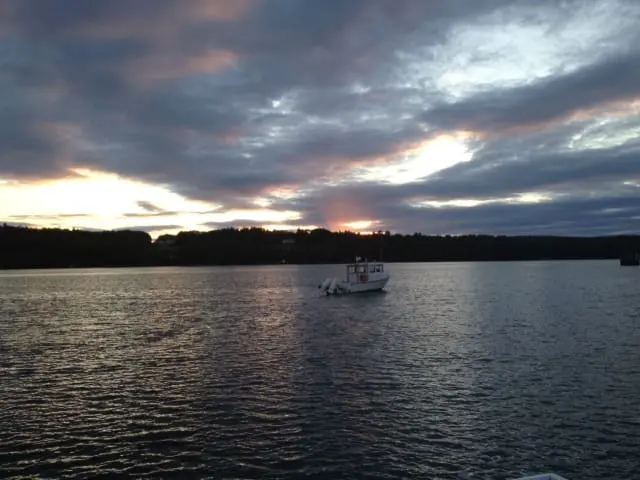
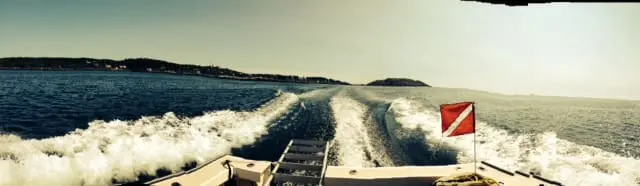
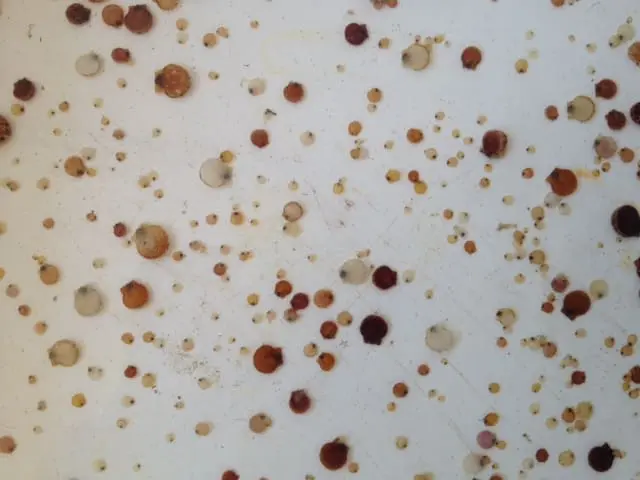
Research wise I’ve been very busy with the Wahle fisheries lab doing lobster and scallop collections. We dive once or twice a week to do either basic scallop collection for gonad indices or lobster suction sampling. After going diving in the mornings on the Turnstone 2 – still waiting on the Turnstone 3 yacht – we collect lobsters and whatever else ends up in the sample bags and bring them back to the lab. We sort for Jonah crabs and lobsters and pick out brittle stars and urchins for the DMC touch tank. We’re hoping to get around 250 young of year lobsters to do growth studies. I’ve also done a fair bit of sorting scallop young of year from spat bags. We dissect out hundreds of small scallops (below in photo) between the sizes of 2mm and 15mm.
The last project I’ve worked on pushes my limits of science work. As a vegetarian I try my hardest not to kill too many animals for research, but recent projects demand dissection. We hope to find growth bands in the gastro-intestinal mill of lobsters, that indicate either the age or the number of molts of that particular lobster. This information would be invaluable to the fishery, but is a mentally difficult task to say the least. I’m learning a lot about how to balance the science aspects with my own personal choices.
Thats all for now, as the summer continues I’ll have updates on dive classes and how our research projects are going. Until then, fair winds!
Katy