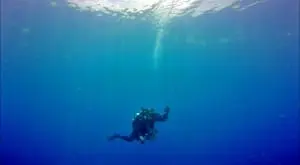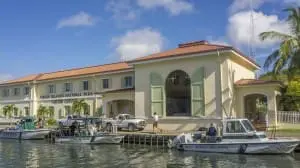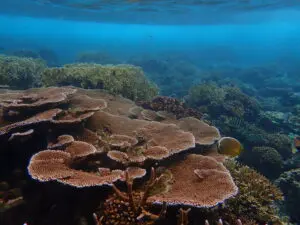
Lionfish derbies are one of the big ways that REEF helps with controlling lionfish abundance. During the summer REEF hosts a series of derbies all around Florida and in the Caribbean that are open to the public. Lionfish derbies consist of many different teams that go out for the day and bring back as many lionfish as they can. This year I was lucky enough to help run the Green Turtle Cay Derby in the Bahamas! Green Turtle Cay was actually the first place to host a lionfish derby and we are excited that they have held one every year since. Along with the derby, REEF has been doing some monitoring research to see the effectiveness of derbies. For the whole week prior to the derby our REEF team surveyed around 80 sites looking for lionfish and doing predator/prey surveys as well as fish counts. This research is being done to see how much impact derbies have on the control of lionfish. The research was very interesting and I look forward to seeing the results after we analyze the data.


As for the actual derby, we have tons of teams going out throughout the week to scope out their best lionfish sites, but the real fun starts on Friday. Each team must have a member present at the Captains Meeting on Friday night to hear all the rules and regulations. The captains’ meeting is where teams that are not preregistered sign up and tons of people walking around buying raffle tickets or REEF merchandise. I love all the competition in the air as each team tries to talk up how many fish they will be catching the next day. After the captains meeting, the teams go home to hopefully get a good night’s rest before the start of the derby at sunrise. Teams go out all day in hopes to collect the most lionfish and win any of the cash prizes. There are prizes first through third in the categories; most, biggest and smallest. All the teams must be back at the dock by 4:00 sharp. This is when they bring all their fish up and we size them and count them. It’s always crazy with the amount of fish being brought in and everyone running around checking the score board to see whose winning. This year we had 907 lionfish come in, a great improvement over the previous years! Something interesting that we noticed was that more of the fish were on the small size, this could mean that the derbies are really effective in keeping the population down and that we are only finding the new juveniles of the year. Hopefully all our research will show how much derbies are helping control the population of lionfish and how the hard work of all our participants is really helping the reefs.