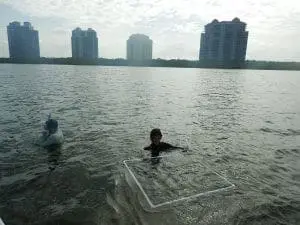
At Florida Gulf Coast University there were a few ongoing research projects I helped with including seagrass collection. I joined a grad student and some undergrads on a day of seagrass sampling out in Estero Bay right behind the Vester Marine Station. The sampling was your basic randomized quadrat counts. I had done seagrass sampling before but either in freezing northern California water or in 1-3m deep sites without scuba gear. So sampling in sites of 1.5m max depth in a warm bay was a nice change. We worked really fast and managed to do (an almost record) 20 sites by the afternoon.
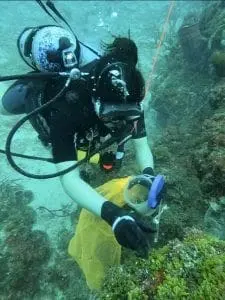
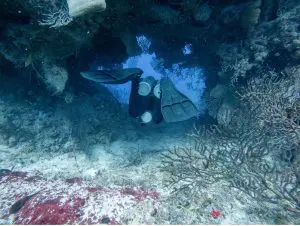
Our next dive training session was done on Florida’s Eastern Coast at a reef site called Ant Mounds off Deerfield Beach. Here is where I did my first ever nitrox dive with a 32% oxygen mix. We analyzed our tanks and calculated our dive based on dive tables to hone our skills from the e-learning. On the first dive, we once again collected halimeda and dictyota samples followed by on-boat processing. Then we switched our tanks and did a nice fun dive along the southern portion of the reef. This site had dozens of barrel sponges and a visiting loggerhead sea turtle.
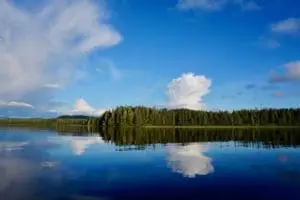
Our last day of diving was probably my favorite, despite having to wake up at 3:00 in the morning for it. Although I set 15 alarms, none went off, but somehow, I miraculously awoke at 3:20 in the morning. We all successfully met at the dock shortly after 4:00 in. the. morning. to load up the vessel and depart on a 3 hour boat ride to the first sampling site 80 miles off the coast of Ft. Myers, FL. Thankfully, the conditions were smooth and it was surprisingly relaxing to be so far from land.
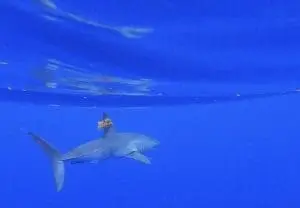
Once there, a few went on a tech dive to evaluate a potential site for red tide research, while me and my buddies snorkeled around the boat looking at small schools of fish and a curious barracuda in stunningly crystal clear blue water. We made our way back to the tech divers once they surfaced only to see they had made a new friend: an unwavering, adequately-sized, silky shark. We definitely needed a bigger boat. A little further from that initial point we noticed another dorsal fin in the water which turned out to be a mako shark. I was stoked; I’d only ever seen nurse or black-tip sharks until then.
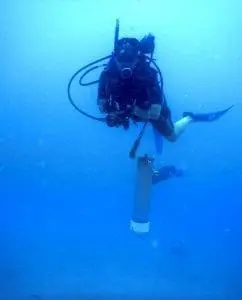
After gawking for the requisite amount of time, we carried on with research. We took YSI and CTD readings, along with water samples at 6 sites in the gulf. The data would be sent to Fish and Wildlife for an ongoing red tide monitoring project. At the final site, we geared up our tanks to deploy sediment traps at an artificial reef consisting of cement structures. After 14 hours at sea we got back to the marina at 7:00 pm only to begin the long process of unloading and washing the boat.