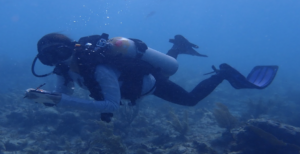
One of the programs here at REEF that I mentioned in my last post is the Explores Education Program. I am working specifically on the Ocean Explorers Camp. This is an environmental camp with an ocean focus for kids ages 7-12. Each day we are in or on the ocean in some capacity doing activities like snorkeling and kayaking. We host the camp at John Pennekamp Coral Reef State Park.
The responsibility to physically be at camp as a counsellor switches between interns. When I am not actually there, I am working on camp curriculum design. This is one of my independent projects I have undertaken. Thanks to my last position, I have experience in environmental education camp program design. I am thrilled to be given the trust and support to exercise this skill set.
In my previous position, I learned and implemented Earth Education Guidelines into my designs. Explained to me by my supervisor but synthesized by Steve Van Matre in his book, Earth Education, “Earth Education is the process of helping people live more harmoniously and joyously with the natural world.” By following the guidelines, you can hope to achieve three outcomes: feeling, understanding and processing. Essentially you aim to create programs that emotionally connect participants to the environment while also having them achieve an understanding on a subject of importance. The last outcome focuses on the participant’s own impact on the environment and how they can take action towards positive change.
I am hoping to take my knowledge and experience using these guidelines to create a comprehensive program design that can be used by REEF in years to come. One of the program components I am creating is a “New World Scavenger Hunt”. Working with a local museum, The Florida Keys History & Discovery Centre, I have gathered information and resources on what life would have been like for the early European explorers and the Native American population of the area. The goal is to have the kids experience how these people interacted with the environment around them. My desired outcome on this particular component is to teach the kids that it is important to look at our past and the perspectives of others to make smart decisions about our environment.
Education is in REEF’s name and I am excited to contribute.