As of five days ago, I had never been to Alaska, let alone a research station tucked into the Kachemak Bay on the Kenai Peninsula. The AAUS Mitchell Internship has given me the opportunity to join Brenda Konar and her group at the Kasitsna Bay Laboratory studying various aspects of intertidal and subtidal community ecology along a glacial gradient in the Kachemak Bay, Alaska.
Although Alaska is still part of the US, it feels a world away from Colorado. The trip up north took 12 hours across three flights and a water taxi. The views from the plane from Anchorage to Homer and the water taxi were unbelievable! The sights of crisp water, islands and bays, sea otters playing, and looming snow-capped mountains made the nerves of diving in the cold Alaskan waters slip away.

My first few days at the research station consisted of processing samples in the lab for species composition, biomass, and reproductive effort. This allowed me to jump right into learning my Alaskan intertidal species. To further my species identification knowledge, I have been putting together a target species list for dive sampling- sea stars, kelp, nudibranchs, oh my!
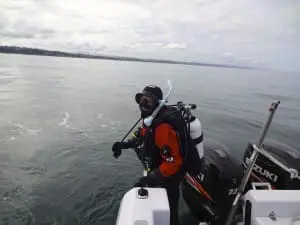
After these first few days of diving into processing samples, I got to dive into the water. I learned how to properly don a dry suit, the beauty of corn starch on seals, and that the nerves of dry suit diving will immediately disappear once you’re weighted down and overheating. I can now officially say I have dove in a dry suit, and in just a few days we will go to work on dive sampling! I’m thrilled about this opportunity to expand my research diving techniques and experience in order to explore a whole new environment. I have already seen so many organisms, like sea stars and nudibranchs, that I had not often seen in warm water. The ocean is such a vast and incredible world, and I can’t wait to experience the wonders of cold water ecosystems while contributing to research.

Lucky for me, the Konar group’s research covers both the intertidal and subtidal. This means that in addition to dive sampling, I get to help the team with intertidal sampling of mussels, clams, algae, and other critters. Today, I had the opportunity to assist with sea otter surveys where we set up a telescope at a look out point and recorded sea otter feeding behavior.

I have already learned so much, and I know I will continue to absorb boatloads of knowledge and skills throughout the course of this summer. I have even gained some skills I didn’t expect, like learning how to don a survival suit!