After Annalise, the REU students and I got ourselves familiarized with the environment, it was time to get started on the big goal for this summer, Pinto Abalone research and restoration work.
Pinto Abalone (Haliotis kamtschatkana) are a species of snail that is native to the rocky Washington coastline, however populations have plummeted due to overfishing and poaching. Restoration projects have been conducted by many institutions and organizations such as Puget Sound Restoration Fund and Washington Department of Fish & Wildlife. Shannon Point has been conducting research on this species for a while and the efforts grow every year!
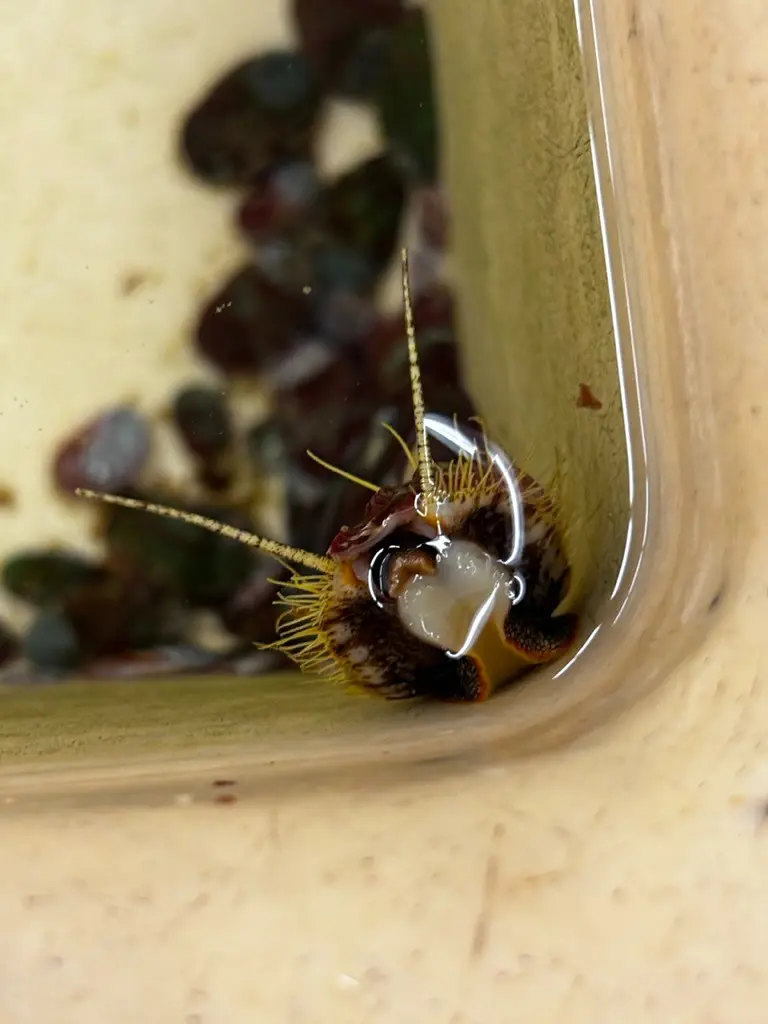
This year, two of the REU students Lamar G. and Kevin O. have been working on developing new out planting techniques and understanding the survivorship of out planted abalone.
Now, you might be wondering what a typical abalone outplant consists of? Well it requires a lot of planning and preparation!
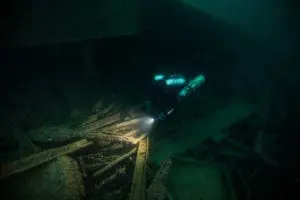
The first step is identifying a location to out plant these gastropods. We start discovering these sites by looking at the underwater topography to find a site with ideal depth. However, depth is not the only factor in an ideal out planting site. After potential sites are picked, divers are sent down to evaluate the bottom. Abalone require rocky bottom with an adequate rocky reef substrate.
When a good location is identified, sites then need to be set up . The requires placing pitons, which are metal stakes, in the four corners of the site so it can be bound with line to define the surveying site.
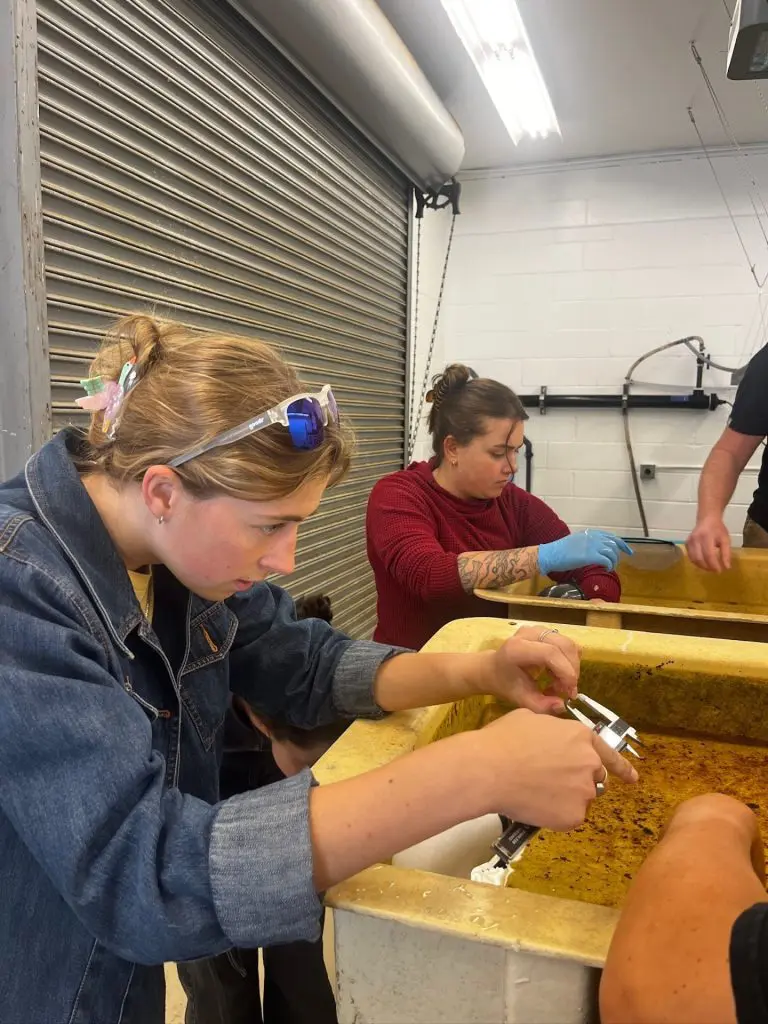
After all this work, the abalone finally entered the equation. But before we can move them into their new home, they need to be measured and placed into tubes. Now this may sound like a simple task, but when you need to move 750 abalone, this becomes a pretty hefty task. Another question may arise, how do you even tag a snail? You actually use Queen bee tags! They are then placed into PVC pipe tubes so they are able to be transported to the outplanting site.
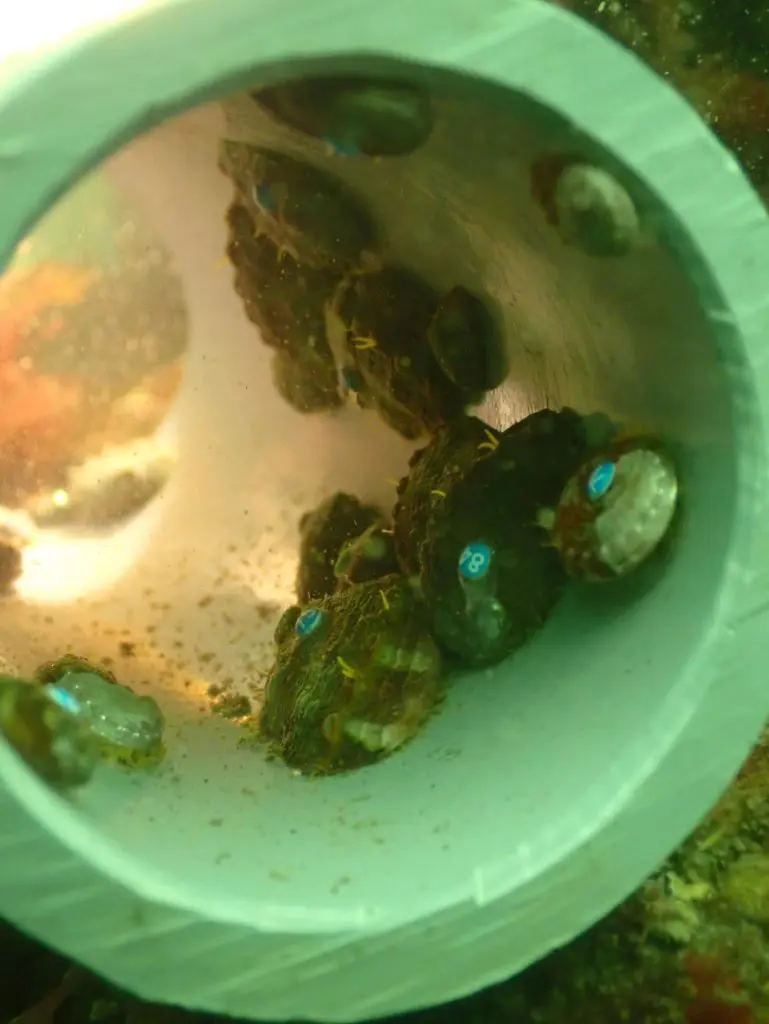
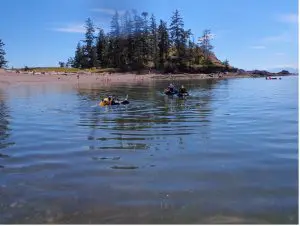
The snails are ready to go and the final step can be completed, out-planting! The tubes are brought to the site and divers descend and carefully place the tubes opportunistically throughout the site. Witnessing the abalone moving from their tubes to their new home is so rewarding!
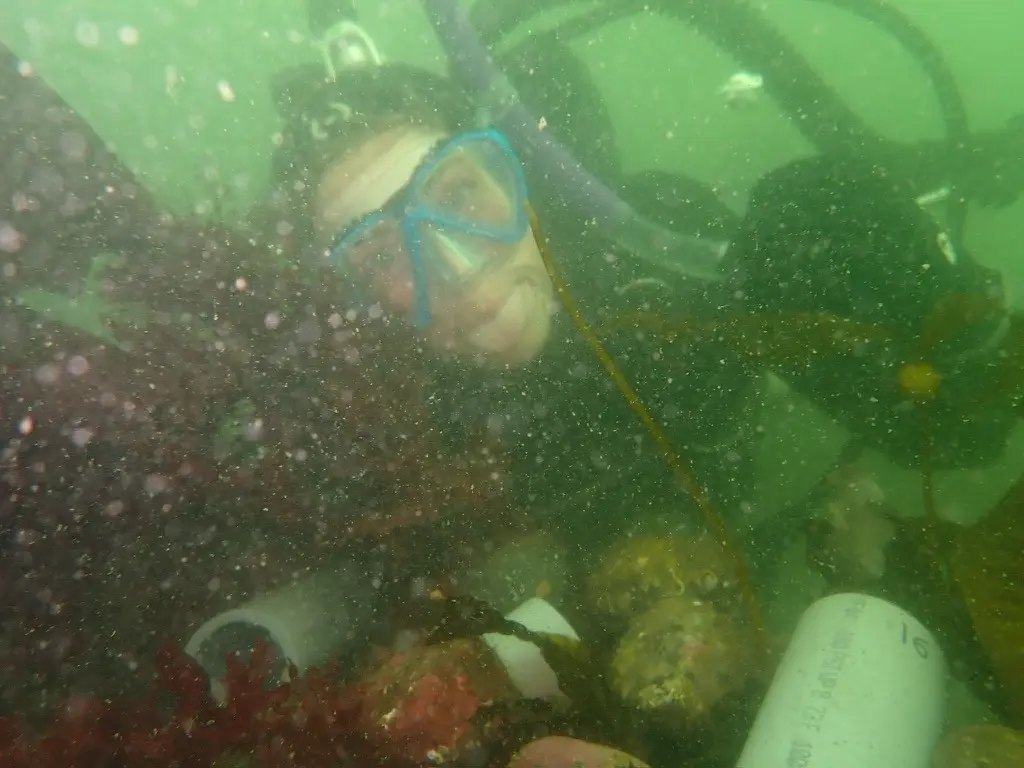
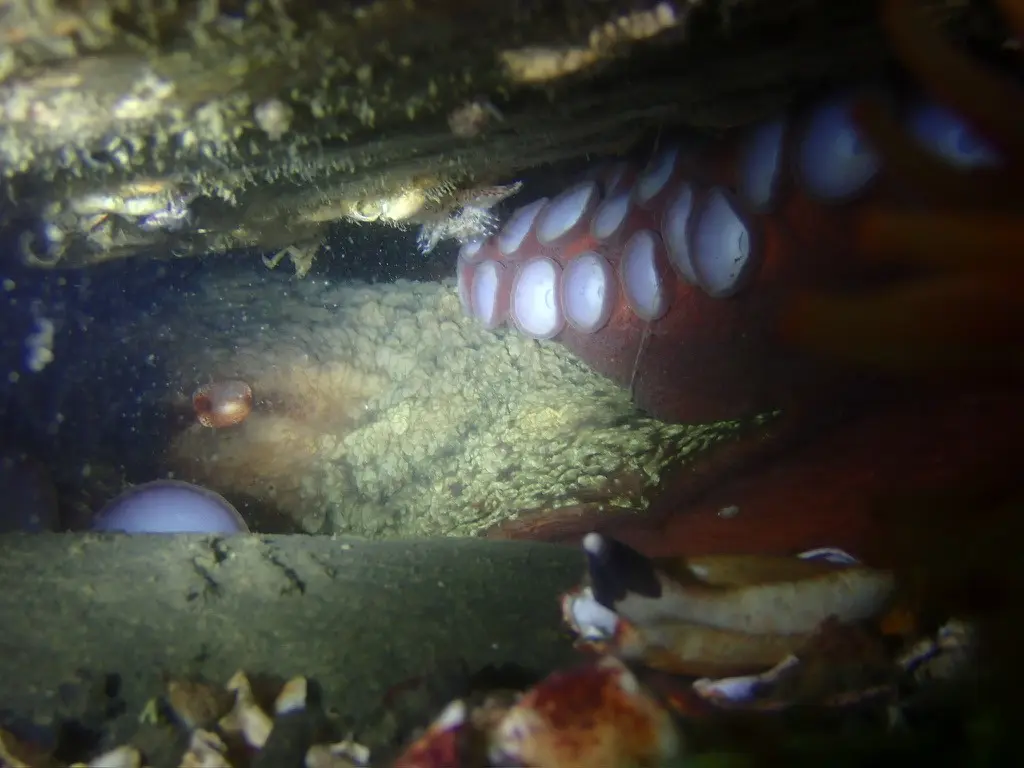
During our abalone restoration efforts, we made a few friends along the way. The first being George, the sea lion. My first encounter with George was a stare off contest between him, my dive buddy Kevin and I. Another one of our friends is the GPO (Giant Pacific Octopus) that lives near one of the out-planting sites. Seeing the actual scale of these creatures is fascinating!
Having the opportunity to be a part of a restoration project this large has been so rewarding! Apart from the technical skills that I learned, I also have a deeper understanding of the organisms that might be forgotten due to their small size. Pinto Abalone has carved out a small snail shaped size place in my heart.