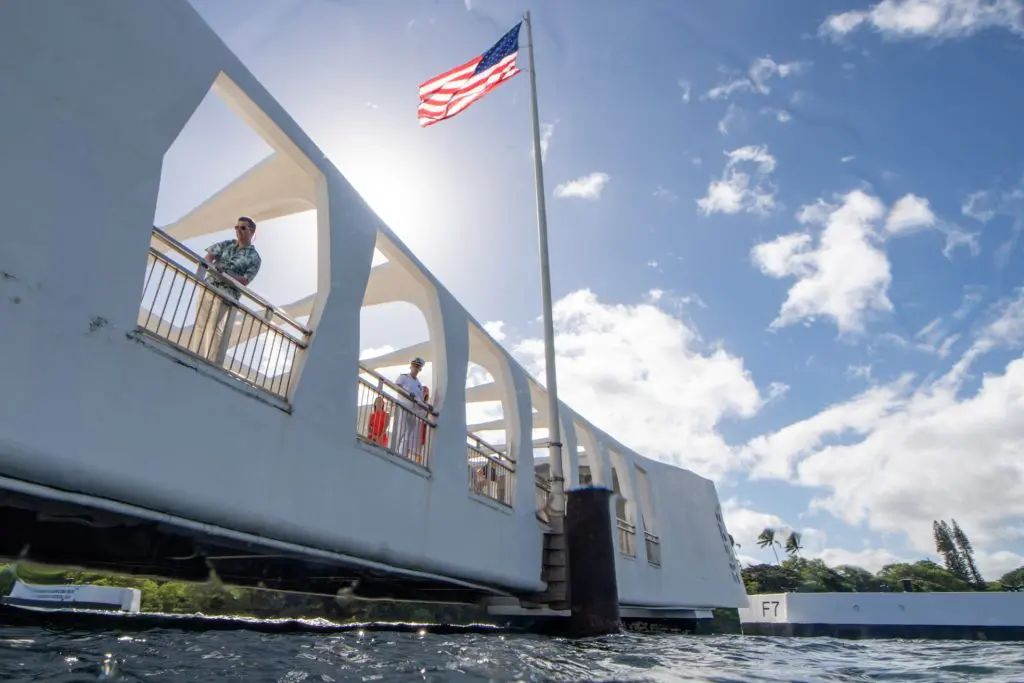
Most visitors to the USS Arizona Memorial eventually do the same thing: they look down.
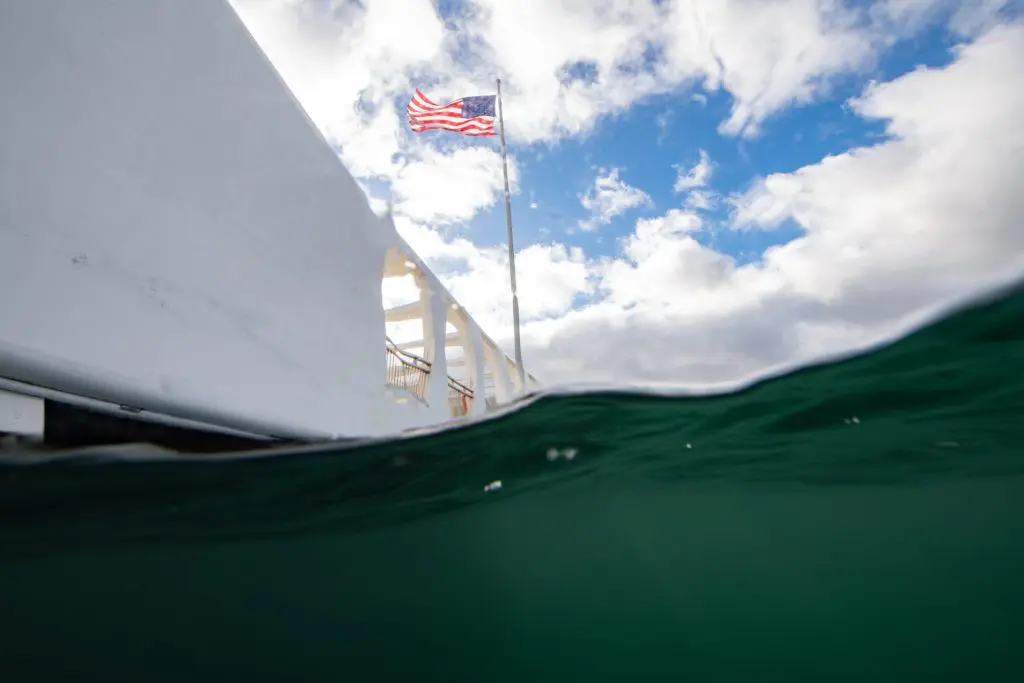
When I first visited Pearl Harbor in 2024, I arrived on a bright orange double-decker tour bus with a high school US History class level understanding of the events of December 7, 1941. At the USS Arizona memorial, I noticed the range of emotions around me. Some visitors stood silently, absorbing the scale of the tragedy. Others discussed the strategy of the attack, the construction of the ships, and the military history with encyclopedic enthusiasm. Yet, regardless of what had brought us there, nearly everyone eventually leaned over the railing and peered into the water, as did I.
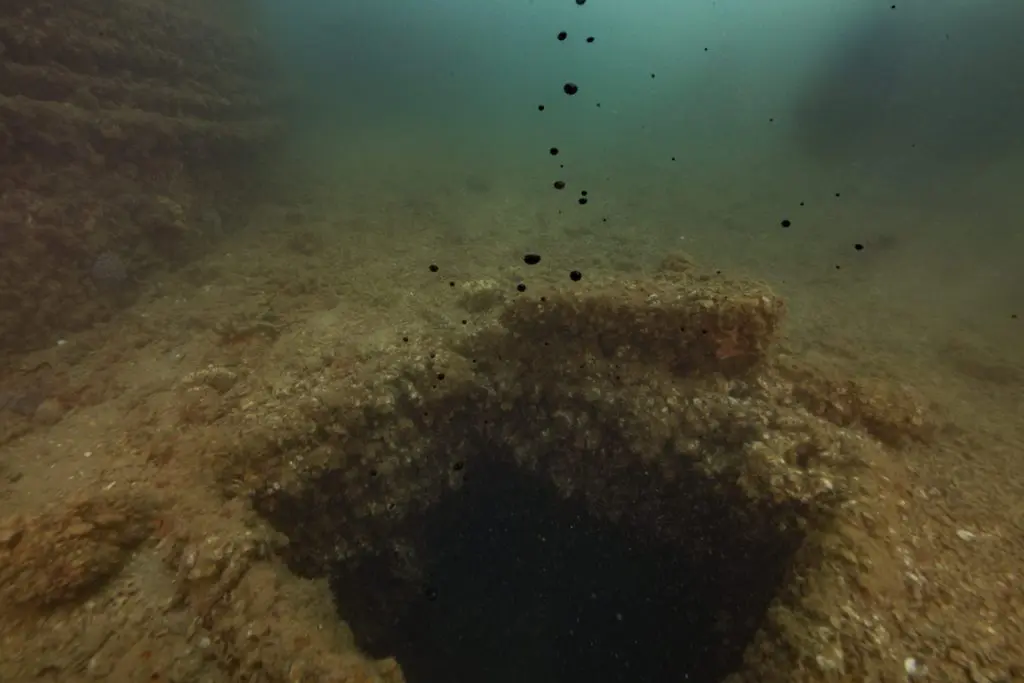
What did the ship look like beneath the memorial? What had survived the explosion, the fire, and more than eight decades underwater? I tried to assemble a sunken battleship in my imagination, but the surface revealed only fragments: the circular outline of a gun turret, sections of corroding steel, and occasional drops of oil rising through the harbor.
Two years later, I now had the opportunity to return to O’ahu to help answer the question I had once stood above the memorial asking: What lies below the surface?
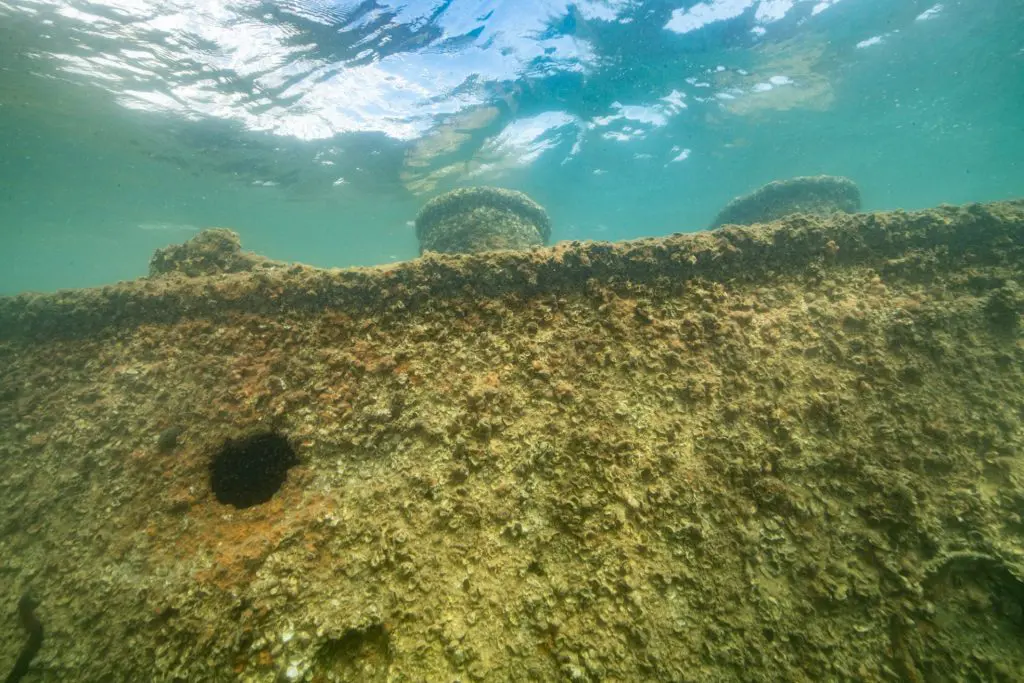
When Brett Seymour, Deputy Chief and A/V Specialist for the National Park Service Submerged Resources Center (SRC), invited me to join him and Jim Nimz, SRC’s Diving Operations Specialist and acting National Diving Safety Officer, on an imaging project of the USS Arizona, I immediately said yes. I had spent three months living on O’ahu in 2024, so after a 15-hour travel day from Biscayne National Park, watching the sunset illuminate Diamond Head and Waikiki from my airplane window felt like Hawai’i welcoming me back. However, I was returning to Oʻahu for an opportunity unlike anything I had experienced there before.
Brett and Jim were using photogrammetry to map the USS Arizona. By capturing tens of thousands of overlapping photographs, they could reconstruct the wreck as a digital, comprehensive, high-resolution three-dimensional model, creating a detailed record for both preservation and public interpretation. I had become familiar with photogrammetry while working on coral reefs in O’ahu, and it had quickly become one of the forms of data collection that captivated me most. I am drawn to the space where science, technology, and documentary storytelling intersect, and this project existed directly at that intersection. Most people will never have the opportunity to dive on the USS Arizona, as it is a protected site. Through photogrammetry, however, they may have the opportunity to explore it.
Like many important expeditions, my time at Pearl Harbor began not with adventure, but with paperwork and FedEx. My first stop was the military equivalent of the DMV, where Pearl Harbor National Memorial Chief Ranger Cynthia Sirk-Fear sponsored my access to Joint Base Pearl Harbor-Hickam (Thank You Cynthia!). After receiving a printed pass that permitted me to enter the base, and, crucially, the dive locker that would be our headquarters for the week, we made a few logistical stops, including a visit to the NOAA dive locker. There, I met Mikey Kent, a former National Park Service diver who now works for the National Oceanic and Atmospheric Administration (NOAA).
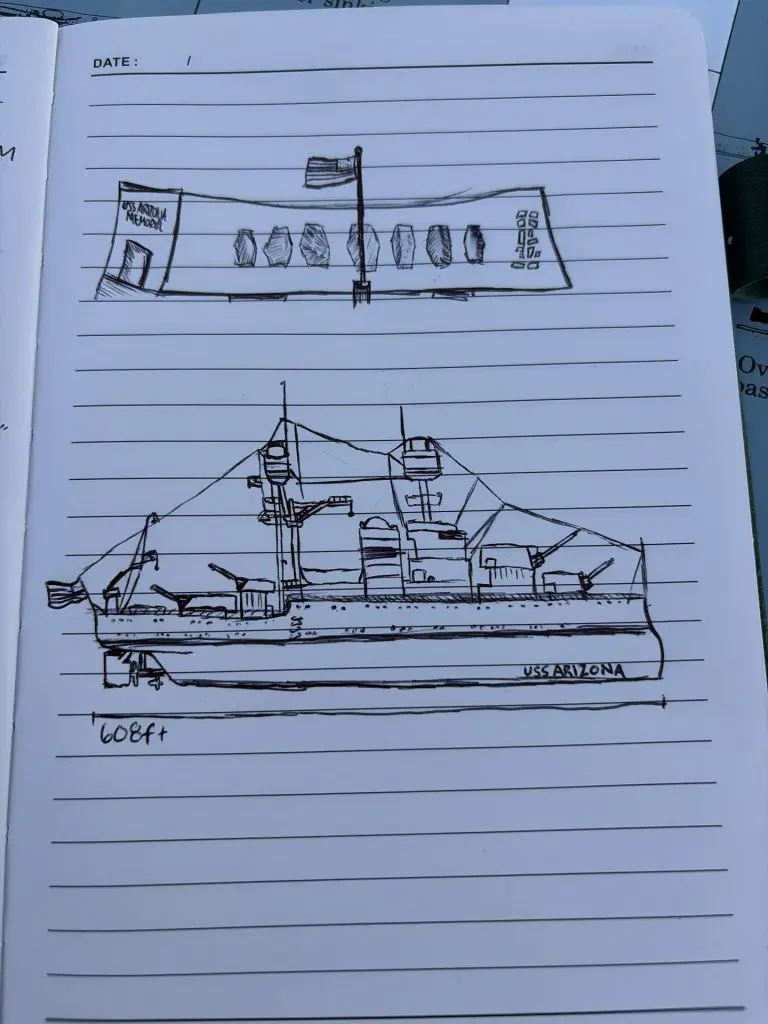
Later that afternoon, I found myself alone on the USS Arizona Memorial while Brett and Jim completed a three-and-a-half-hour photogrammetry dive. Being alone on the memorial, which also serves as a war grave, was difficult to comprehend. Without the usual crowds, the structure felt less like a tourist destination and more like a place suspended between the present and the past. I read every plaque and interpretive sign, then began drawing the wreck from the diagrams around me. My sketch was simple, but the act of drawing forced me to study the ship’s shape and orientation. When I later descended to the wreck, that rough sketch became a surprisingly useful mental map.
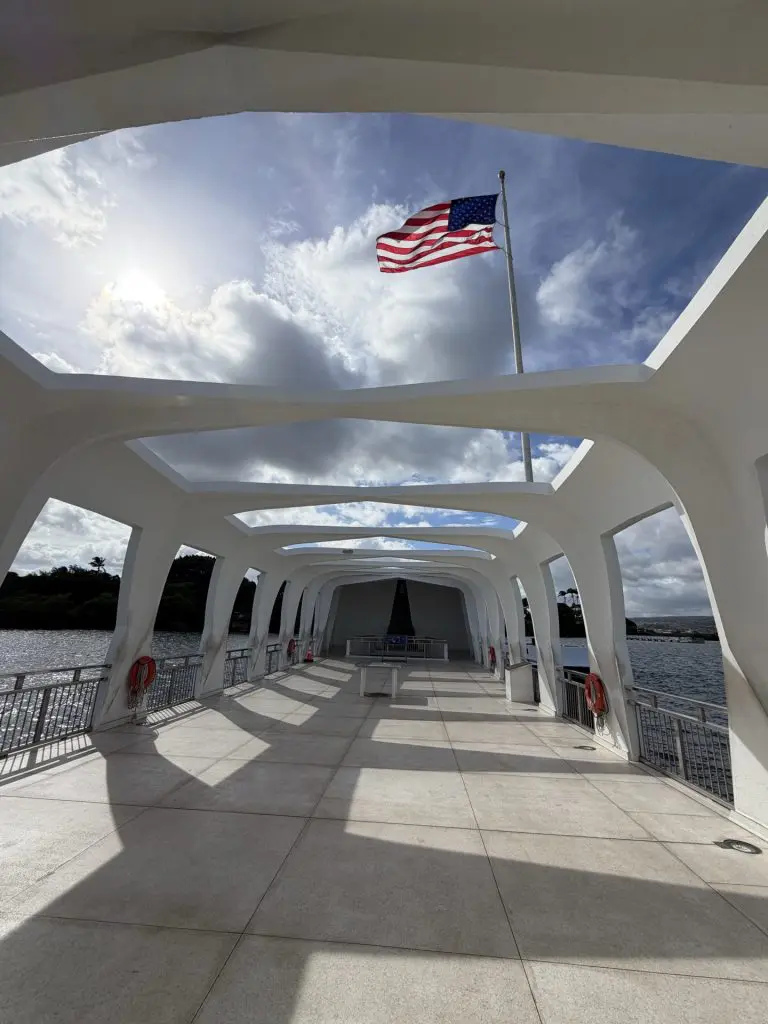
As I waited, I tried to absorb the history of the place where I was sitting. The attack on Pearl Harbor brought the United States into World War II and altered the course of the country. In the months that followed, wartime fear and racism were used to justify the forced removal and incarceration of Japanese Americans. The consequences of December 7, 1941 extended far beyond the harbor, shaping American lives, policy, and international involvement for generations.
I was lost in my feelings, feeling conflicted about diving this sacred place of remembrance. Somber? Grateful? Nervous? Eager to dive? None of those emotions seemed sufficient on its own, yet all of them were present. When Brett and Jim surfaced, I asked Brett how he reconciled the weight of diving at a site defined by so much loss. His answer stayed with me throughout the week. After well over 500 dives on the USS Arizona, he explained, he still feels that weight most strongly when he notices something “new”—not something newly introduced to the wreck, but something he has never seen before. It might be a spoon lying among the rubble or the sole of a shoe fused to the deck. These ordinary objects interrupt the scale of the battleship and return his attention to the individuals who once occupied it. He also told me not to expect myself to feel any particular way.
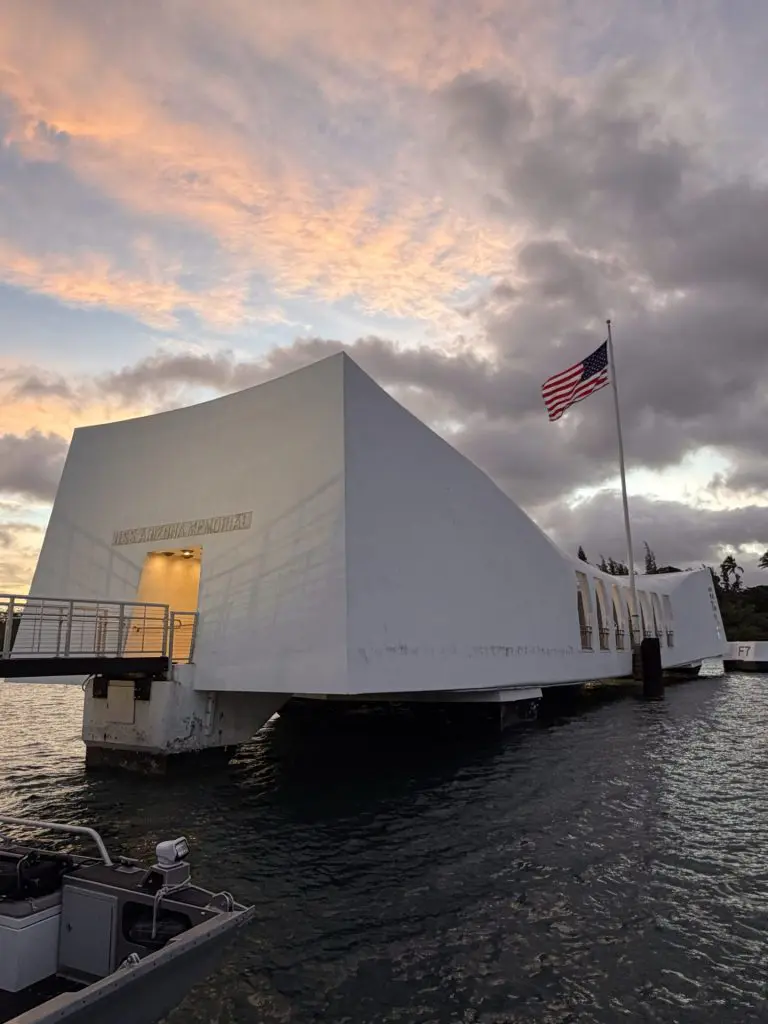
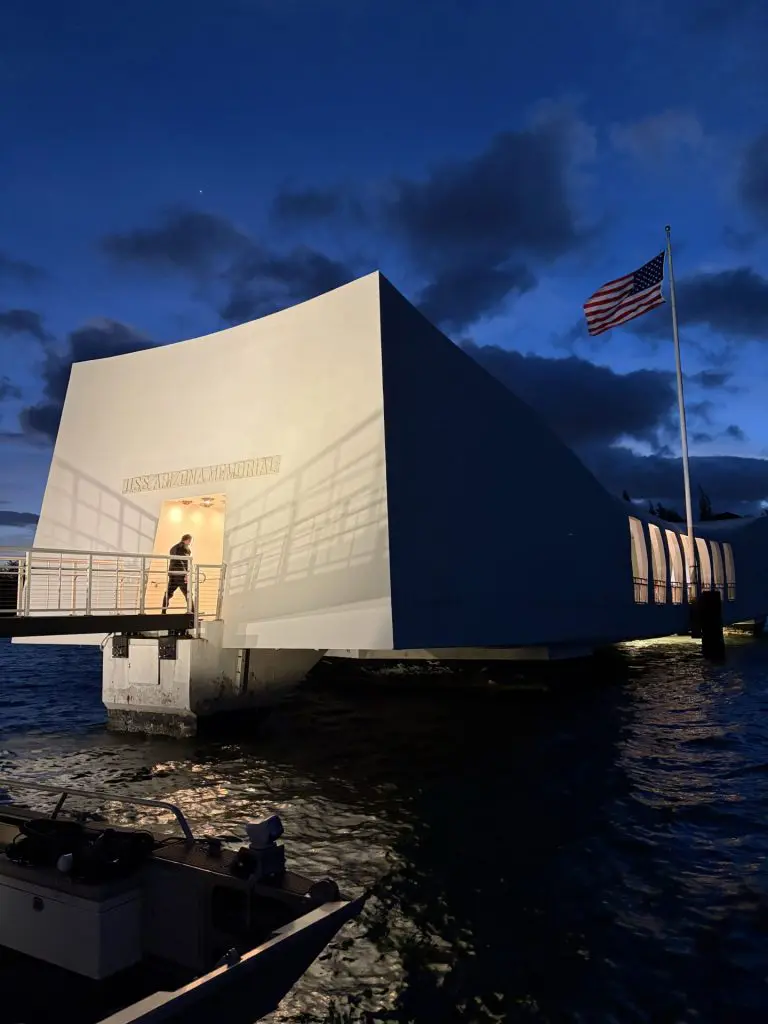
That first evening, we stayed at the memorial until nightfall. Jim pointed out that almost no visitors get to watch the sun set over the USS Arizona. During my week there, I would watch three such sunsets and hear evening Colors and, later, Taps carried across the water from the base.
The following day, it was my turn to dive.
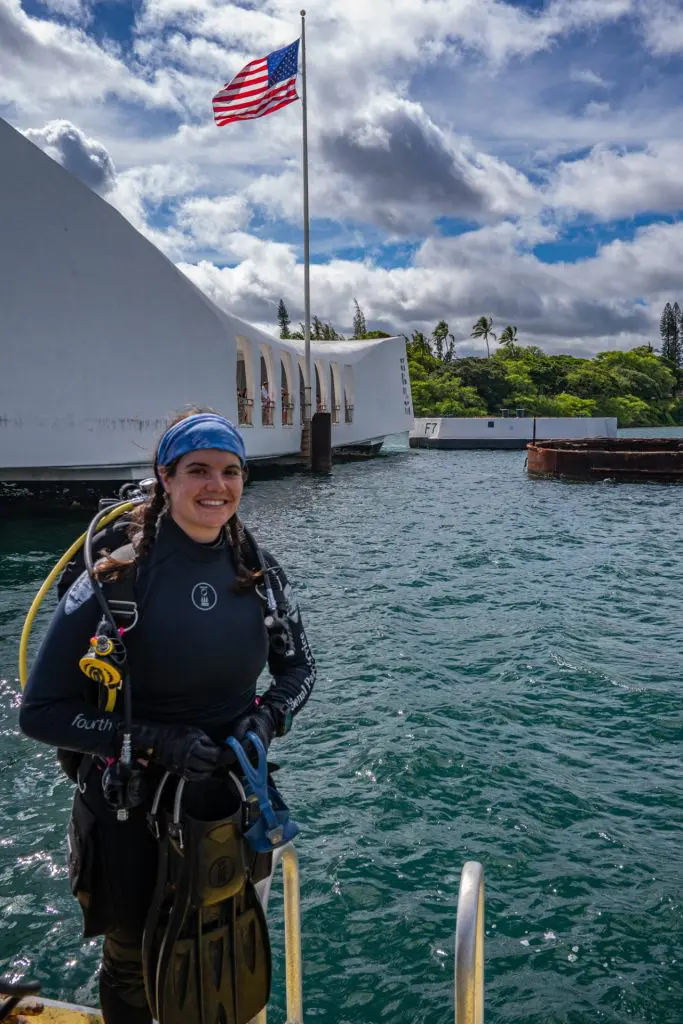
Brett and Jim would complete another long, scooter-propelled rebreather dive first, leaving me plenty of time on the memorial. I used part of it to take the final exam for my Divers First Aid course and the rest serving as “topside support.” In practice, my role involved locating zip ties, handing Jim screwdrivers while he adjusted his rebreather loop, and attempting to look knowledgeable.
As the time for my dive approached, my excitement became more complicated. When I previously worked for a reef-monitoring nonprofit on Oʻahu, my boss had told me, “No one gets to dive in Pearl Harbor.” At the time, I accepted that statement without question. I certainly never imagined that I would return a couple of years later and descend onto the USS Arizona.
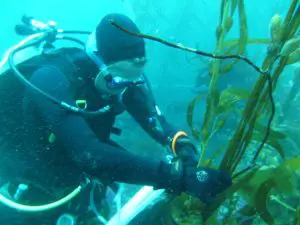
For my first dive, I left my camera behind per Brett’s request. Before trying any photography on the wreck, it was important to experience it without placing anything between myself and the site. Brett guided me on an orientation of the ship. With more dives on the Arizona than anyone else and decades of experience photographing and filming it, he gave me a tour that was, unsurprisingly, comprehensive. No dive I had completed before felt like this one. The wreck did not feel like a conventional dive site. I was swimming through a place I had previously encountered only through textbooks, memorial exhibits, and archival images.
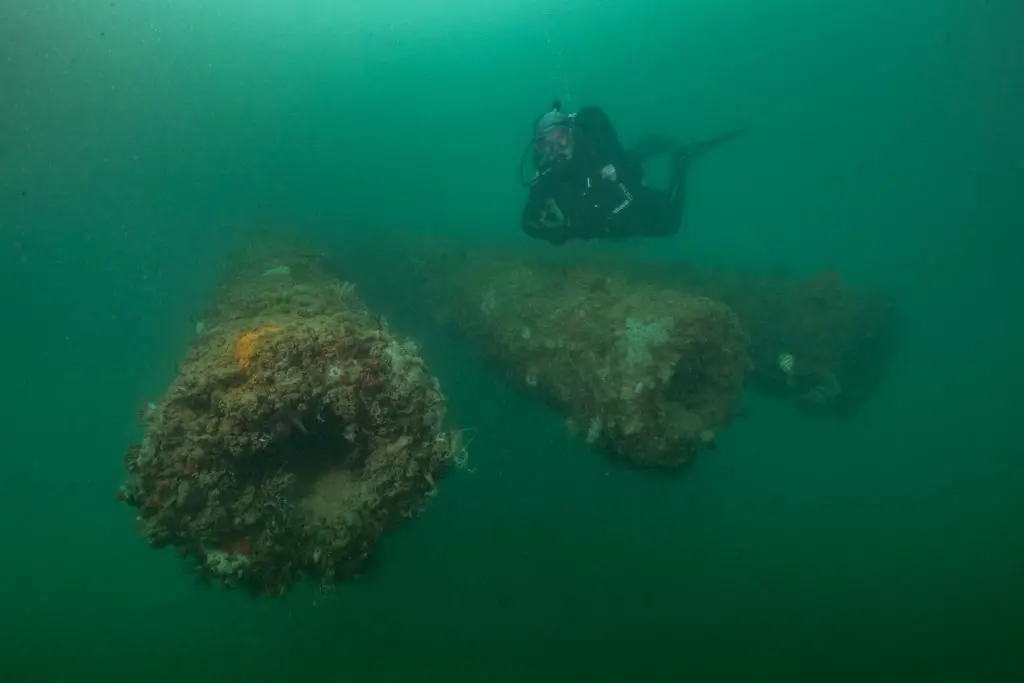
Photo: Brett Seymour
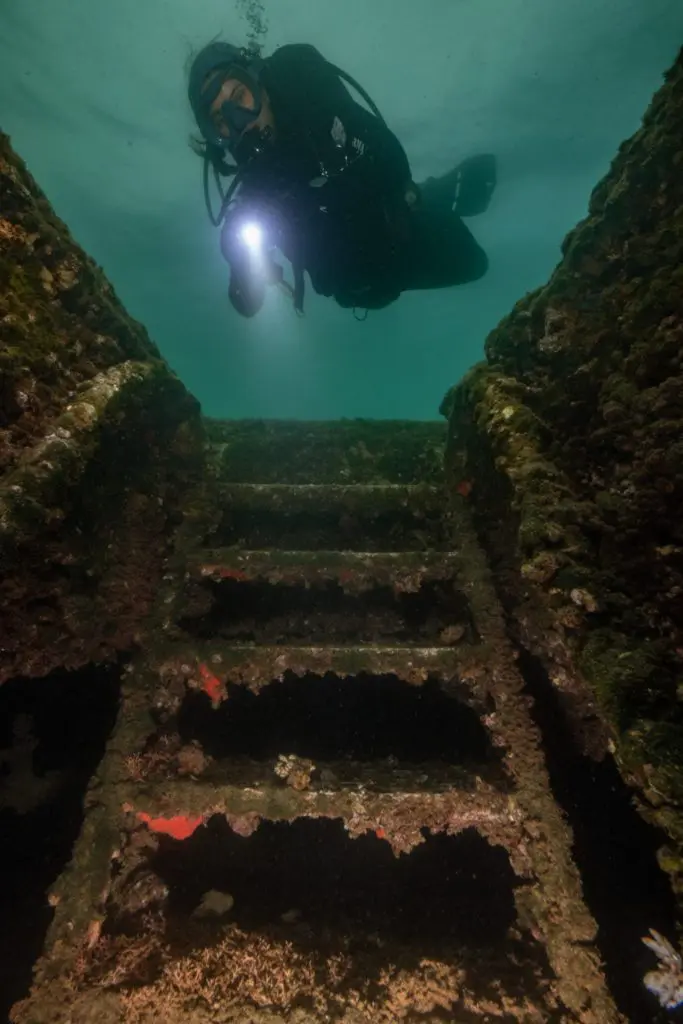
Photo: Brett Seymour
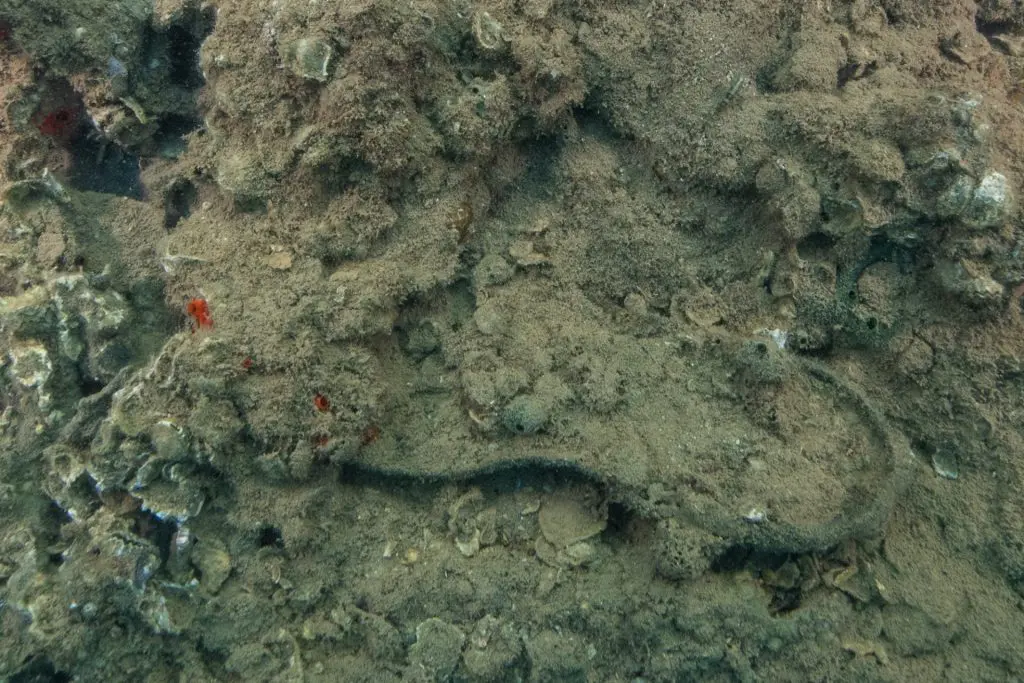
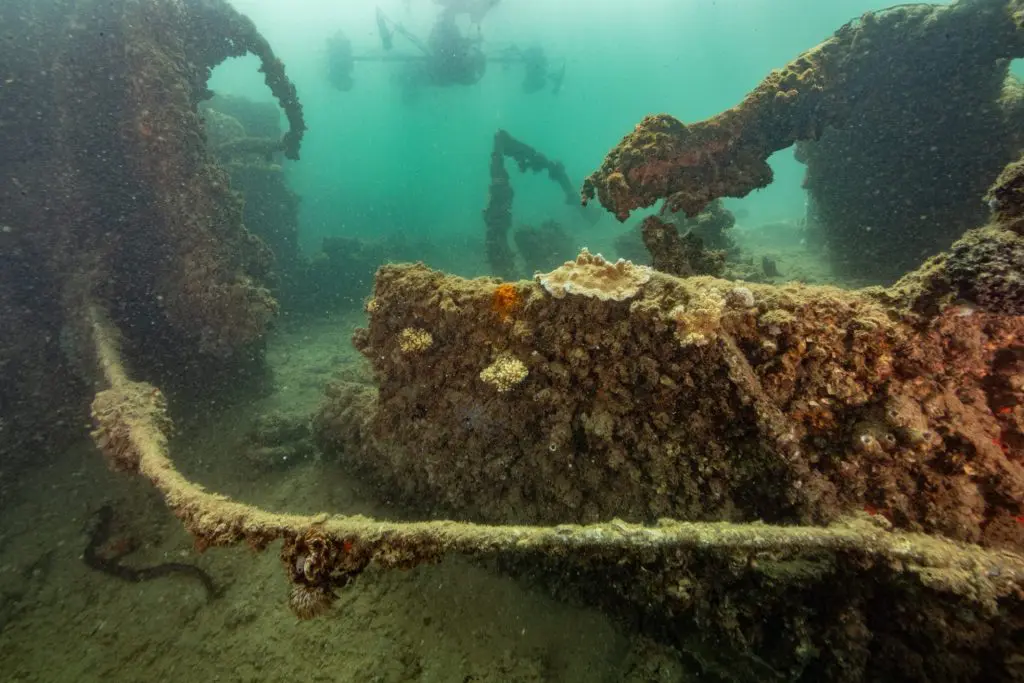
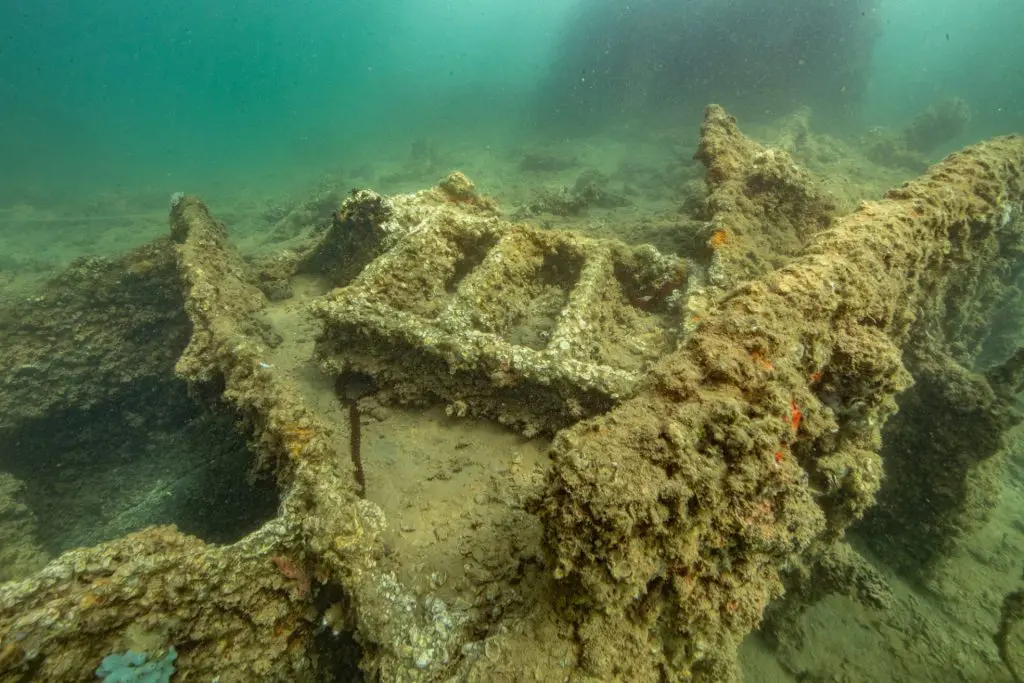
The USS Arizona is 608 feet long, slightly longer than two football fields, and once carried twelve 14-inch guns in four triple turrets. In the attack, 1,177 sailors and Marines aboard the ship were killed. More than 900 were never recovered and remain within the wreck. At first, I saw the USS Arizona primarily as a battleship. Brett led me from the stern to the bow, where I could wrap my hand around the narrow forward edge that once helped the hull cut through the sea. He showed me an ammunition space where shells remain and the places where oil continues to escape from the wreck. The drops rise slowly to the surface and spread into iridescent circles, commonly known as the “black tears of the Arizona.” These features reinforced the identity I already associated with the ship: a powerful, armored vessel designed for war.
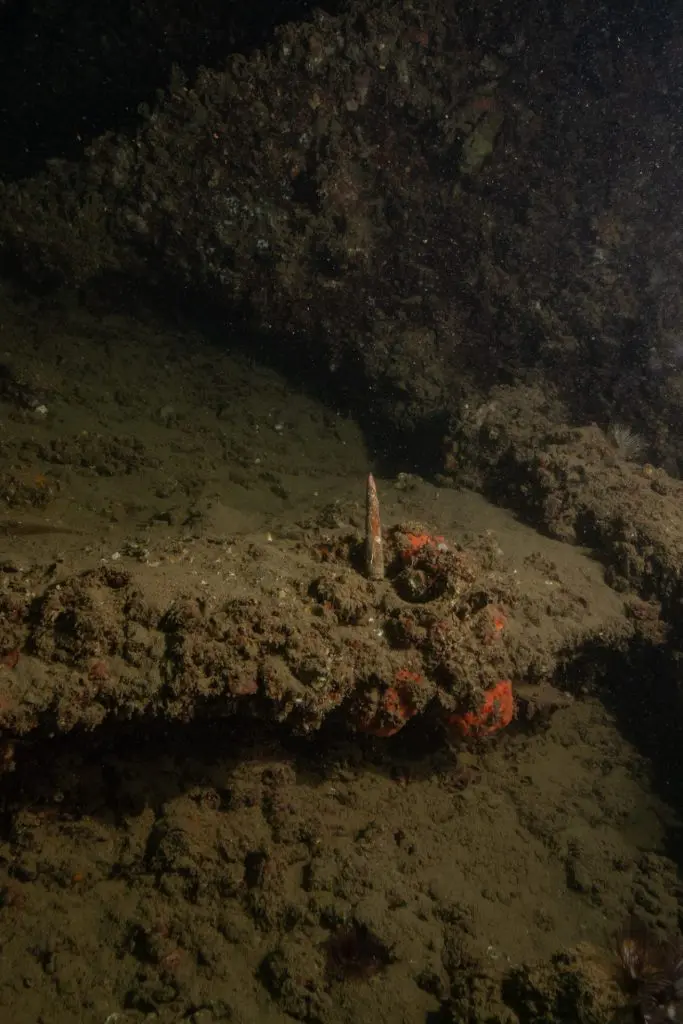
Then I began noticing details that challenged that perception. Much of the deck was made of teak, its remaining wooden surfaces contrasting with the corroding metal around them. I saw traces of items and spaces that had once been part of daily routines. The USS Arizona had not only been a weapon or a feat of naval engineering. It had been a workplace, a home, and a setting for thousands of ordinary moments. Before it became a battlefield and a war grave, sailors ate meals there, completed shifts, wrote letters, and waited for the next day.
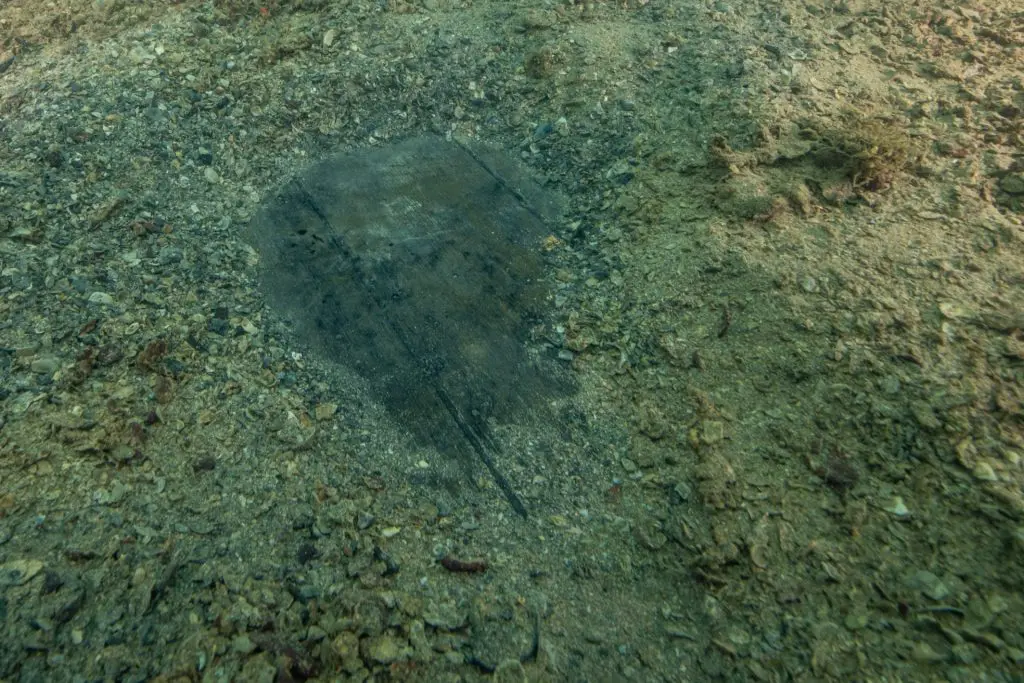
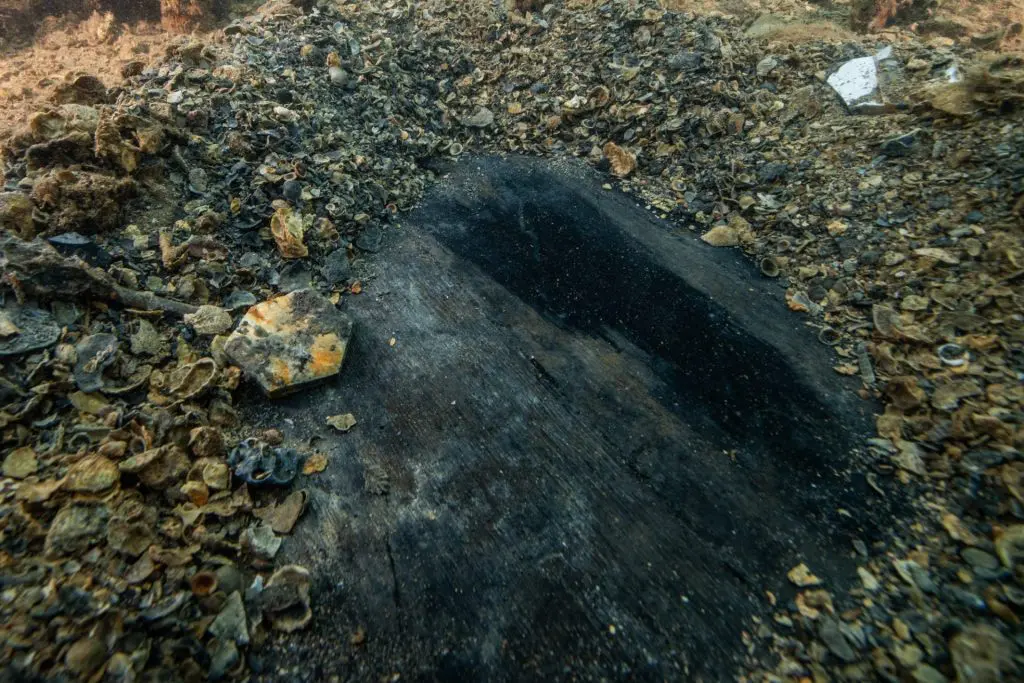
When I surfaced, the memorial above the ship no longer seemed to hover over an abstraction. I had begun to understand the wreck’s shape and scale, but more importantly, I had started to recognize the lives embedded within.
I brought my camera on my second dive, and it transformed my awareness of the wreck. Initially, I thought that photographing the USS Arizona might distract me from its significance. Cameras can easily create distance, encouraging a photographer to think about composition, lighting, and exposure instead of the meaning of what is in front of the lens. Instead, my camera became a magnifying glass. It slowed me down and encouraged me to examine details I might otherwise have missed. Objects Brett had shown me no longer appeared simply as artifacts scattered across a wreck. Through the viewfinder, they became evidence of lives once lived.
Who had used them? What purpose had they served? How had they come to rest in that particular place?
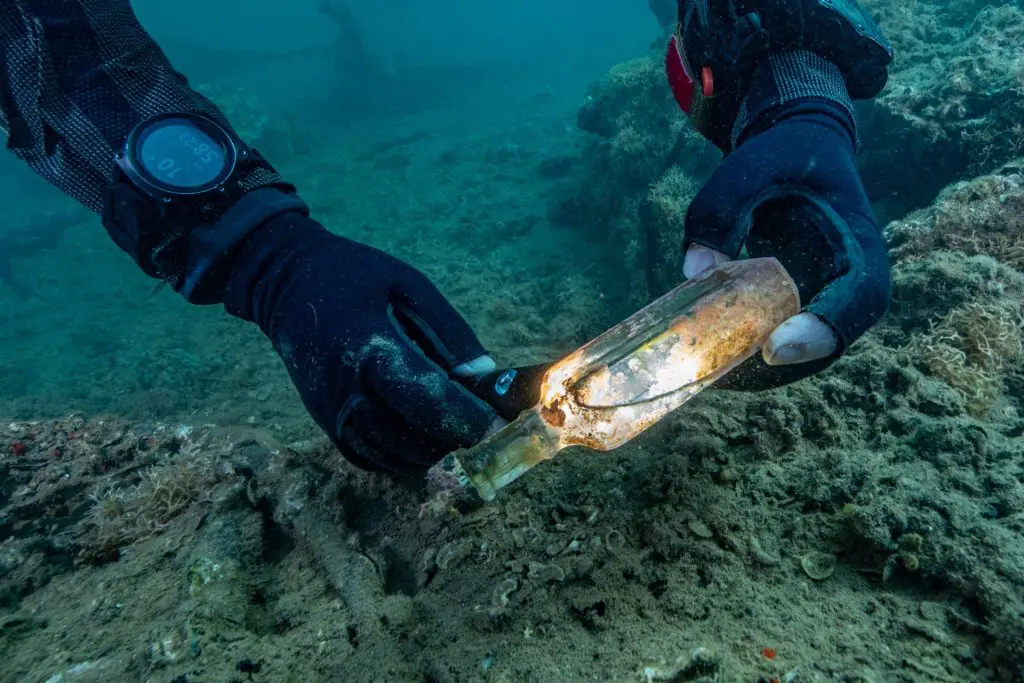
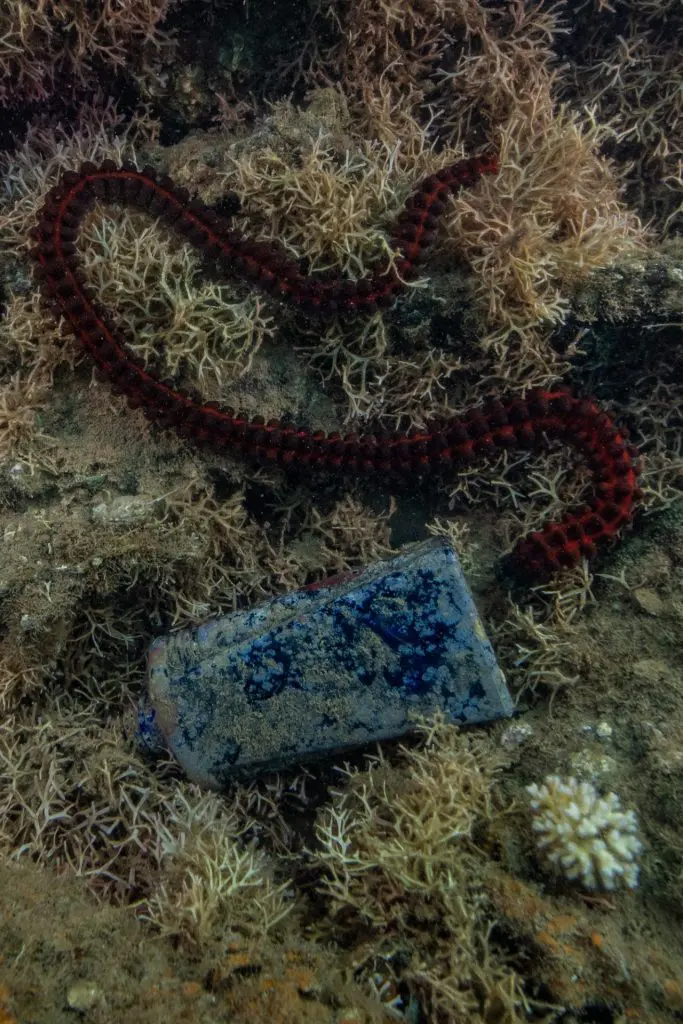
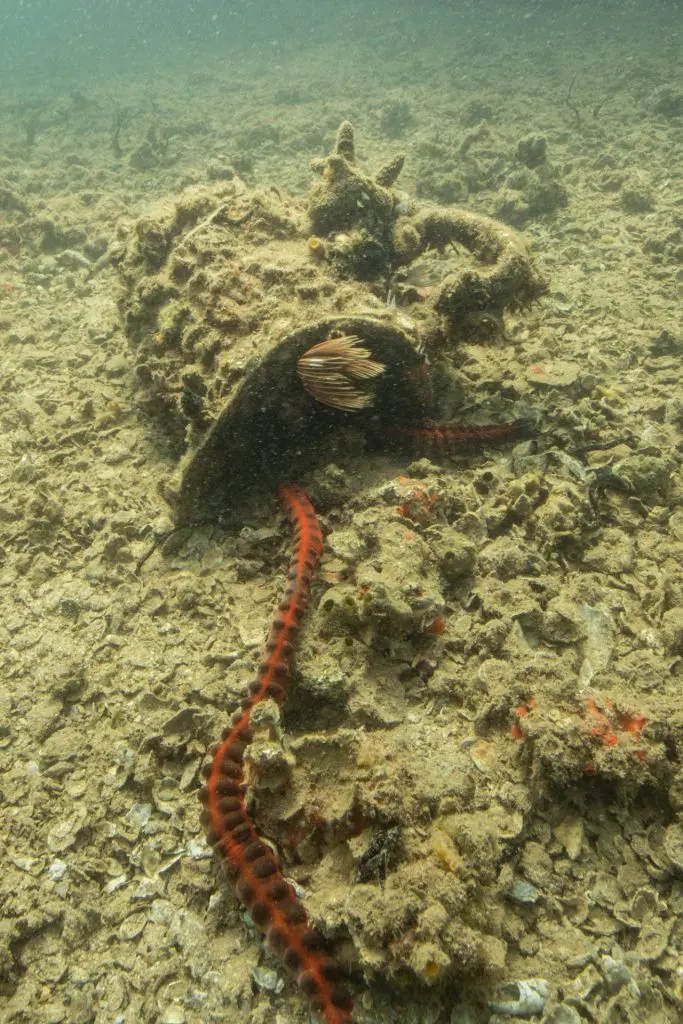
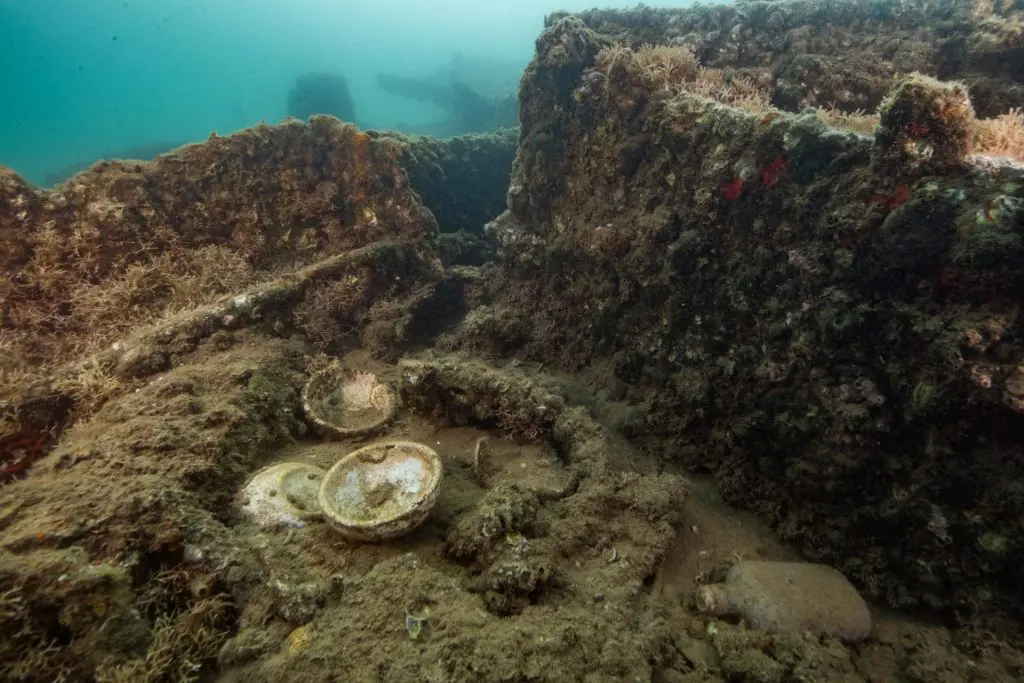
In what had once been the galley, I photographed three ceramic bowls lying sideways and upside down, half-buried in sediment. I found myself imagining them in their former life—perhaps laid out for sailors preparing to eat breakfast before the attack. Now, they rest among the remains of the room they once belonged to. The bowls preserved the possibility of an ordinary morning that never had the chance to become an ordinary day.
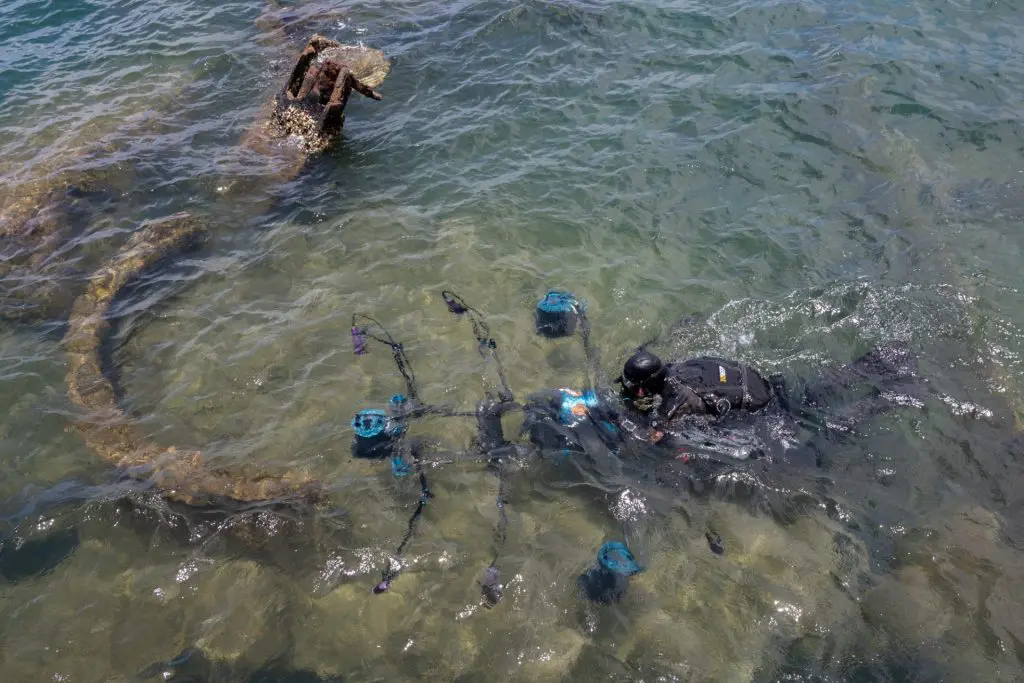
During this dive, I also tried maneuvering the photogrammetry system Brett custom-built and named the “SeaArray.” The rig consists of three mirrorless cameras mounted on a single plane, controlled through a central system and surrounded by six Keldan lights. It is large enough to require a pulley for lowering it into and retrieving it from the water, which was one of my duties as top-side support. Once submerged, Brett uses an underwater scooter to fly it over the wreck. Holding the SeaArray while trying to grasp the scooter was intimidating. My brief attempt gave me an immediate appreciation for the precision required to maneuver it for hours at a time. Throughout the week, Brett and Jim completed a series of three- to four-hour rebreather dives and captured just under 100,000 photographs. Each image represented only a fraction of the ship. Combined, they would allow the wreck to be reconstructed in extraordinary detail.
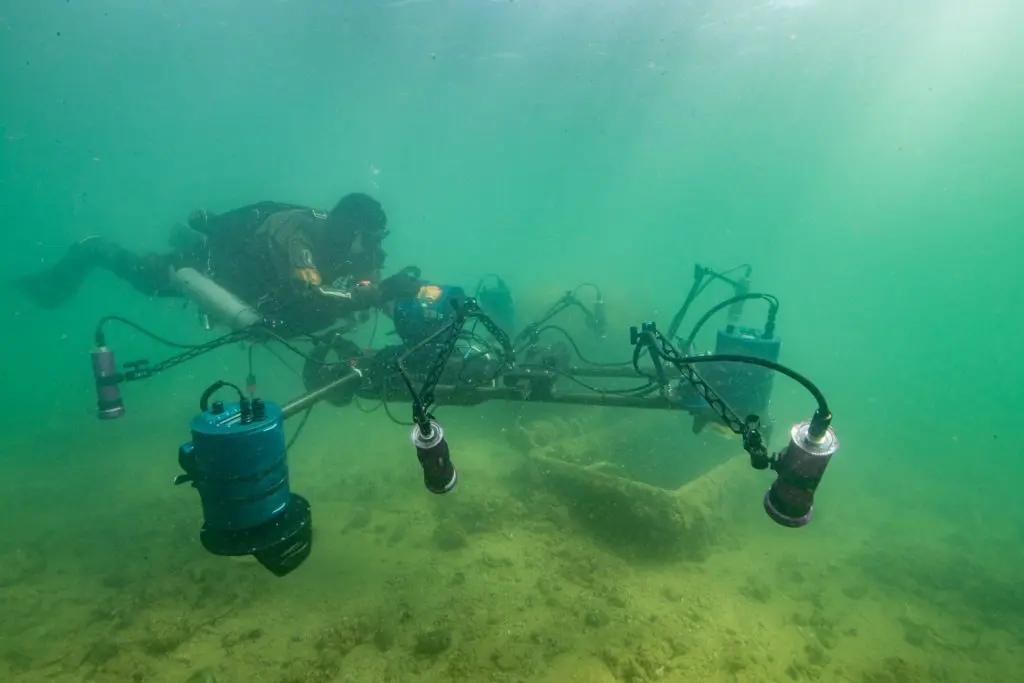
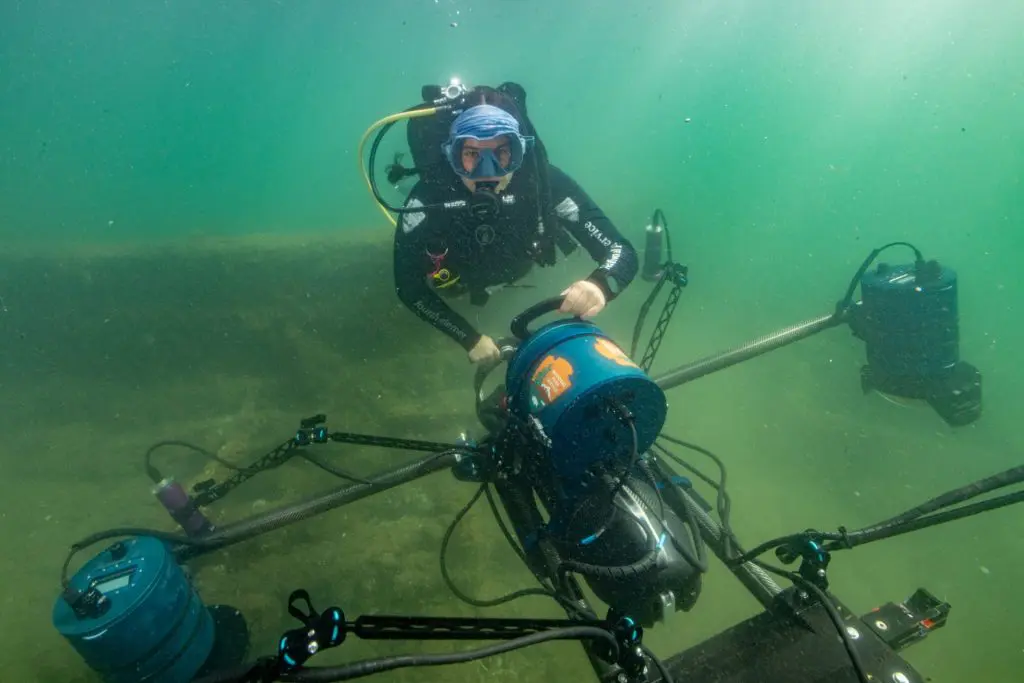
My camera helped me notice individual objects. The SeaArray would allow millions of people to look closely at the entire ship.
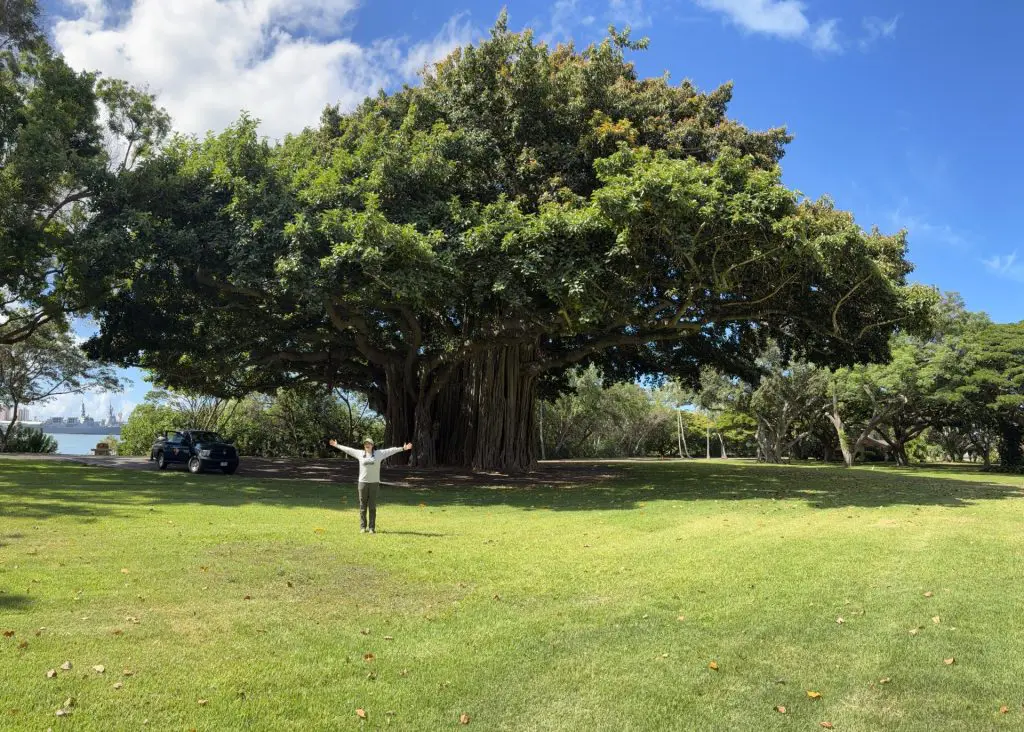
On my last full day at Pearl Harbor, I saw the USS Arizona and its memorial at a new perspective from Ford Island. We also visited the USS Utah Memorial on the opposite side of the island. Originally built as a battleship and later converted into a target ship, the Utah was struck by torpedoes during the opening minutes of the attack. It capsized, killing 58 members of its crew, and remains where it sank. The Utah receives far fewer visitors than the Arizona, partly because of its location on an active military base. Seeing both sites emphasized that Pearl Harbor does not hold a single story. Each ship, memorial, survivor, and person lost represents another perspective on the events of December 7. Our Ford Island tour also included Brett’s favorite tree, which he introduced as “the biggest tree you have ever seen and ever will see.” I initially suspected some exaggeration. After standing underneath the banyan’s enormous canopy, however, I am willing to admit that he may be right, and that says a lot as I grew up amongst monstrous Redwood trees in California.
Later that morning, I joined Brett and Jim for a meeting with Tom Leatherman, superintendent of Pearl Harbor National Memorial. Their discussion focused on how the new photogrammetry model could be incorporated into public interpretation. I thought back to my first visit. I had stood on the memorial looking into the water, trying unsuccessfully to construct the ship in my mind. Nearly every visitor faces that same limitation. They can see portions of the wreck from above, study photographs in the visitor center, read books, or use the park’s virtual-reality experiences, but very few will ever see the USS Arizona beneath the surface.
That is why the photogrammetry project matters.
The model could support immersive augmented-reality experiences, allowing visitors to explore the ship’s structure and understand how the visible sections fit into the complete wreck. Similar tools could eventually be used in classrooms far beyond Hawaiʻi, giving students and members of the public a more accessible connection to the site.
Preservation is sometimes understood as preventing a physical object from disappearing. At the USS Arizona, however, preservation also means maintaining the public’s ability to understand what remains. The wreck will continue to change as metal corrodes, sediment shifts, and marine organisms grow across its surfaces. A detailed, digital three-dimensional model creates a record of the ship at this moment in time while also helping future visitors interpret its history. Digital access cannot replace standing on the memorial, and it certainly cannot replicate diving the wreck. It can, however, close some of the distance between knowing that a ship lies beneath the water and recognizing the spaces, objects, and human stories it contains.
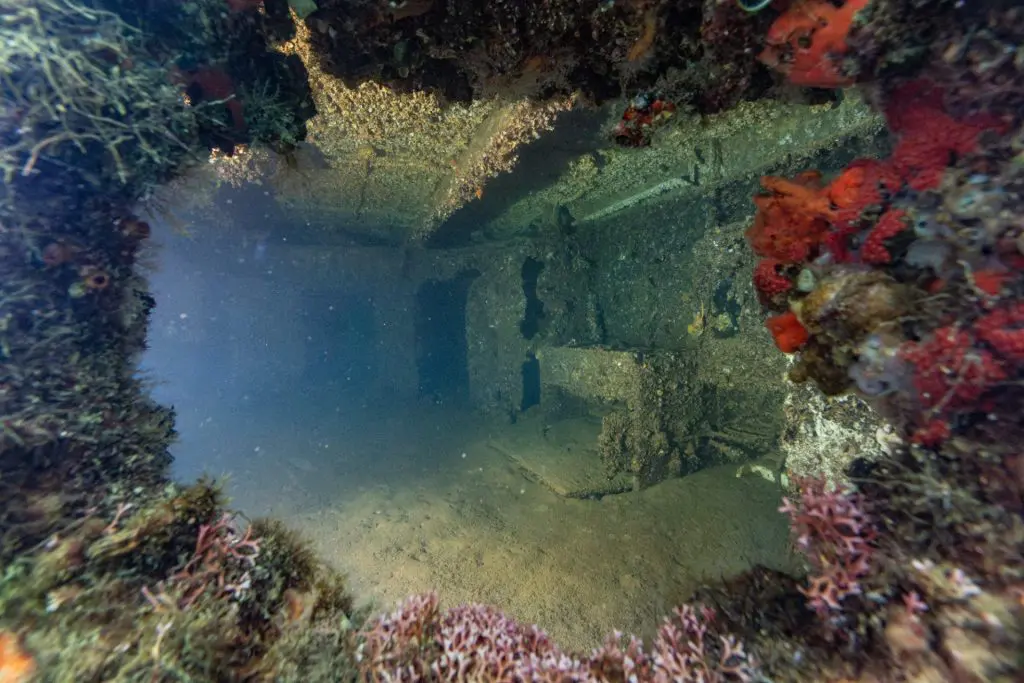
With the morning’s conversation about public interpretation still on my mind, I descended for my final photography dive. Brett helped illuminate parts of the interior by shining a LED light through portholes into the Marine Division Officers and Admiral’s Cabins on the second deck of the ships stern often reffered to as “Officers Country”. The lights exposed layers of the wreck that were hidden: a rotary phone, a mirror, a table and chair, a desk, a hanging light fixture—the outline of a space once lived in.
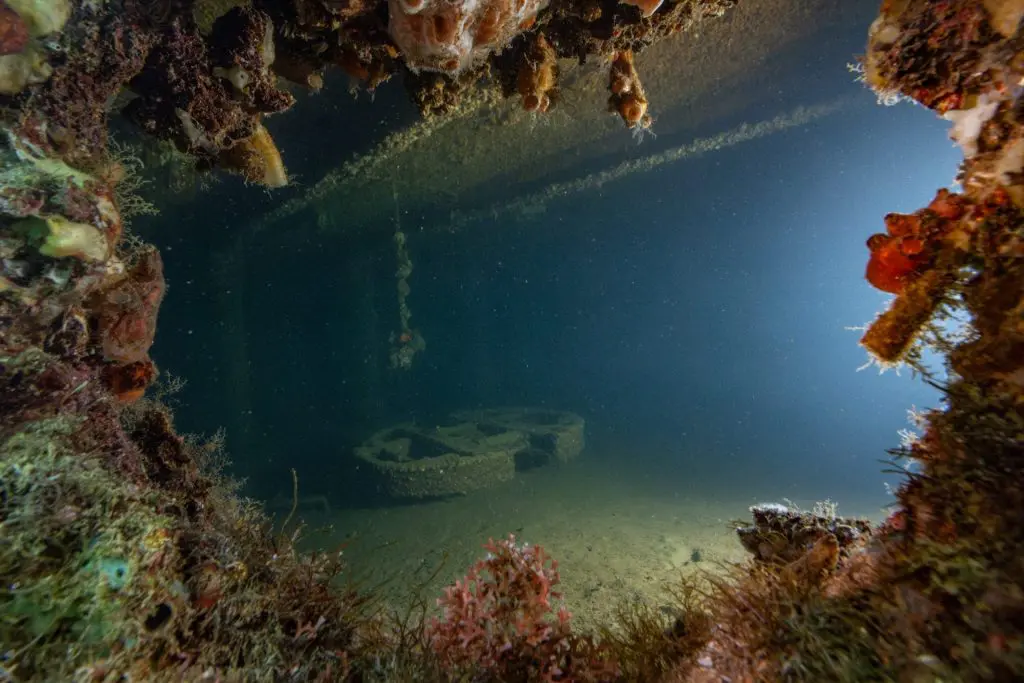
As I photographed, I also began paying closer attention to the life that had settled across the ship. Corals, sponges, fish, and invertebrates now occupy its surfaces and openings. Inside one of the forward gun barrels, I spotted a small banded coral shrimp—striped, delicate, and seemingly unconcerned with the historical significance of its chosen home. The contrast was striking. The USS Arizona remains a war grave and a place defined by profound loss, yet its structure now also provides habitat. Life has grown across metal designed for war and taken refuge in spaces once occupied by sailors.
That life does not erase or soften the tragedy of the wreck. Instead, it adds another layer to a site that cannot be understood through a single identity. The USS Arizona is simultaneously a battleship, a workplace, a tomb, an archaeological site, a memorial, and a living marine habitat.
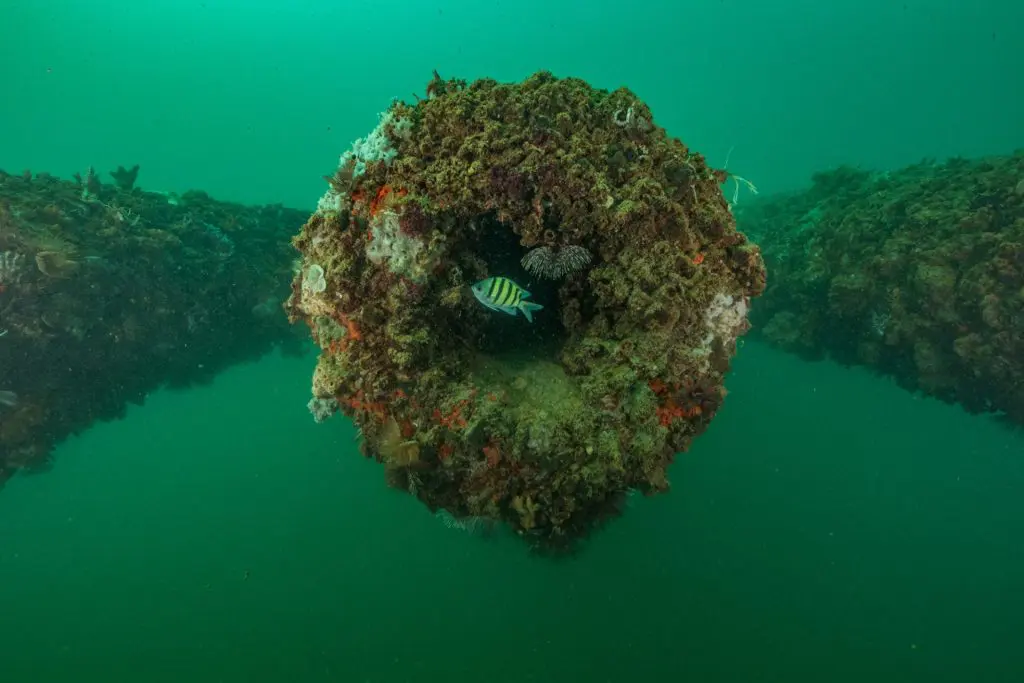
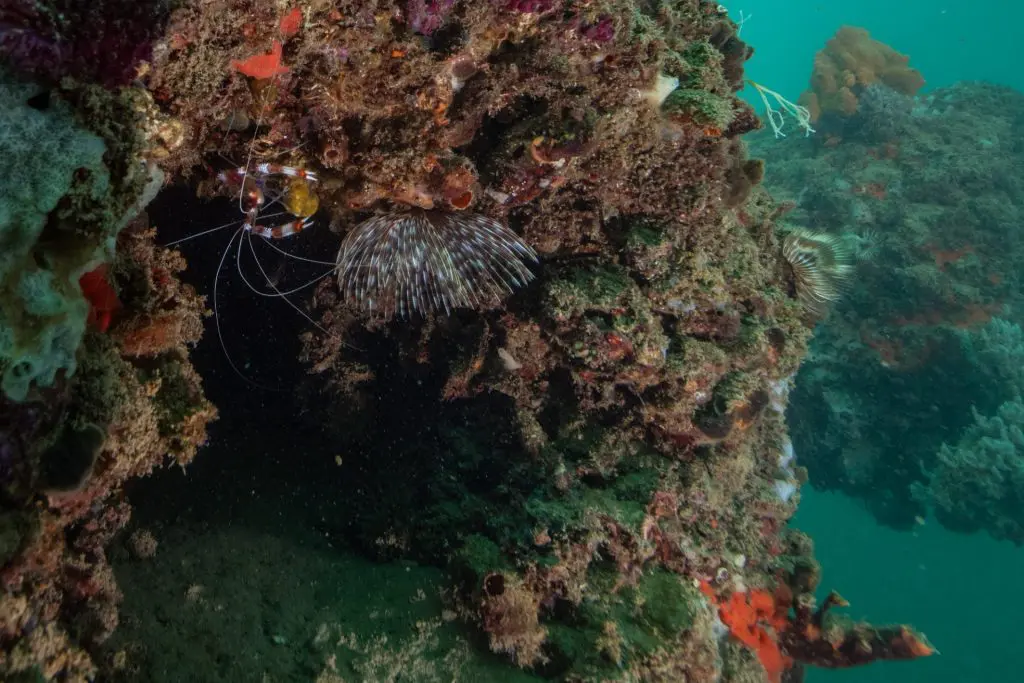
When I had first stood above it in 2024, I wanted to know what was down there. I assumed the answer would be primarily visual: the shape of the hull, the scale of the turrets, the arrangement of the deck. After diving the wreck, I realized that What lies below the surface? is a far more complicated question.
Beneath the memorial lies a machine built for battle, but also a place where people worked and lived. There are military gun turrets and common-place ceramic bowls. There is corroding steel and surviving teak. There are traces of catastrophic violence alongside a tiny shrimp sheltering inside a gun barrel. Most importantly, there are more than 900 people who remain within the ship.
My camera had helped me move beyond simply seeing those details. It made me pause, question, and imagine the lives connected to them. The photogrammetry project has the potential to do something similar on a much larger scale: to help people who may never visit the site look more closely at the USS Arizona and understand it not as an indistinct shadow beneath a memorial, but as a place filled with individual stories.
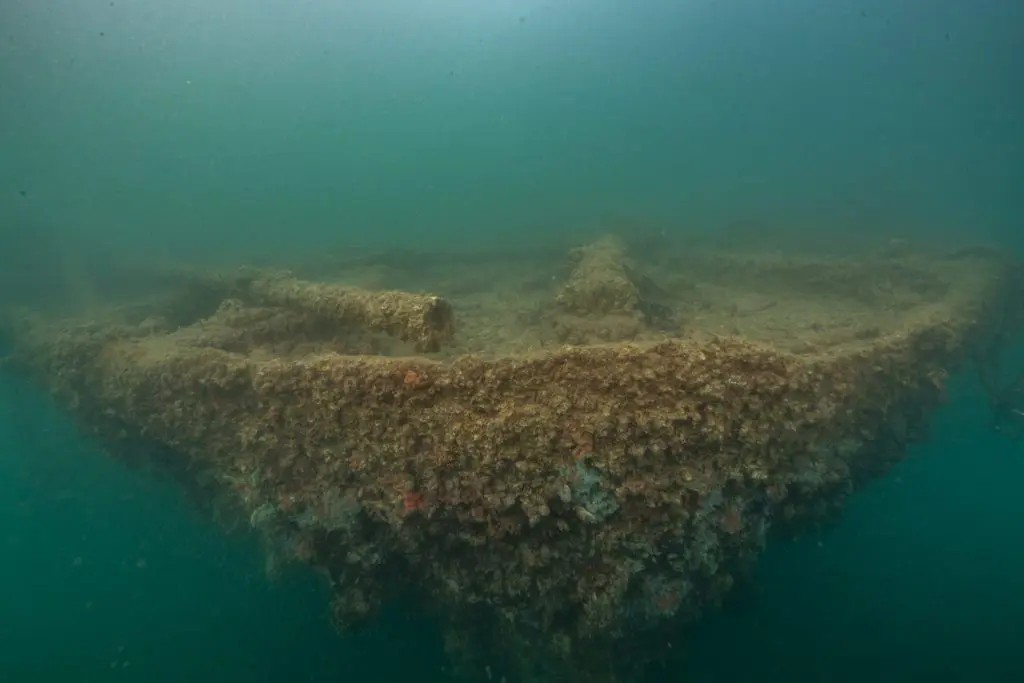
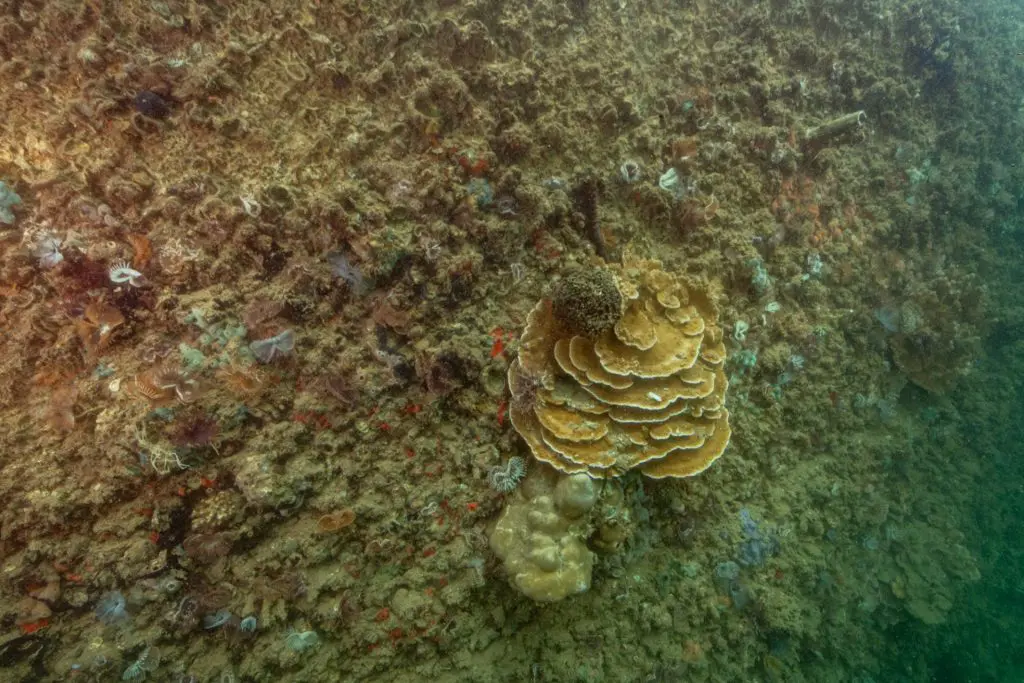
As I surfaced from my final dive, the faces of people on the memorial appeared above me. I thought about the visitors who would lean over the viewing well, searching the water below for some glimpse of the ship. They may never descend to it. But through nearly 100,000 photographs, they may one day be able to explore its form, encounter its details, and ask deeper questions about the history it holds.
A huge thank-you to Brett and Jim for inviting me along to support this project, sharing their expertise, and showing me around Pearl Harbor and the USS Arizona. Jim, thank you for the life lessons, the laughs, and the unforgettably Attentive prank. Brett, thank you for guiding me through such thoughtful dives on the USS Arizona, walking me through your post-production workflow, and sharing some of your approach to underwater photography. I am also grateful to Kelly Moore, who joined us for lunch, and to Mikey Kent, whom I met at the NOAA dive locker. As former NPS divers, they generously shared stories and insights from their own experiences, adding even more perspective to an already unforgettable week.