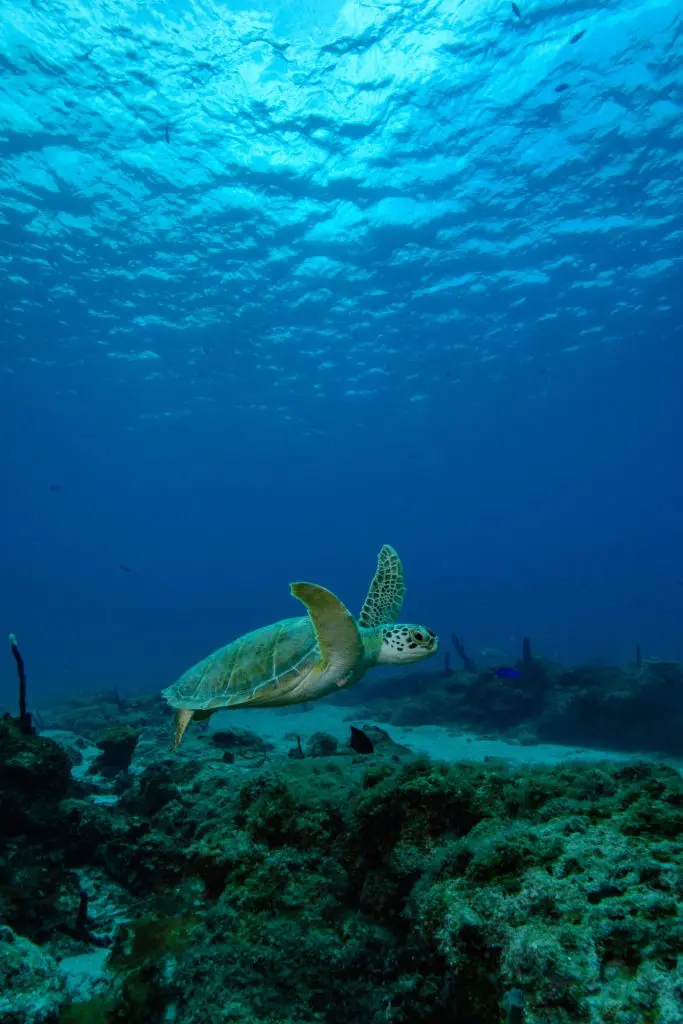
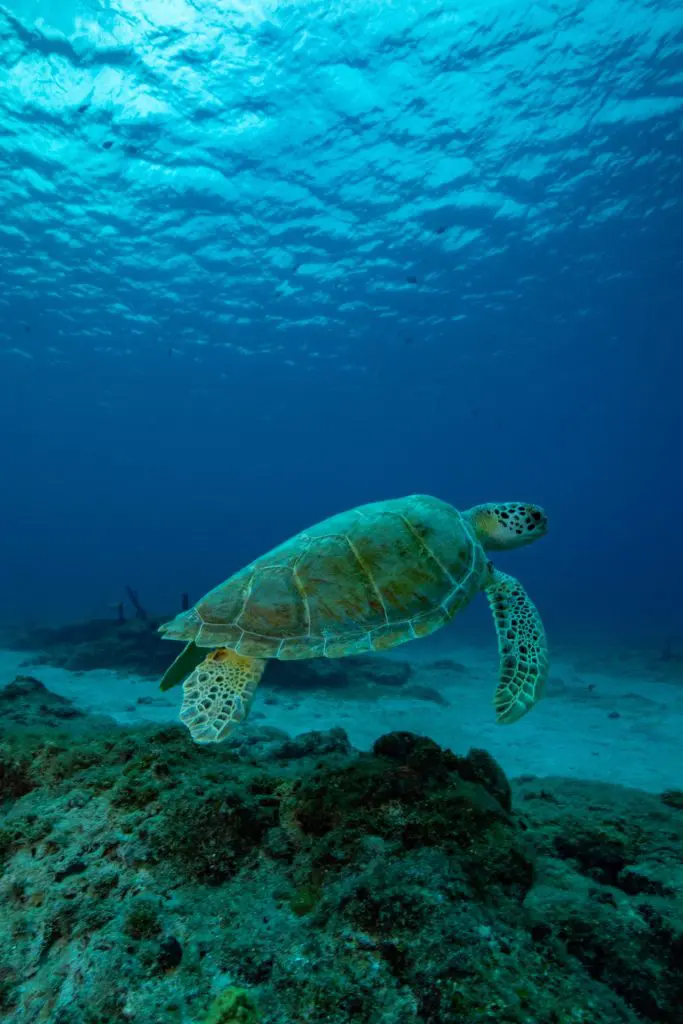
During my time in St. Croix, I explored the Christiansted National Historic Site, released 36 sea turtle hatchlings at Buck Island Reef National Monument, up-planted mangroves in Salt River Bay National Historical Park and Ecological Preserve, saw my first seahorse at the Frederiksted Pier, and swam what felt like several nautical miles to a magical wall dive at Cane Bay. Karl Teague served as my primary tour guide, above and below water, during this action-packed week.
The Frederiksted Pier
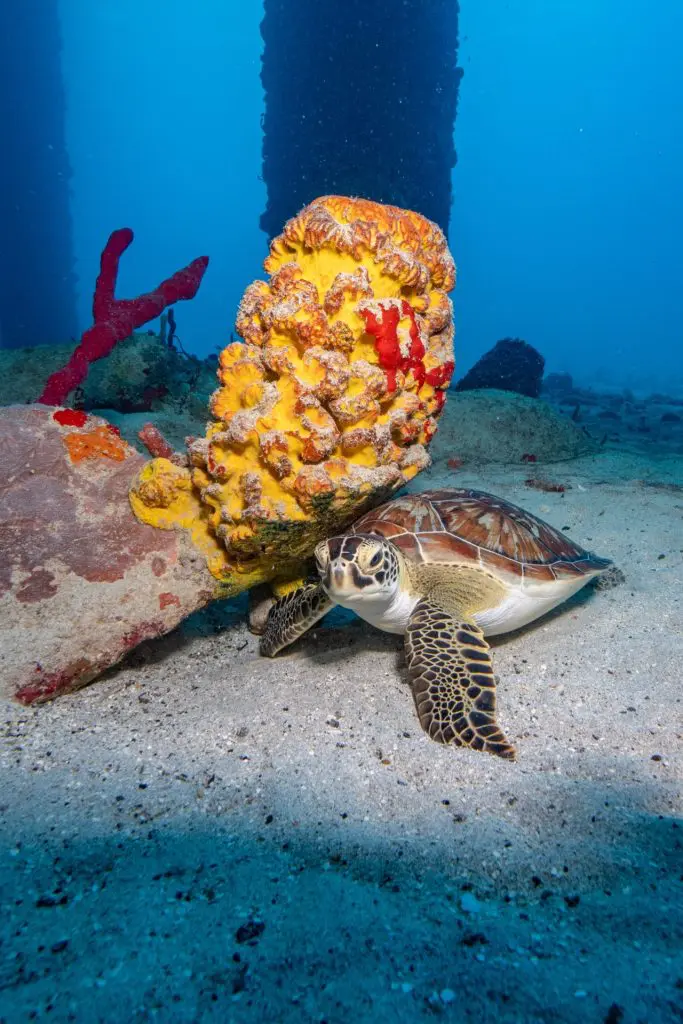
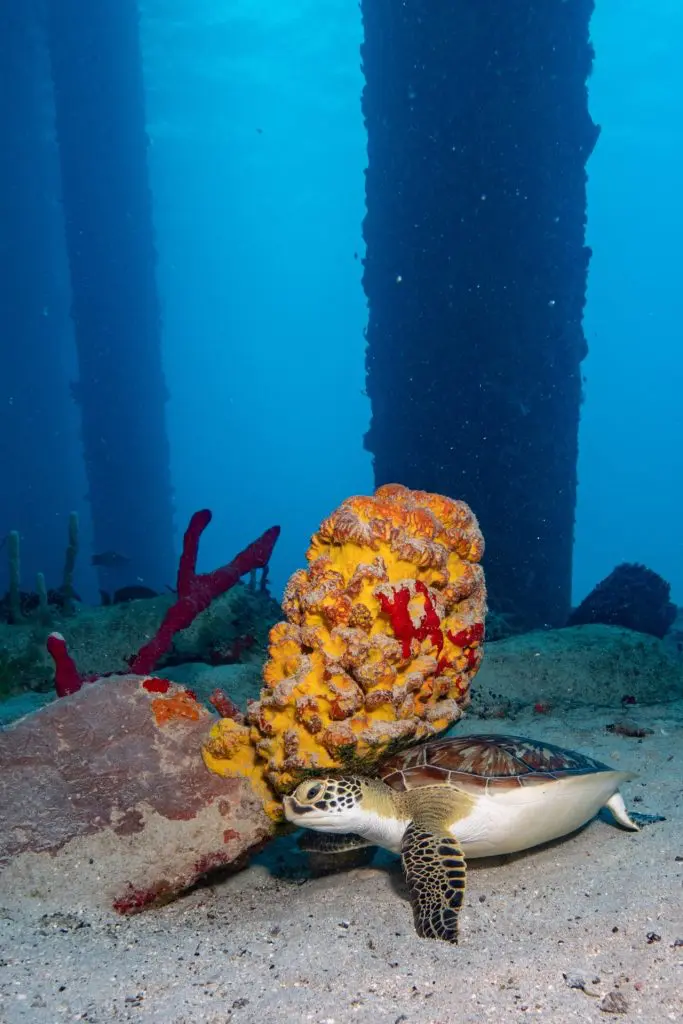
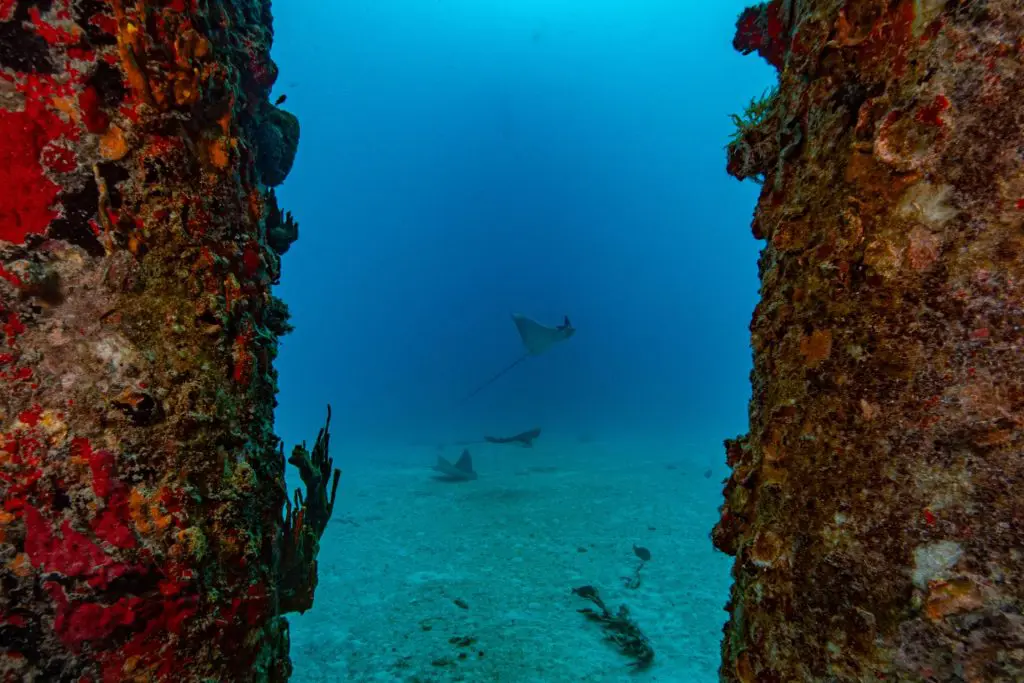
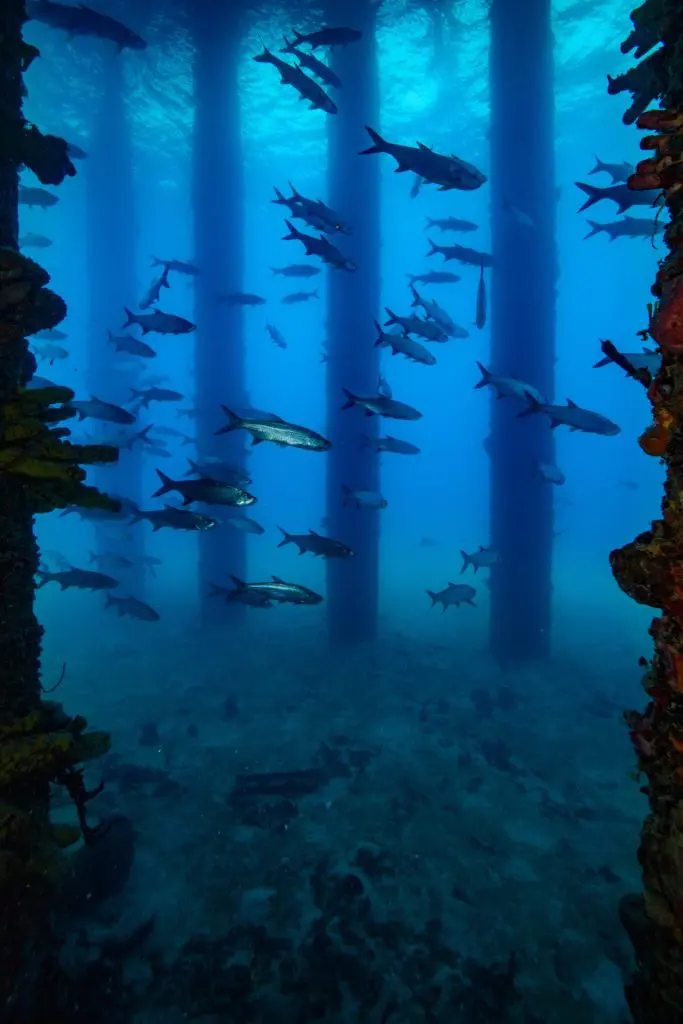
We started off strong with some fabulous dives at the Frederiksted Pier, where the pilings created a series of window frames, showcasing an expansive variety of marine life.
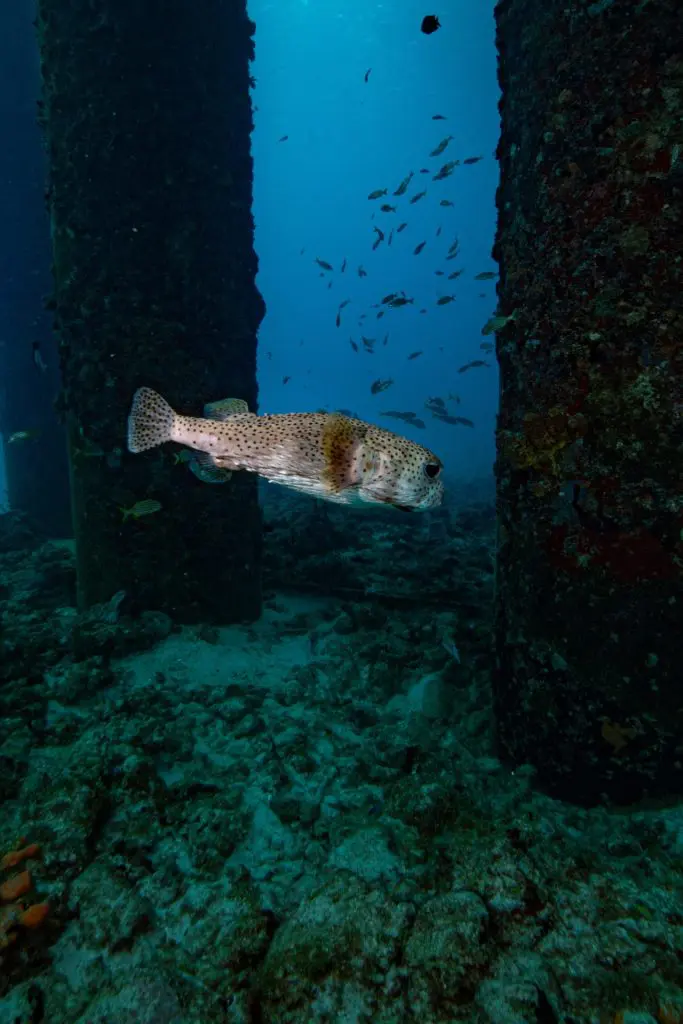
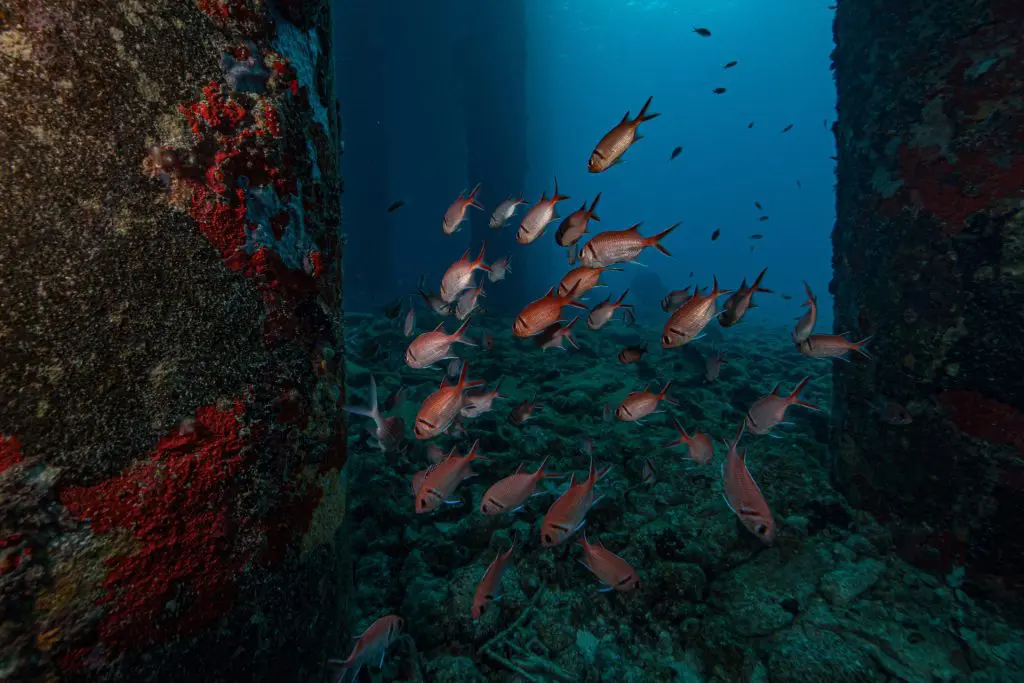
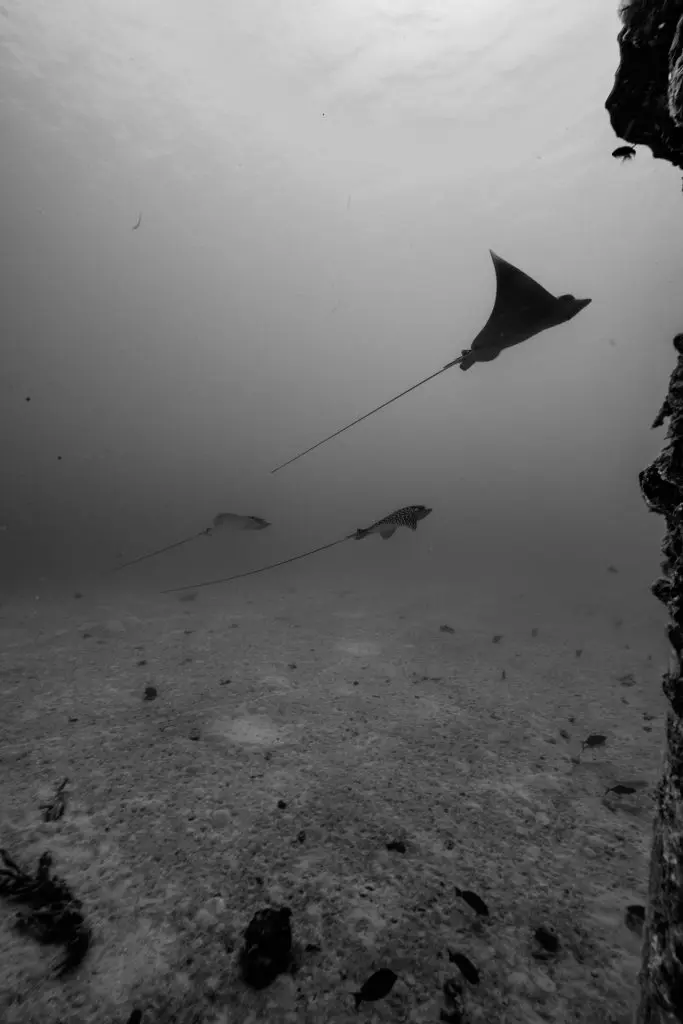
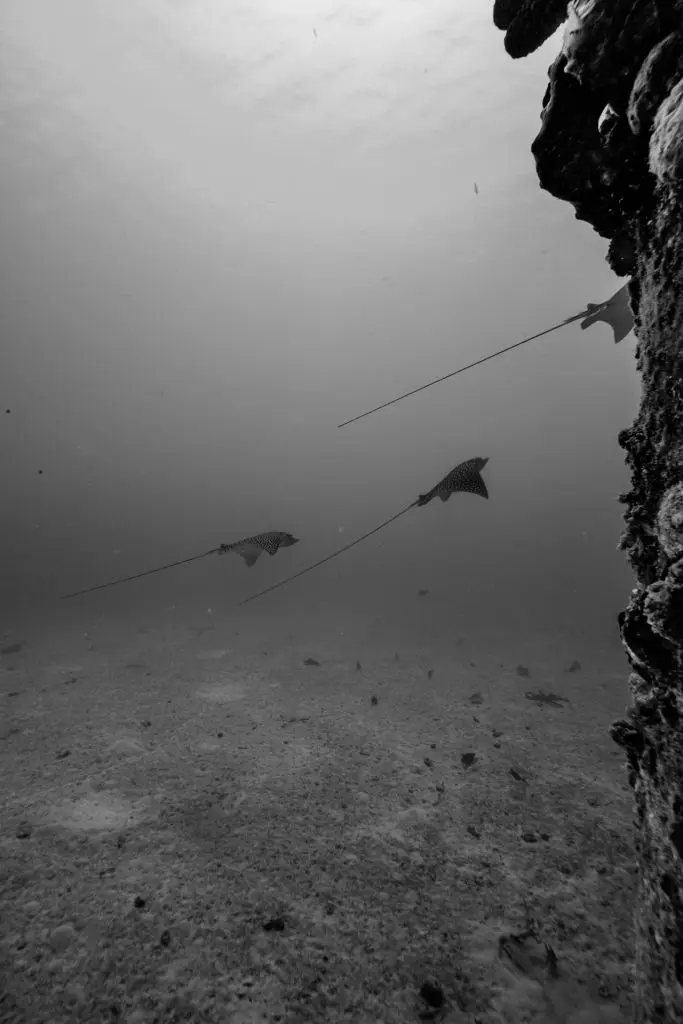
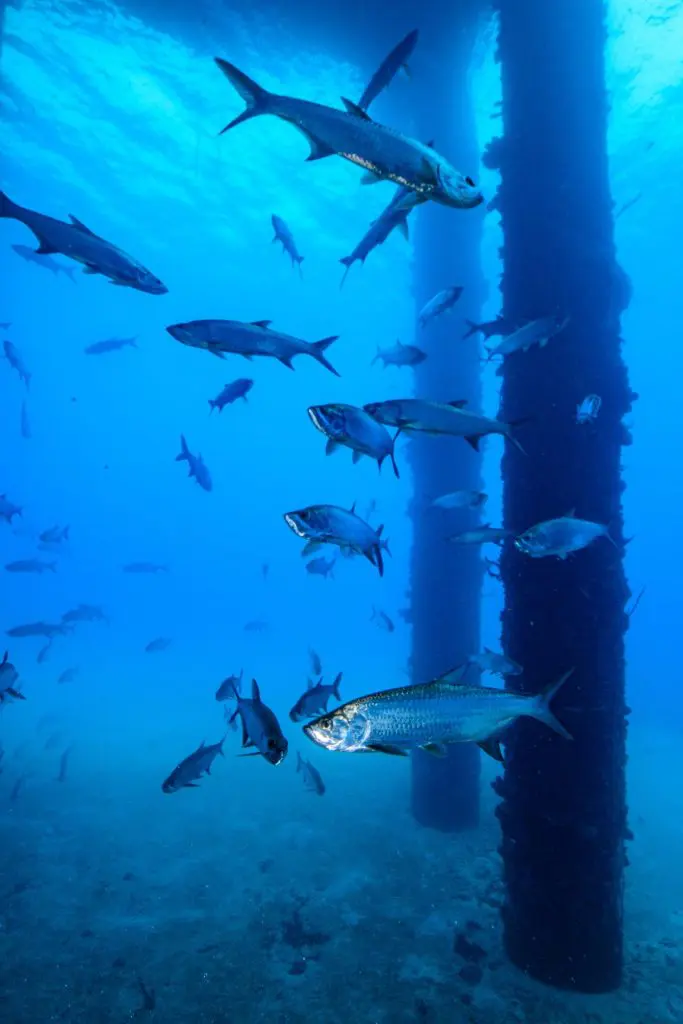
Through each one, something new appeared: sea turtles descending from the surface, a school of spotted eagle rays cruising past, and tarpon hovering around the far end of the pier.
Naturally, my camera battery died just in time for our second dive.
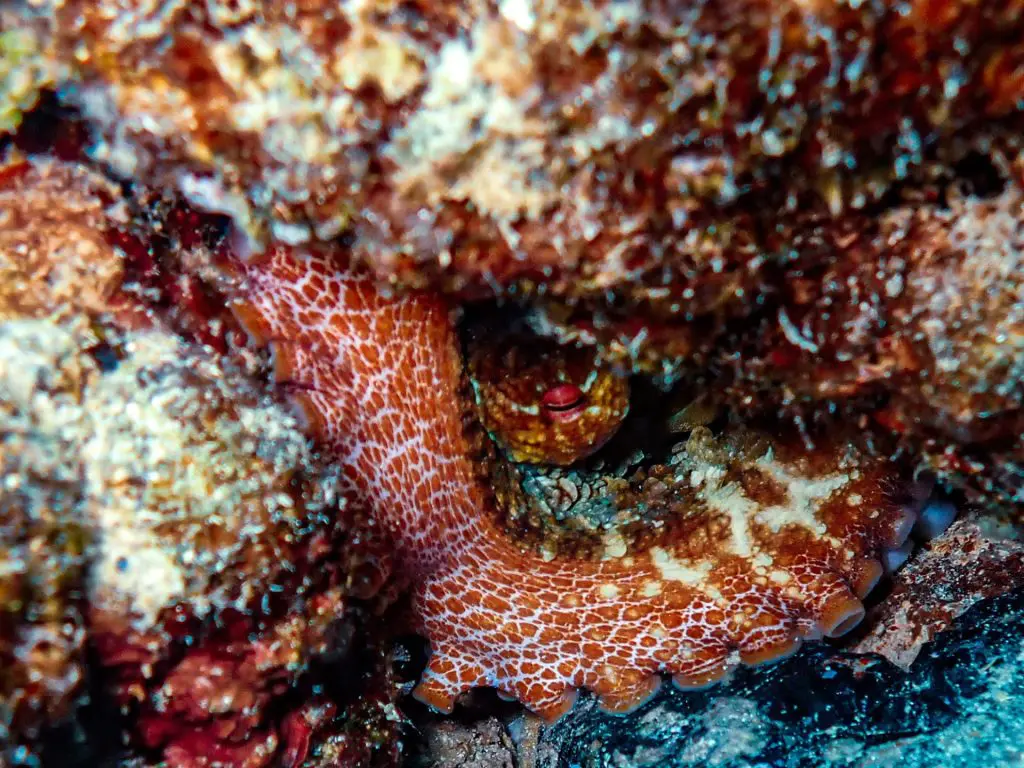
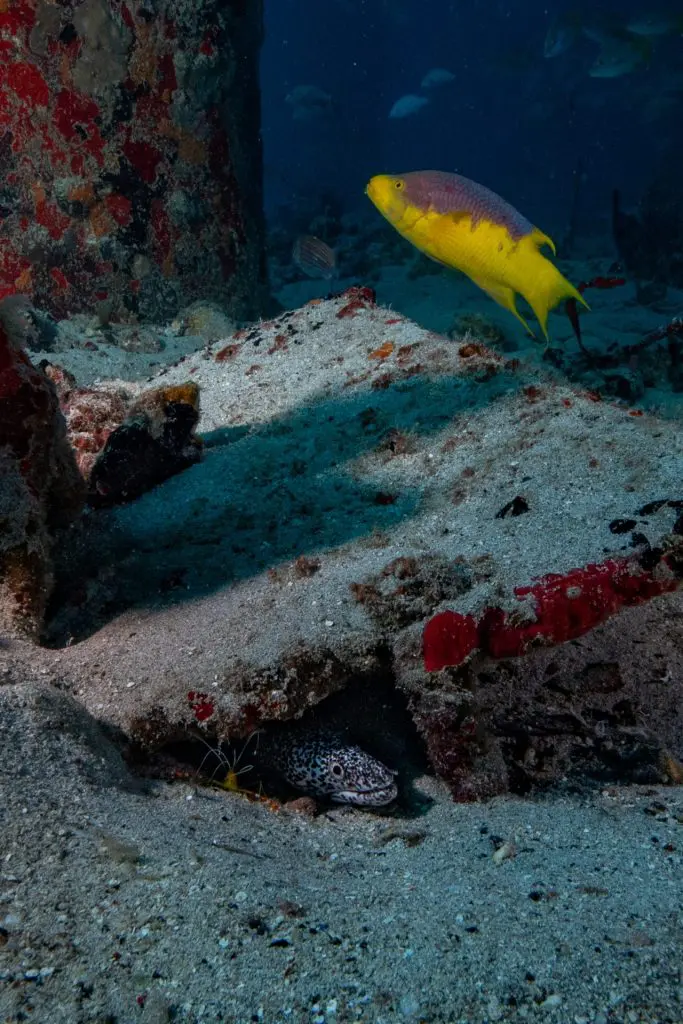
Karl lent me an Olympus TG-7, which gave me the chance to try macro photography for the first time. I have always loved looking closely at reef creatures, so macro photography was intriguing. The pilings and rocks were covered in life, and suddenly animals I swam past on the first dive became photographic subjects. We even found an octopus, which was already enough to make the dive successful in my book. There is no photograph. And then, toward the end of the dive, I saw a seahorse!
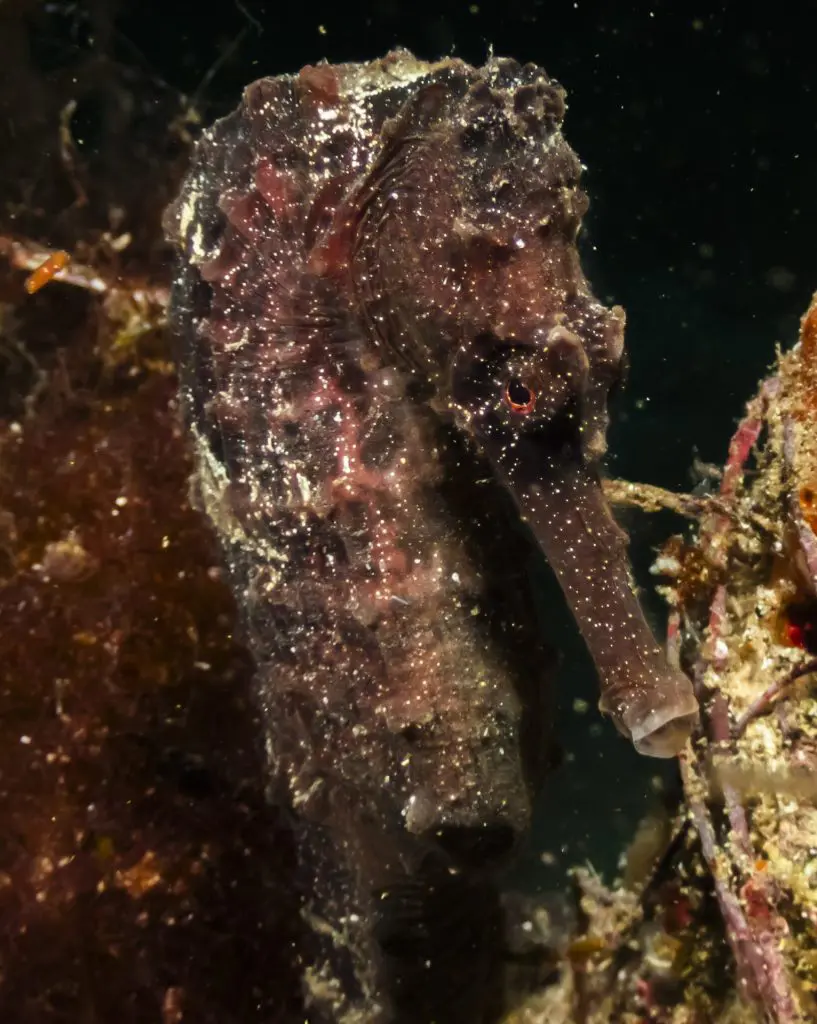
My seahorse excitement requires some explanation.
Years ago, I made a list of animals that I refuse to fully believe exist until I see them with my own eyes. This may sound ignorant. I prefer the term healthy skepticism.
First on the list: narwhals. Seriously…underwater unicorns? (Note: if anyone reading this can take me diving with narwhals, I am completely willing to have my worldview challenged.)
Second on the list: seahorses. I had always placed them somewhere in the category of “probably real, but suspiciously whimsical.” Tiny horses? Underwater? With curly tails? Thanks to Karl and Frederiksted Pier, I can now officially confirm that seahorses do, in fact, exist. And, they are extremely cool.
Another animal that probably would have landed on my list had I known it existed was the frogfish.
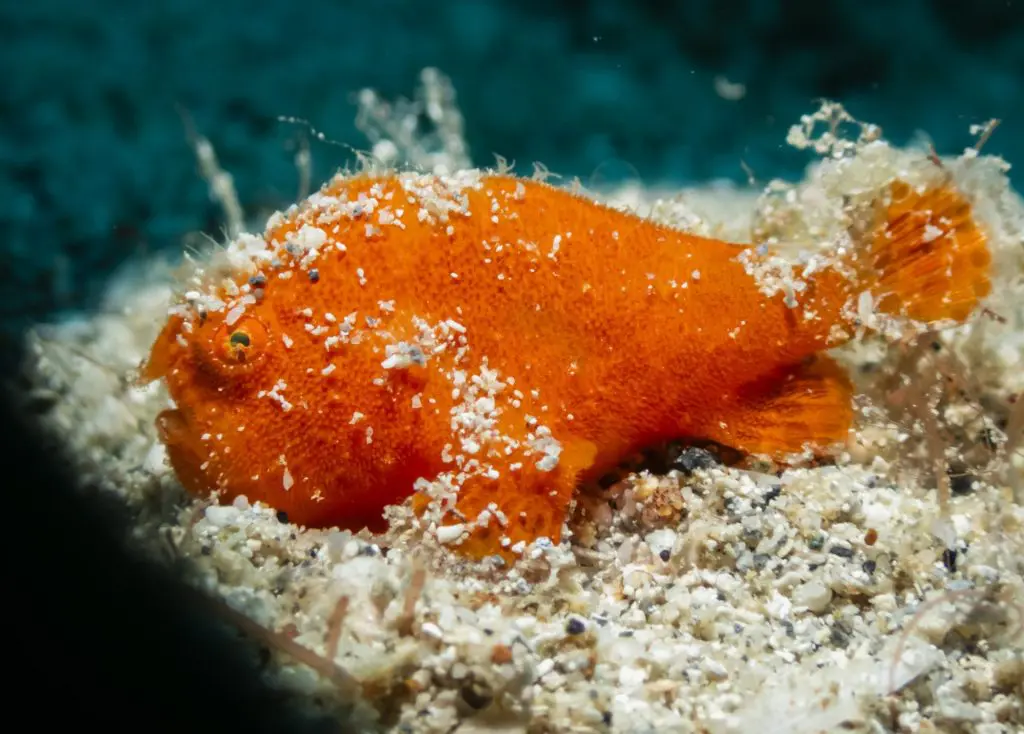
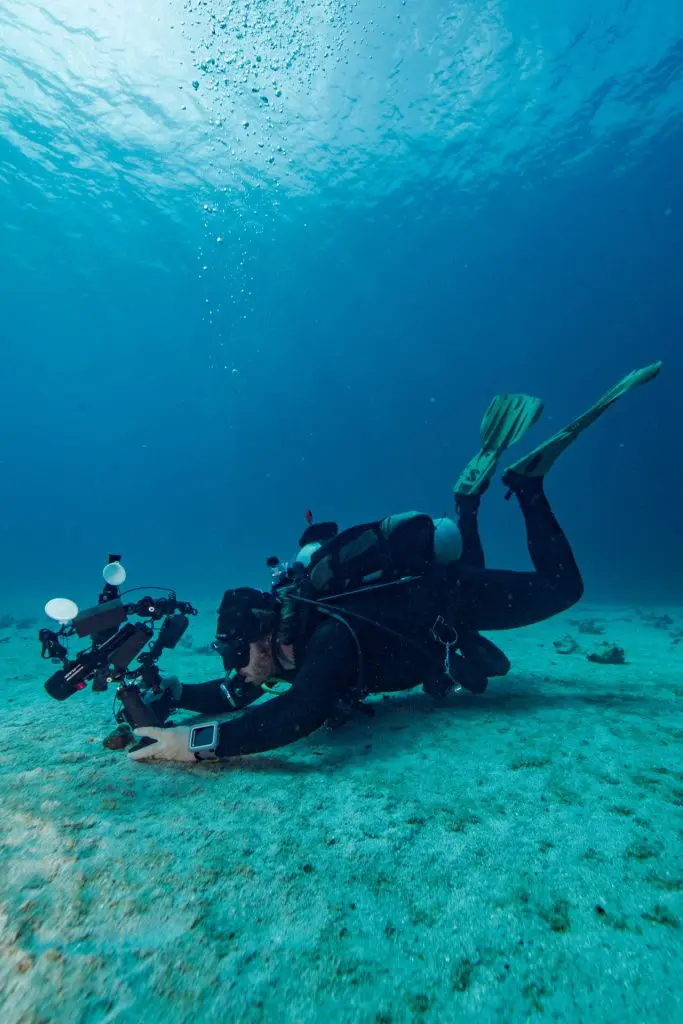
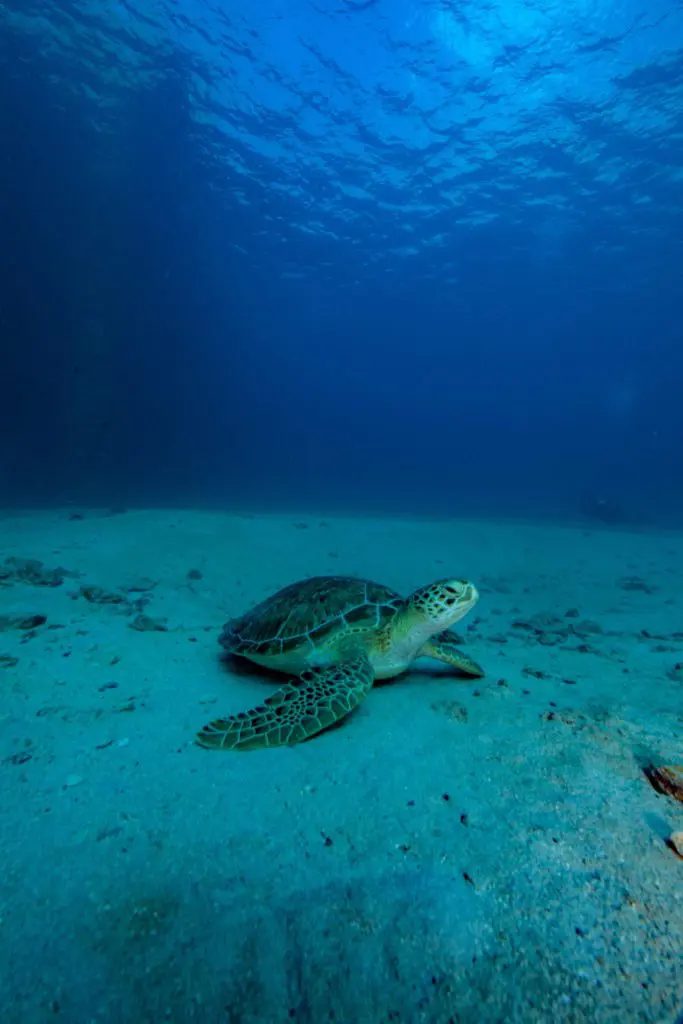
On a return dive to The Pier, Karl spent a considerable amount of time photographing what, from my perspective, looked like a small orange speck of dust. While he remained completely motionless, deeply committed to this speck, I explored around him and photographed a green sea turtle. Eventually, curiosity got the better of me, so I swam back over to determine what could have held his attention for so long.
Perched in front of him was a tiny orange blob. Once Karl pointed it out, I was very excited to see it. Frogfish are bizarre, wonderfully camouflaged little animals, and I admired it for several minutes before returning to the friendly turtle, whom I could see without squinting.
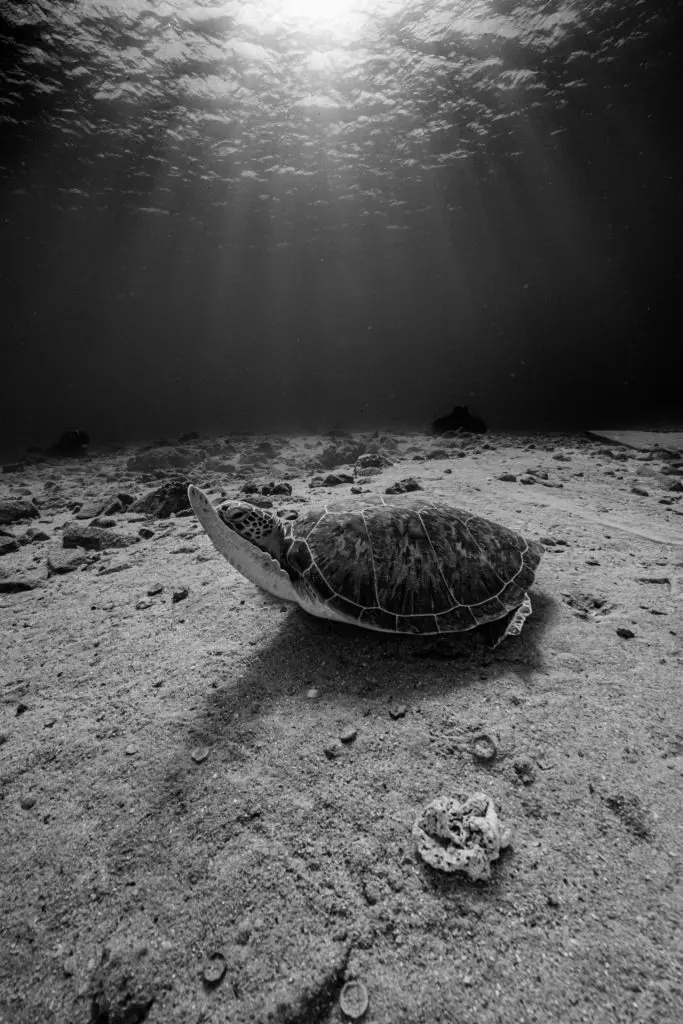
Just minutes after leaving the frogfish that was approximately the size of punctuation, three spotted eagle rays swam by. I was astonished by the amount of biodiversity at the Frederiksted Pier.
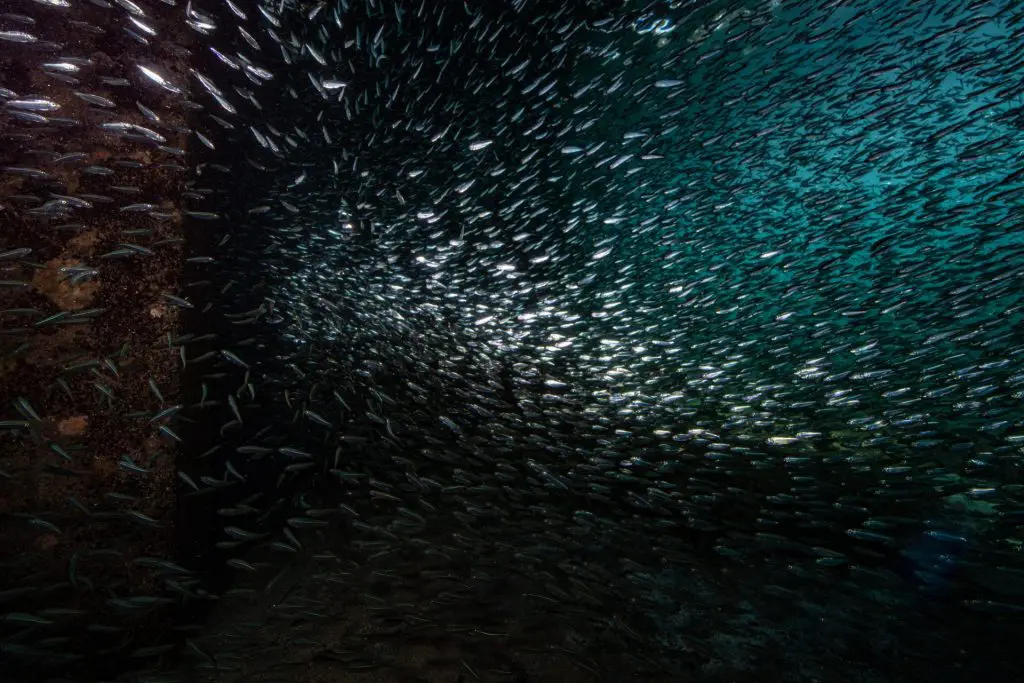
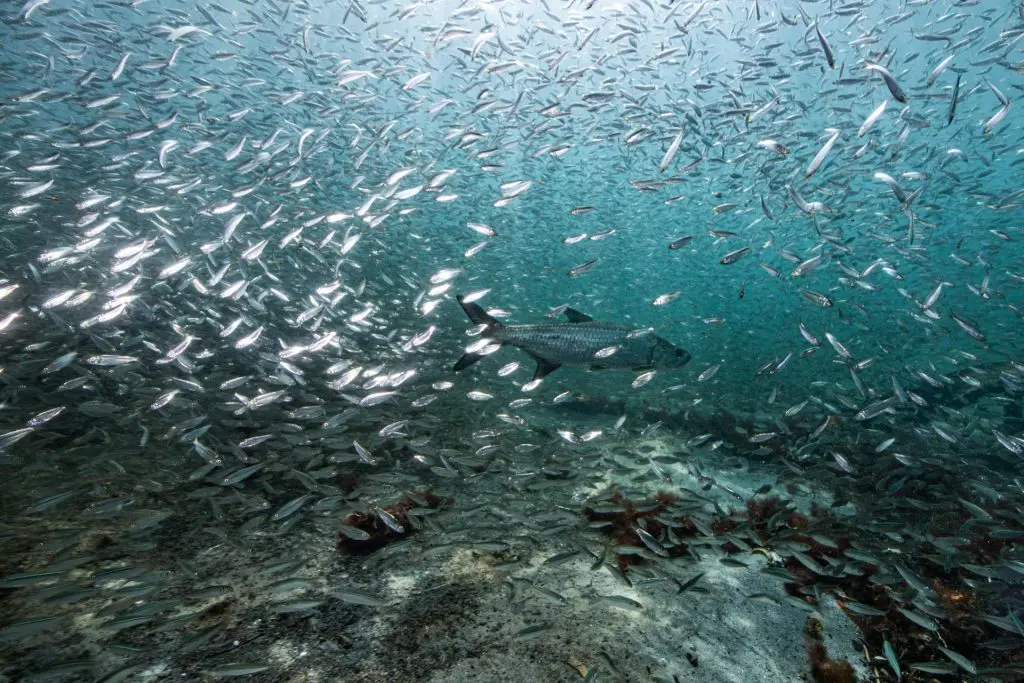
As we wrapped up our dive and headed back toward shore, we found ourselves engulfed by a bait ball. Thousands of tiny silver fish surrounded us, flashing in the light from my strobes as they moved together like one enormous, shifting cloud. Earlier, at the opposite end of the pier, we had been swimming among massive tarpon; now we were surrounded by their much smaller, equally silver counterparts, and I could only imagine the jealousy the tarpon would have of the buffet we were inside of.
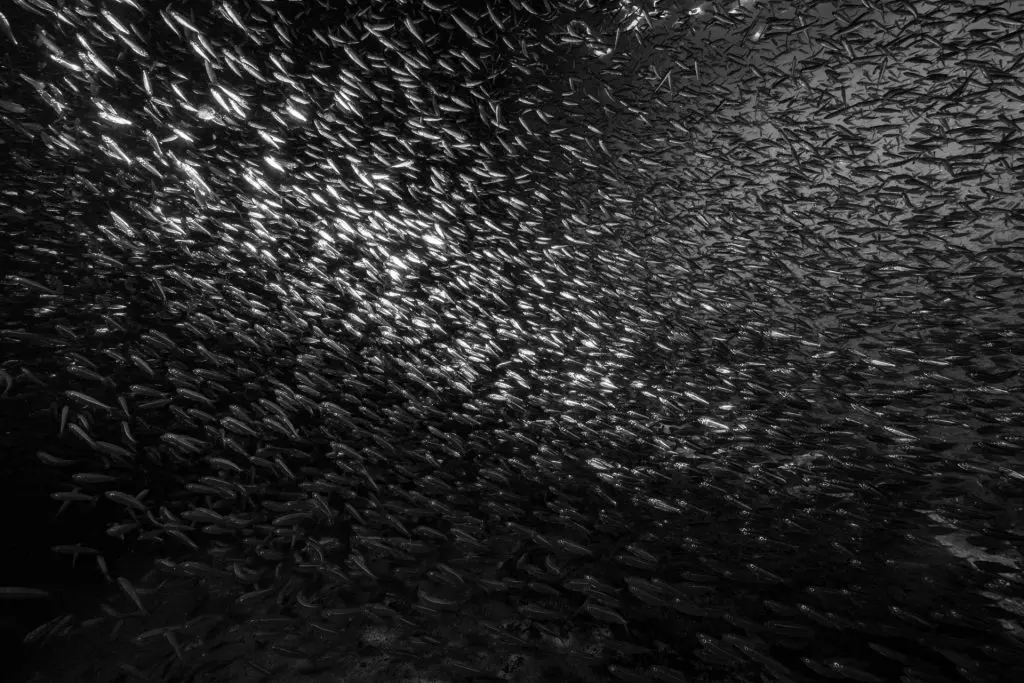
Then, the bait ball split. The fish peeled apart in perfect unison, opening a passage through the middle just as a tarpon glided between them. A few stragglers seemed to panic, darting frantically from one side to the other before the school closed ranks again behind it. Watching thousands of individual fish divide and collapse back into a single moving mass, all while trying to stay one step ahead of a hungry tarpon, was mesmerizing.
That dive lasted 100 minutes—the longest dive I have completed to date.
To complement the diving, I spent time exploring and working in St. Croix’s parks above sea level.
Christiansted National Historic Site
The Christiansted National Historic Site serves as the headquarters for the National Parks of St. Croix. The centerpiece is Fort Christiansvaern, the bright yellow-and-green fort overlooking Christiansted Harbor. I was lucky enough to get my own private history tour from Michelle and Alyson, two interpretation rangers who entertained what was probably an unreasonable number of questions.
For some context, Christiansted became the center of Danish colonial government and trade on St. Croix after the Danish West India and Guinea Company purchased the island from France in 1733. Fort Christiansvaern was completed in 1749 to protect Christiansted’s harbor and the commercial interests built around it. Standing on the upper level of the fort, with cannons still pointed toward the harbor, made its defensive purpose easy to imagine.
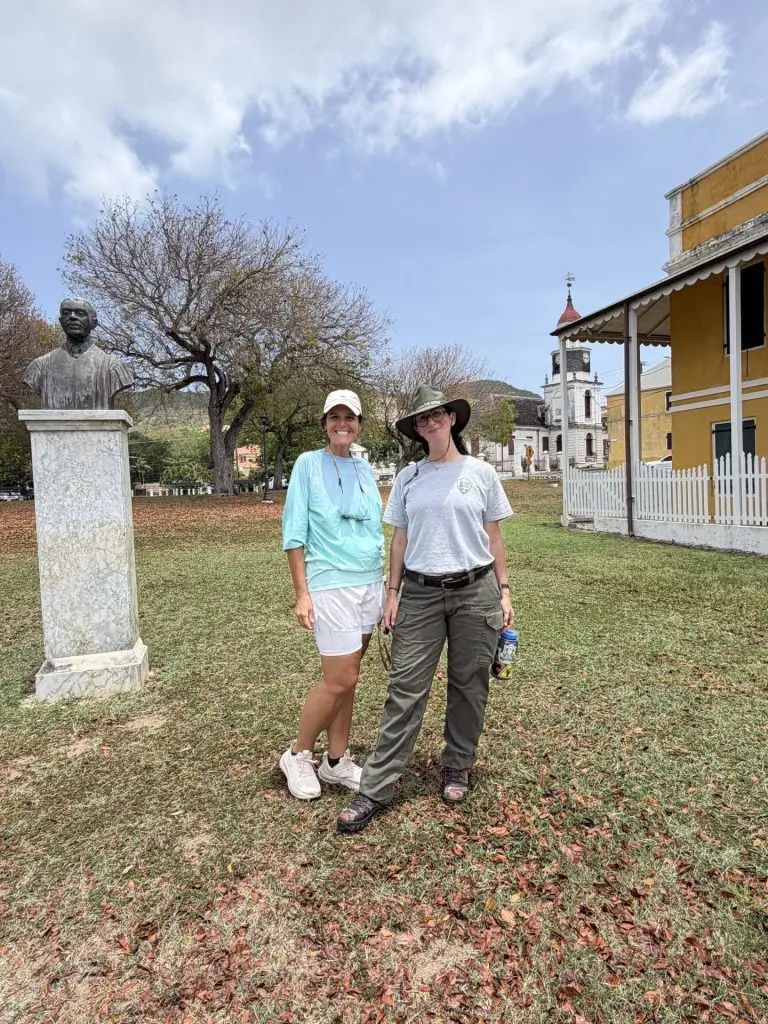
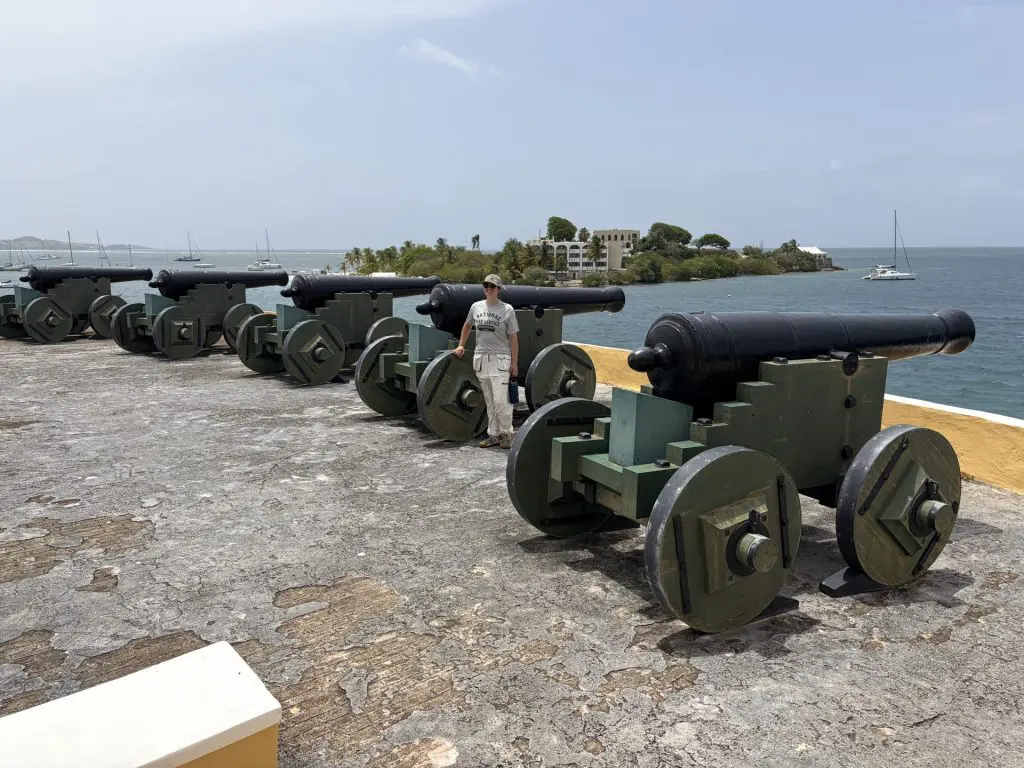
Fort Christiansvaern was only one part of the larger system that made Christiansted a center of colonial trade. Michelle and Alyson explained the significance of each structure. The nearby Customs House processed the goods moving through the colony and managed immigration matters. The Scale House was where exports and imports were weighed. Sugar cane, molasses, rum, cotton, and tropical hardwoods flowed outward; building materials, household goods, agricultural supplies, and other imports flowed in.
And the NPS dive locker was located in the fort’s old stable yard. I enjoyed this fact immensely. Something was appealing about loading scuba tanks beside an eighteenth-century fort before heading out to work.
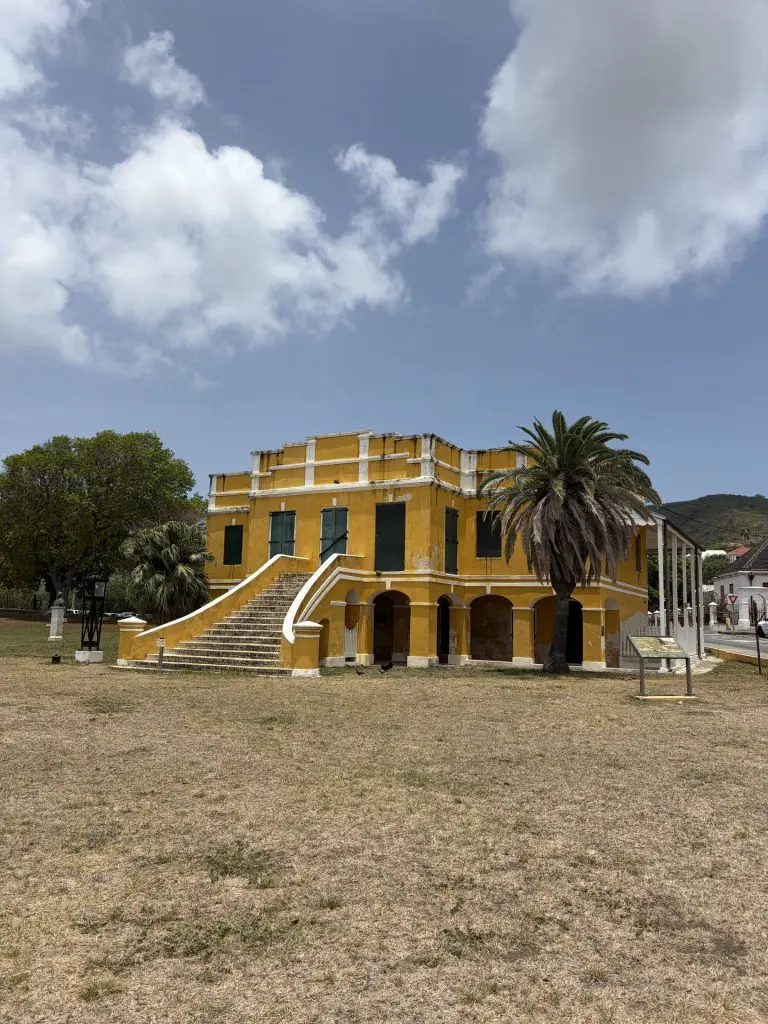
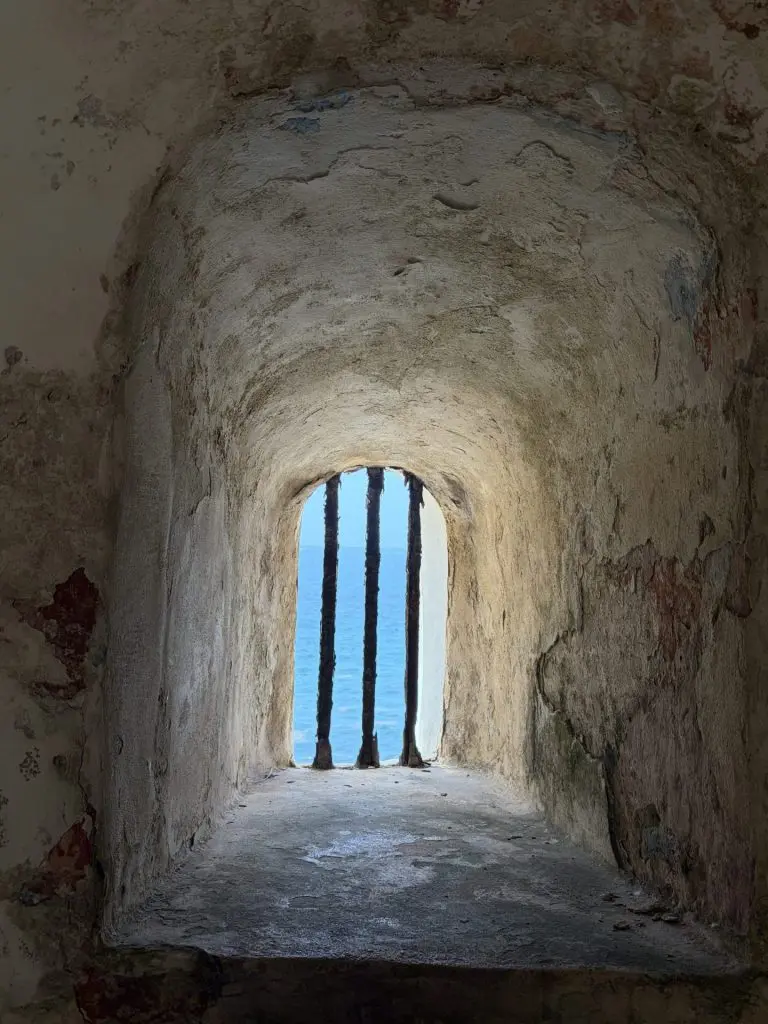
Christiansted’s fort showed me a snapshot of what the National Park Service works to preserve: the layered human history embedded in a place. Buck Island and Salt River completed the picture, demonstrating how that same responsibility of preservation extends to reefs, wildlife, and the entire watershed. Rather than feeling like separate kinds of preservation, the three parks made clear how closely St. Croix’s cultural and natural landscapes are intertwined.
Buck Island Reef National Monument
I loved my visit to Buck Island with Karl, Larissa, Michelle, Alyson, and a couple of students from the Youth Conservation Corps, or YCC. Kristin Ewen, Karl, and the Buck Island dive team have been working on coral disease and restoration projects around the island, and I had hoped to join them underwater. Unfortunately, the weather had other plans, but this did not stop me from enjoying the nature that Buck Island has to offer, and I did not need scuba gear to have one of my favorite days in the Virgin Islands.
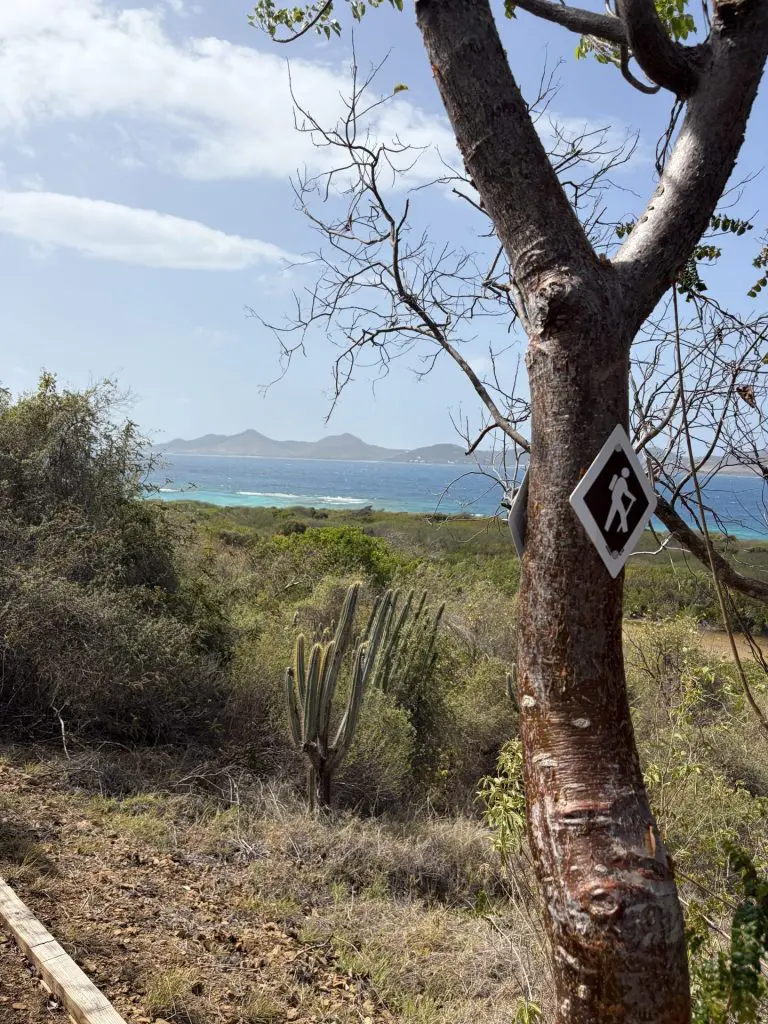
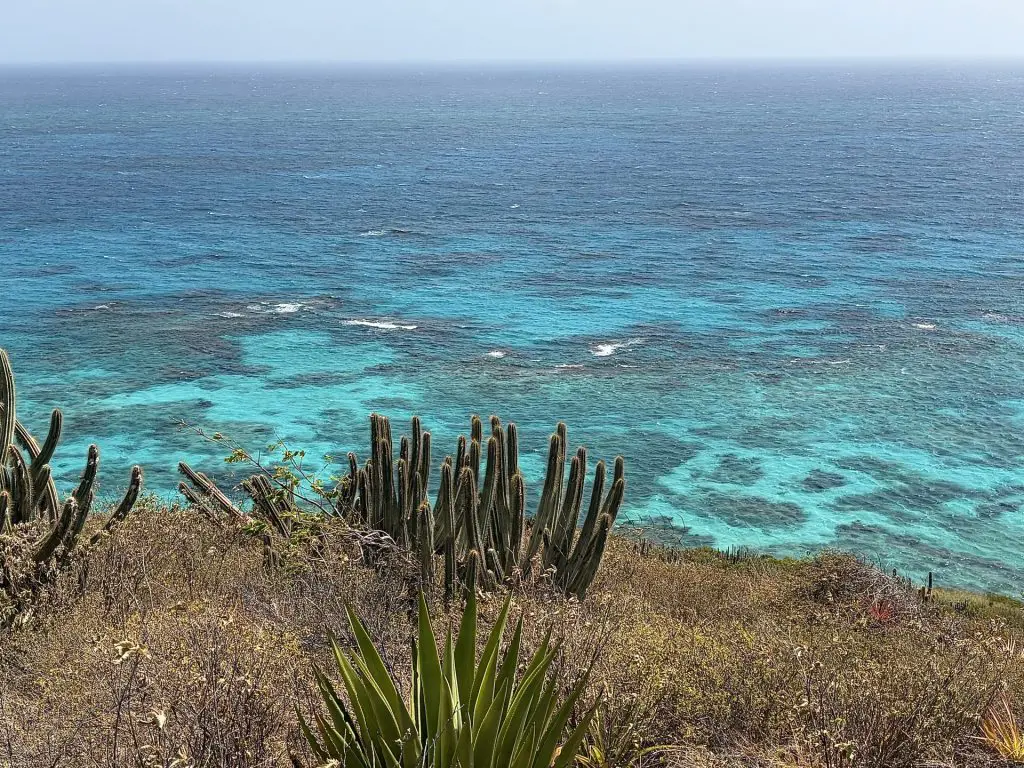
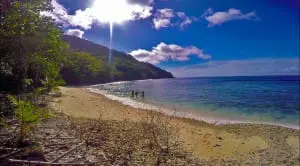
We started by walking the eastern beach, conducting sea turtle nesting surveys with a great view of St. Croix, then hiked to the top of the island, where the view kept getting better as I got sweatier. Along the hike, Karl pointed out interesting flora and fauna. From the top, the view was insane. I could see the reef clearly through the bright turquoise water, and I loved how the ocean shades darkened with depth.
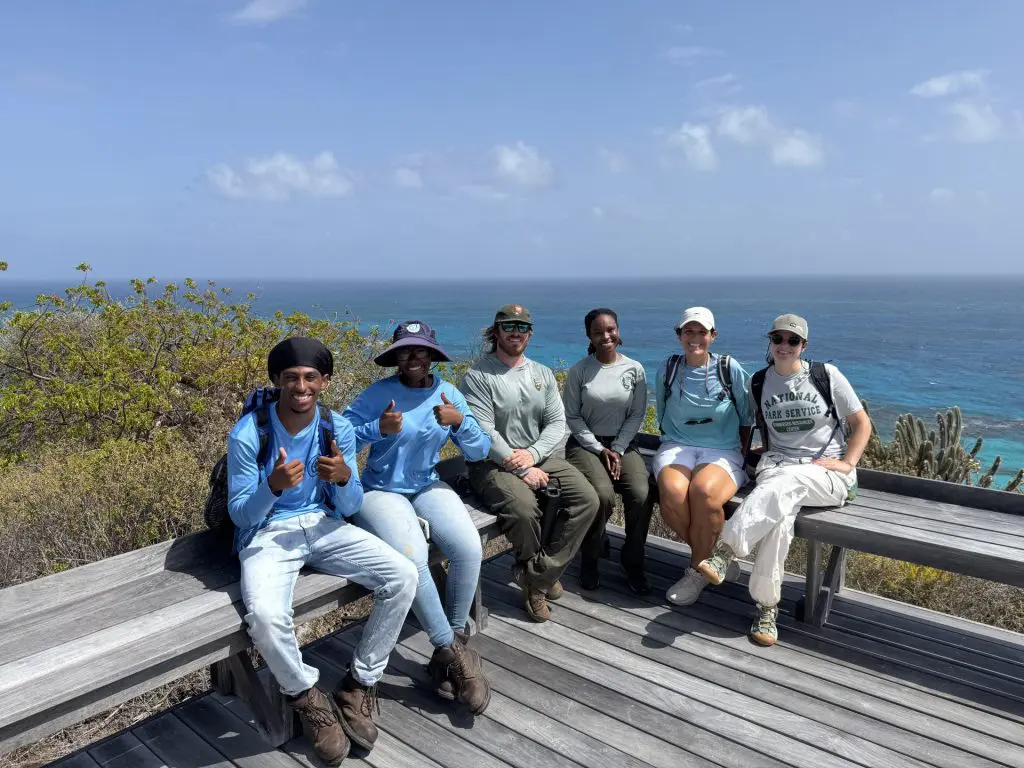
Before heading back, we had one last job: excavating a sea turtle nest. Nest excavations are conducted several days after a nest begins hatching so researchers can determine its success. Empty shells and unhatched eggs are counted and recorded, and any hatchlings that did not emerge are documented as well. This work was conducted for permitted sea turtle research (Permit #31045106-1).
Our nest had hatched about five days earlier, so we anticipated that the turtles who had survived were already long gone. Anything left behind would most likely be eggs that never hatched or hatchlings that had not survived.
When we uncovered the nest we were happily surprised to find 36 very much alive, tiny, adorable, and incredibly impatient hatchlings, along with 96 hatched eggs of turtles that had already left. After spending five days underground, the hatchlings had absolutely no interest in waiting another fifteen minutes for us to finish collecting data.
We tried to corral the hatchlings while more kept surfacing from the nest. The small pile of turtles became a larger pile of turtles, each one determined to begin its journey to the ocean immediately, regardless of whether the humans with clipboards were ready.
Once the nest data were collected, we brought the hatchlings closer to the shoreline and released them onto the sand.
I had imagined this part differently.
In my head, each hatchling would dramatically reach the water, recognize its destiny, and glide gracefully into the Caribbean.
The first part wasn’t far off. The tiny hatchlings flopped their flippers and made their way toward the water’s edge with determination. Guided by instinct and the environmental cues that orient them toward the sea, they knew exactly where they were headed. Reaching the ocean was their first checkpoint. Gracefulness, however, was not part of the assignment. The first small wave hit them, and several tumbled straight back onto the beach.
They tried again. Another wave. Back onto the sand.
It turns out that entering the ocean for the first time involves considerably more trial and error than Disney’s Moana had led me to believe.
Eventually, all 36 hatchlings made it off the beach and disappeared into the ocean.
Sea turtle survival statistics make that moment humbling. Estimates suggest that only about one in 1,000 to one in 10,000 hatchlings survive to adulthood. Nonetheless, the first step of making it to adulthood is leaving the nest and making it to the ocean, so getting the hatchlings, who otherwise would likely have never escaped their nest, to the ocean felt significant. Maybe one of our 36 will be the one in a thousand.
On our boat ride back, we were fortunate enough to witness two green sea turtles making another batch of future hatchlings…a very full-circle day!
After hatchlings came saplings.
Salt River Bay National Historic Park & Ecological Preserve
I spent a day working with Kristin at Salt River, up-potting native trees that will eventually be out-planted in restoration areas. We worked alongside wonderful YCC students, potting red mangroves along with some black mangroves, sea grape, and other native species.
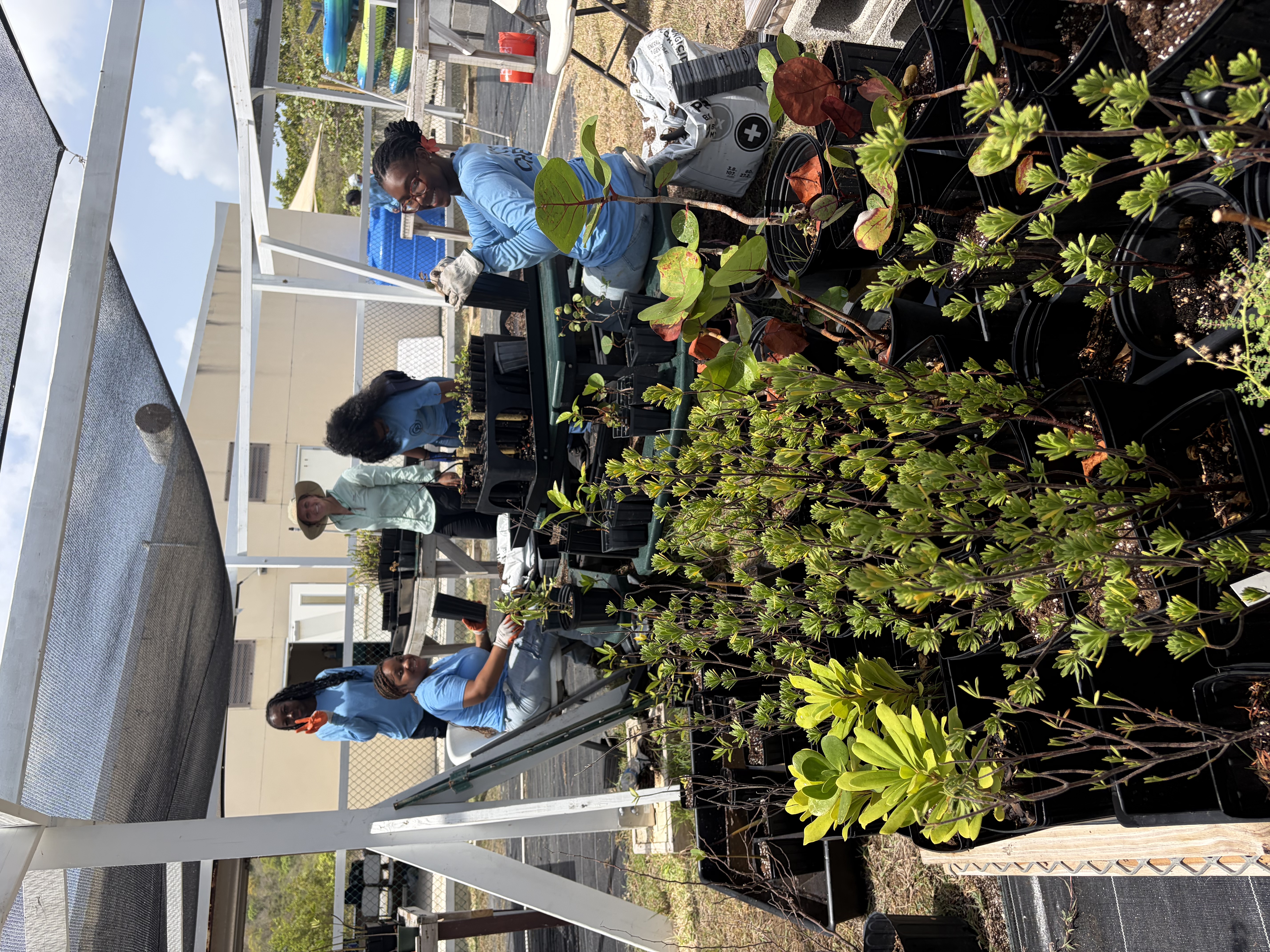
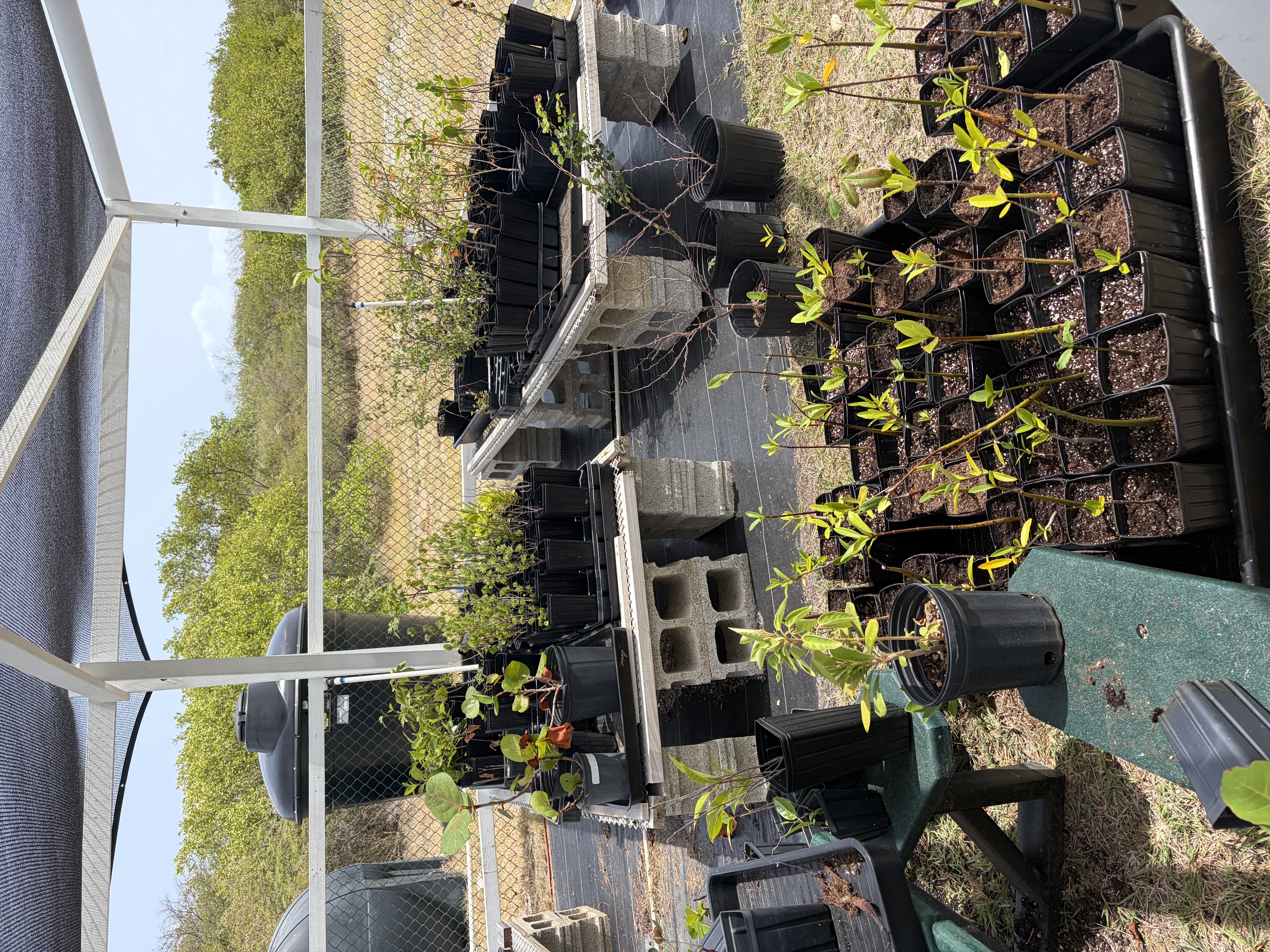
Kristin plans to outplant the trees with local school groups in the fall, and it felt particularly meaningful to contribute to a project that will continue growing, quite literally, after I leave.
From thirty-six hatchlings to dozens of saplings, St. Croix gave me the chance to work with very small living things whose futures stretched far beyond the limited time I spent with them. I had also hoped to experience another side of Salt River, underwater, but the Caribbean Sea had other plans. Karl and I took the NPS boat out toward one of the park’s dive sites, but heavy surface swell, poor conditions, and the lack of a mooring forced us to turn around. Rather than surrender the dive day entirely, we drove to Cane Bay for a shore dive.
Cane Bay
I use the term ‘shore dive’ somewhat generously. Technically, yes, we entered the water from shore. But the surface swim that followed felt more like the swimming leg of an Ironman triathlon. Around the time I began to suspect we were simply swimming to another Caribbean island, we reached the drop point and descended, and the swim immediately became worth it. Sand chutes cut between coral gardens before the reef dropped away into the blue along the Cane Bay Wall. Parts of the wall descend thousands of feet, creating the strange sensation of hovering beside a landscape that simply disappears beneath you.
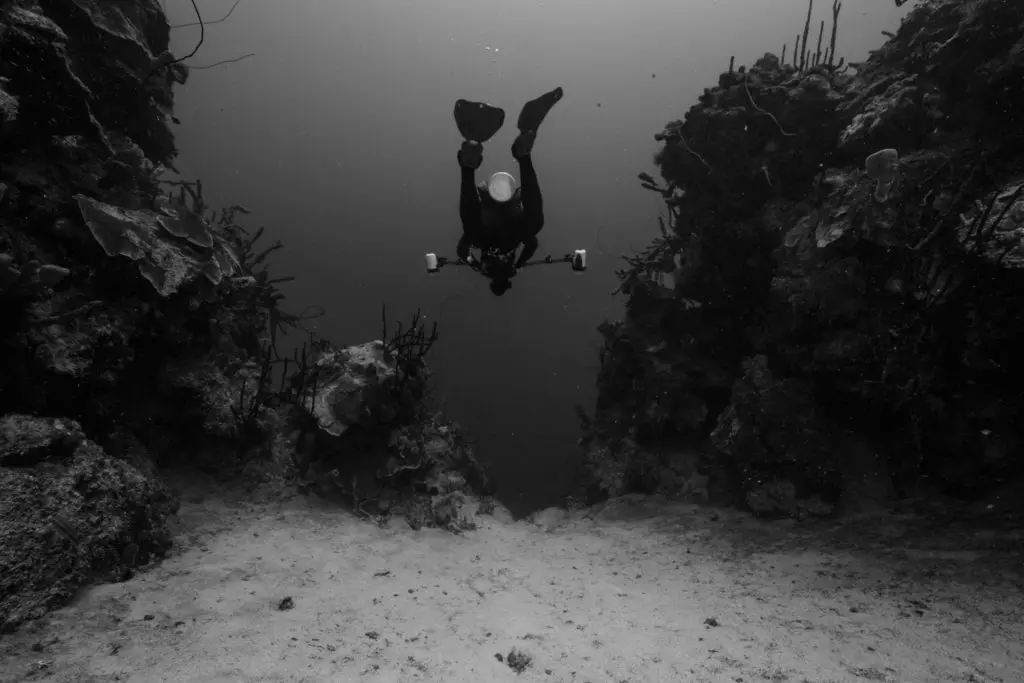
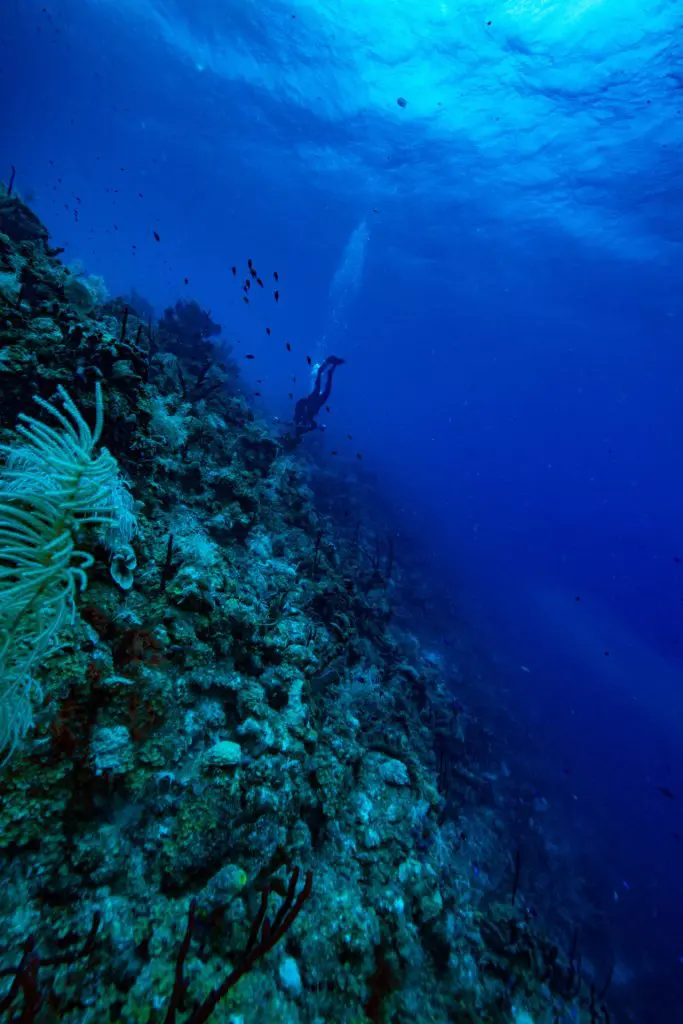
A few Caribbean reef sharks appeared out in the blue. I promise, they look significantly farther away in my wide-angle photographs than they actually were.
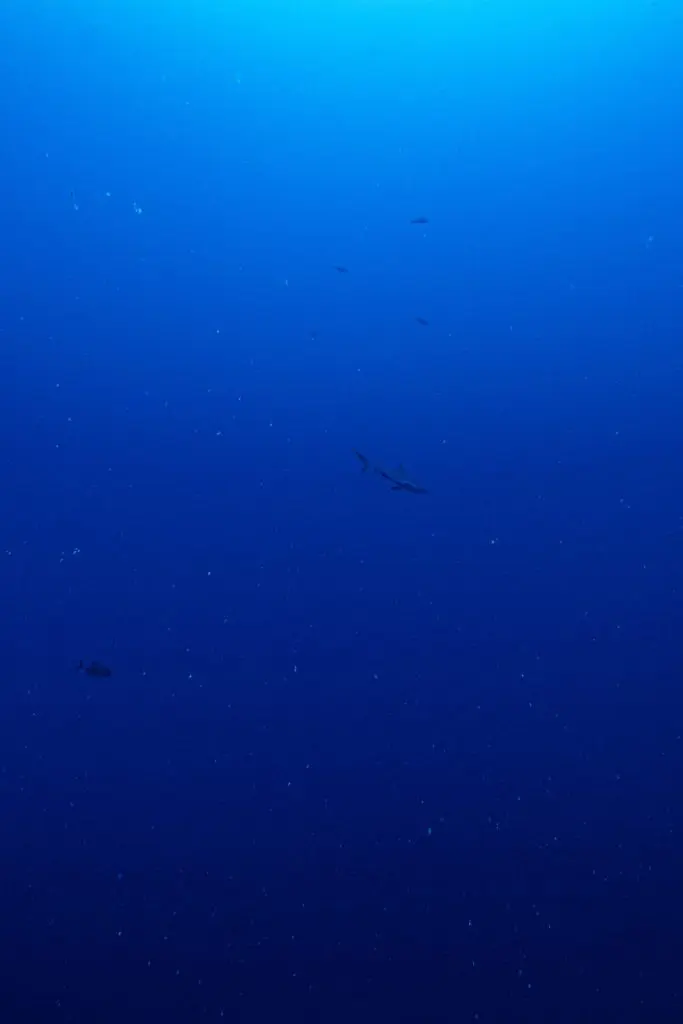
After spending time on reefs from close range, there was something exhilarating about looking outward into that huge expanse of blue water and seeing sharks materialize at the edge of visibility.
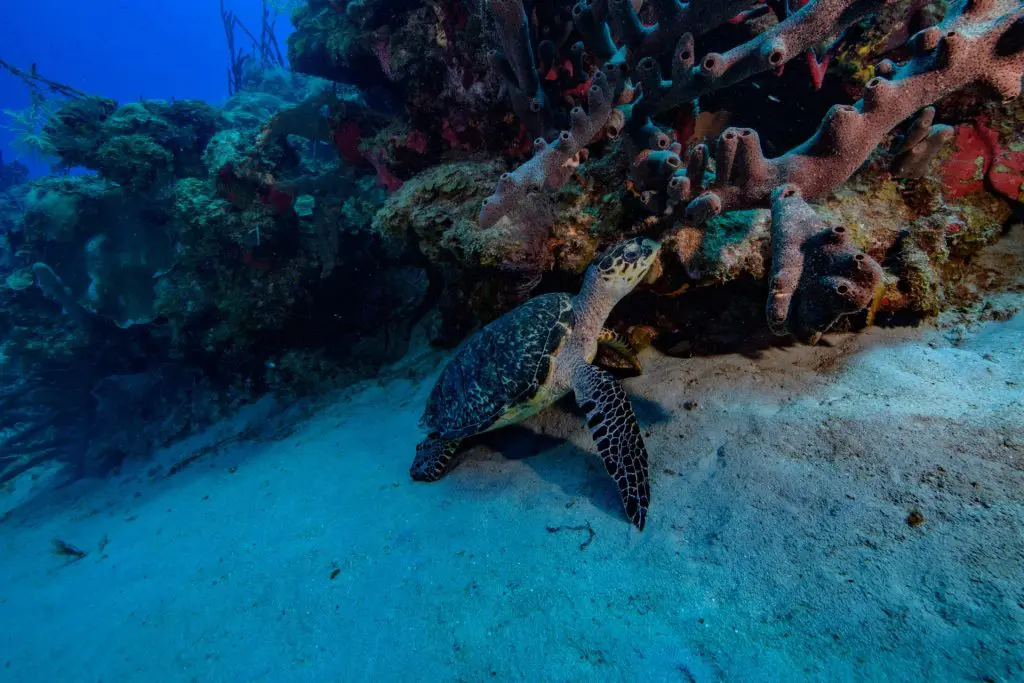
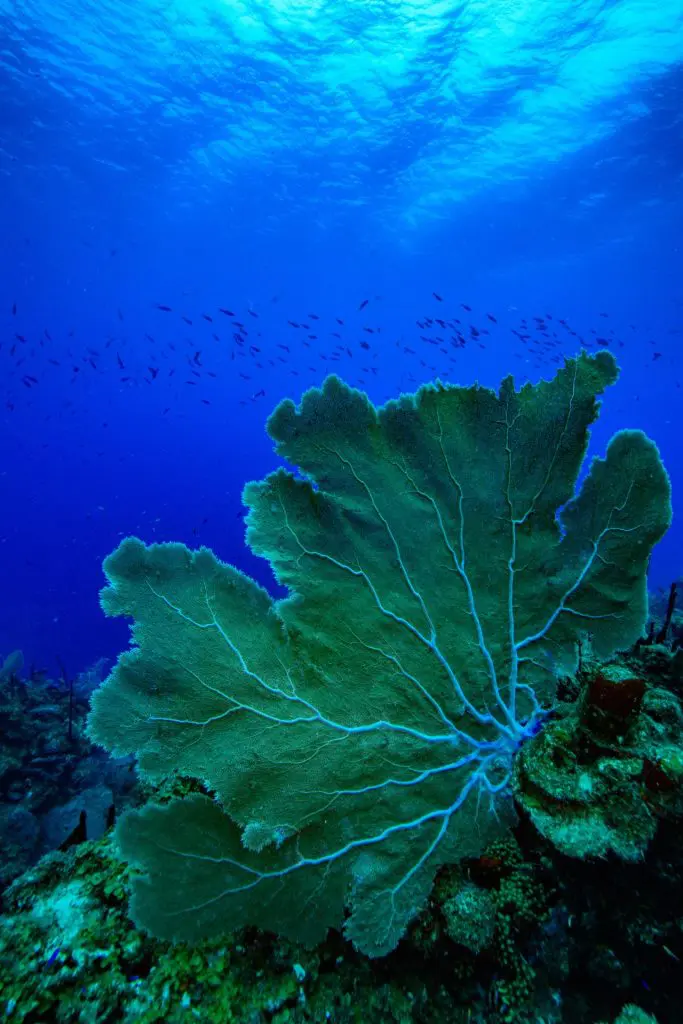
Turtles tucked themselves along the sloping reef, while enormous gorgonian sea fans moved back and forth in the current.
So Much Joy in St. Croix
Read that heading out loud, and you can call me Dr. Seuss!
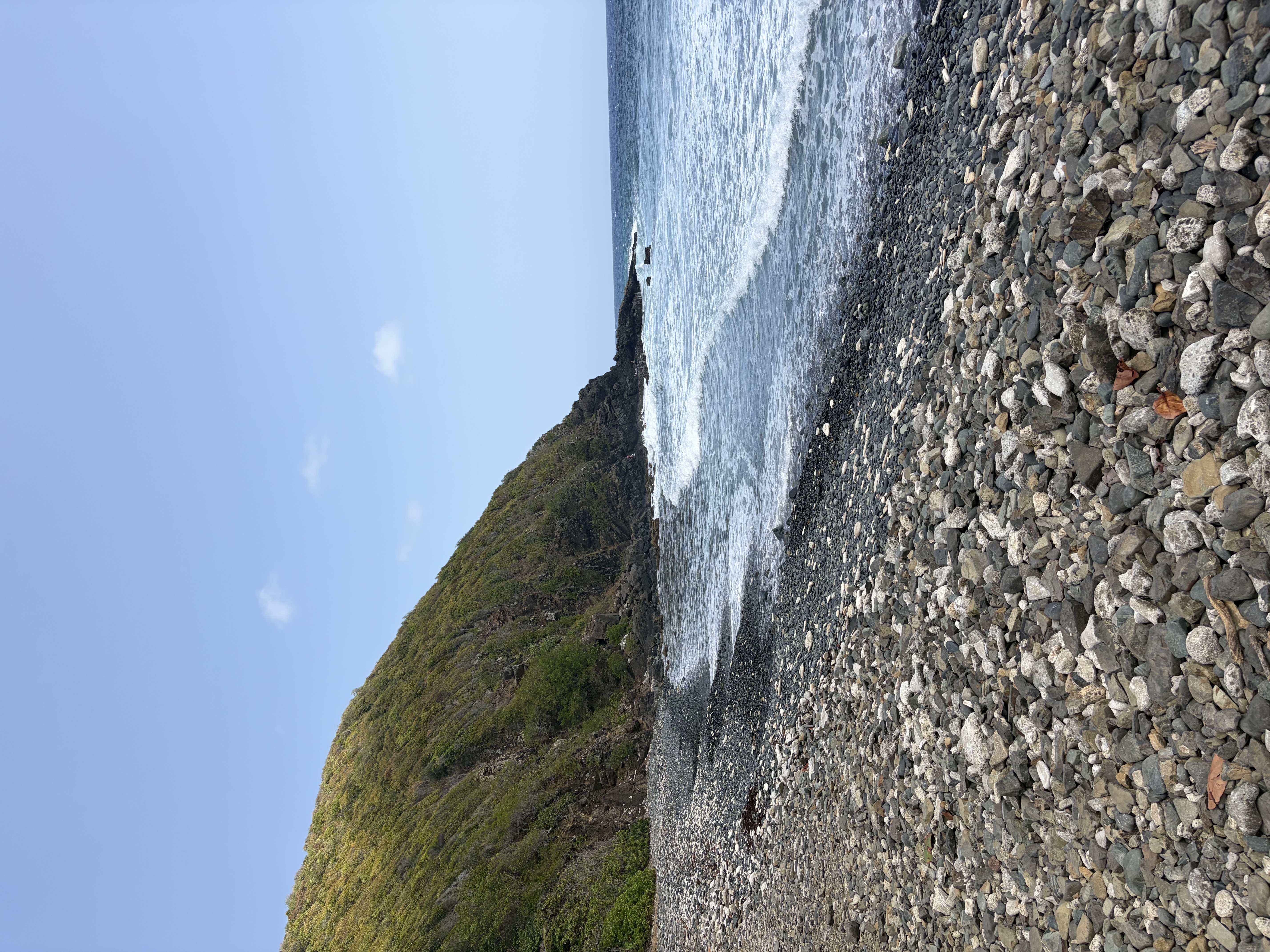
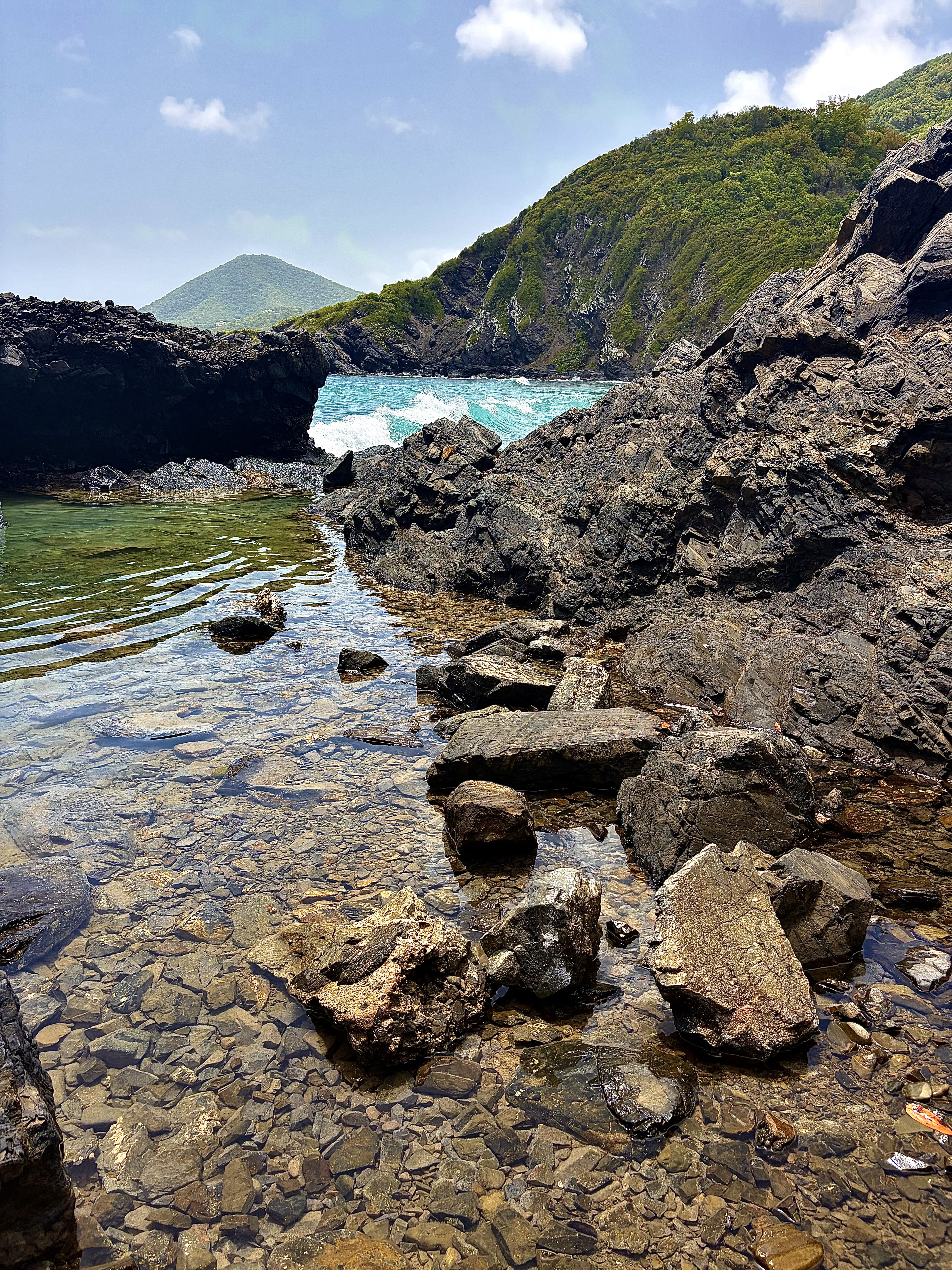
Off the clock, Karl recommended a hike to the Annaly Bay Tide Pools, a series of natural pools tucked into St. Croix’s coast.
Thank you to Kristin and Karl for showing me so much of St. Croix, for bringing me into projects and work happening across its three national parks, and for giving me the opportunity to observe such an extraordinary range of Caribbean life.
Thank you as well to Michelle and Alyson for taking the time to walk me through Christiansted’s history and entertain all of my questions.
And finally, a huge thank you to Theresa and John Harper for opening your beautiful home to me and giving me such a welcoming and wonderful place to stay, relax, and return to at the end of each day.