Although my official start date as an intern with the Bonnier Diver Group is still a few weeks away, I’ve been busy with other parts of the diving and ocean research community, and wanted to share these exciting experiences before I head down to Florida to start my internship!
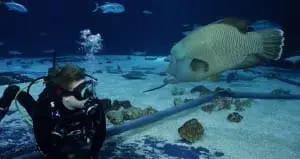
At the beginning of the summer I went on an overseas study through Indiana University’s Office of Underwater Science to the Dominican Republic, where I was involved in Dr. Charles Beeker’s Living Museums of the Sea project. During the trip I got to meet the 2015 North American Rolex Scholar, Michele Felberg, who joined our class as part of her year long adventure. Over the course of the next week and a half we visited a number of sites including the Guadalupe Underwater Archeological Preserve, the wreck of the Cara Merchant, and the sandy beach of La Coleta. The class was responsible for assessing the biological and archaeological components of the sites and performing maintenance as needed.


I was given the opportunity to use Indiana University’s Canon 7D to photograph and document the trip. It was a great experience and an interesting change from the GoPro camera I typically take diving. The 7D gave me a lot more control of the final image, but that control comes with a lot more responsibility. My daily routine soon included assembling the camera and housing correctly, keeping the batteries charged, making sure everything got to the dive site safely, rinsing and disassembling the housing at the end of the day.

During the trip Dr. Beeker and I discussed a potential article I could write for my internship involving the underwater drill that he and his friend Billy Carter designed. I even got a chance to shoot pictures of the device in action!

During my internship, I hope to be able to tie in my experience with Dr. Beeker’s class and my experience learning about and photo-documenting the drill into my internship with Bonnier Dive Group. I’m also extremely interested in working with the staff on Sport Diver and Scuba Diving‘s web based components, especially video editing. I’m excited to try my hand at writing journalism pieces, but also for the opportunity to hone my editing skills!
One Response
Wow Robby! Wow!!!