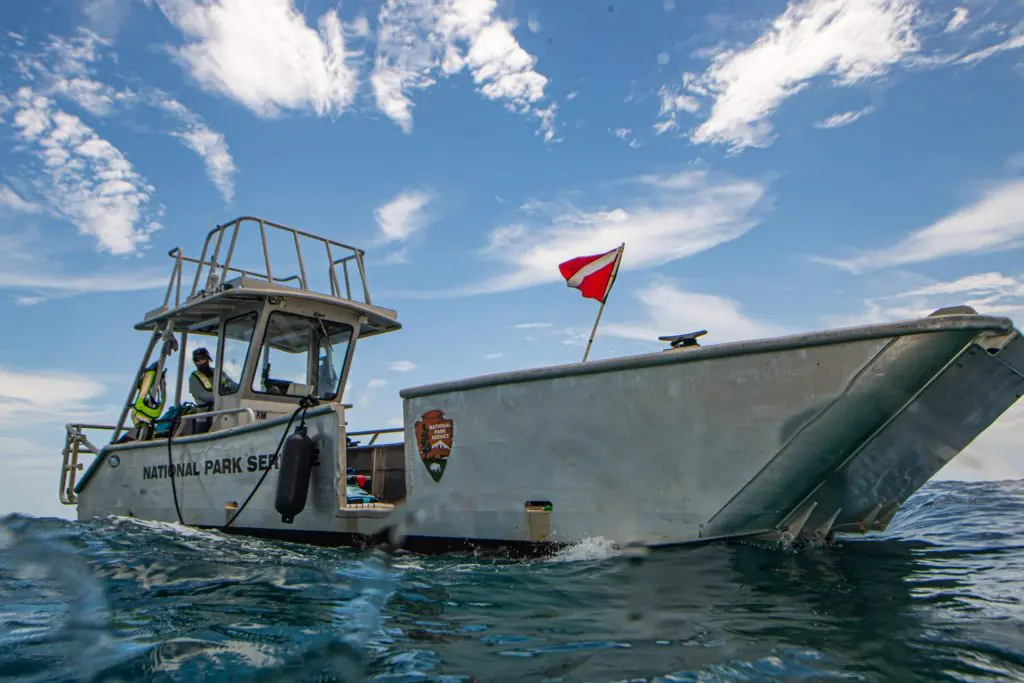
South Florida summers are not for the faint of heart. Within about six minutes of stepping outside, I accepted that the mosquitoes owned me and that humidity was going to turn me into a human sponge. Fortunately, I spent most of my time either on the water or beneath it, where the conditions were significantly less hostile.
With my required Florida weather complaint officially out of the way, I absolutely loved my time at Biscayne National Park. I was greeted at Miami International Airport by Shelby Moneysmith—Regional Dive Officer, Park Dive Officer, biologist, and someone who somehow manages to do the work of about four people. Upon arrival at the Park, I met my three roommates and four other Scientists in Parks (SIP) interns. I knew it was going to be an incredible two weeks…above and below the water.
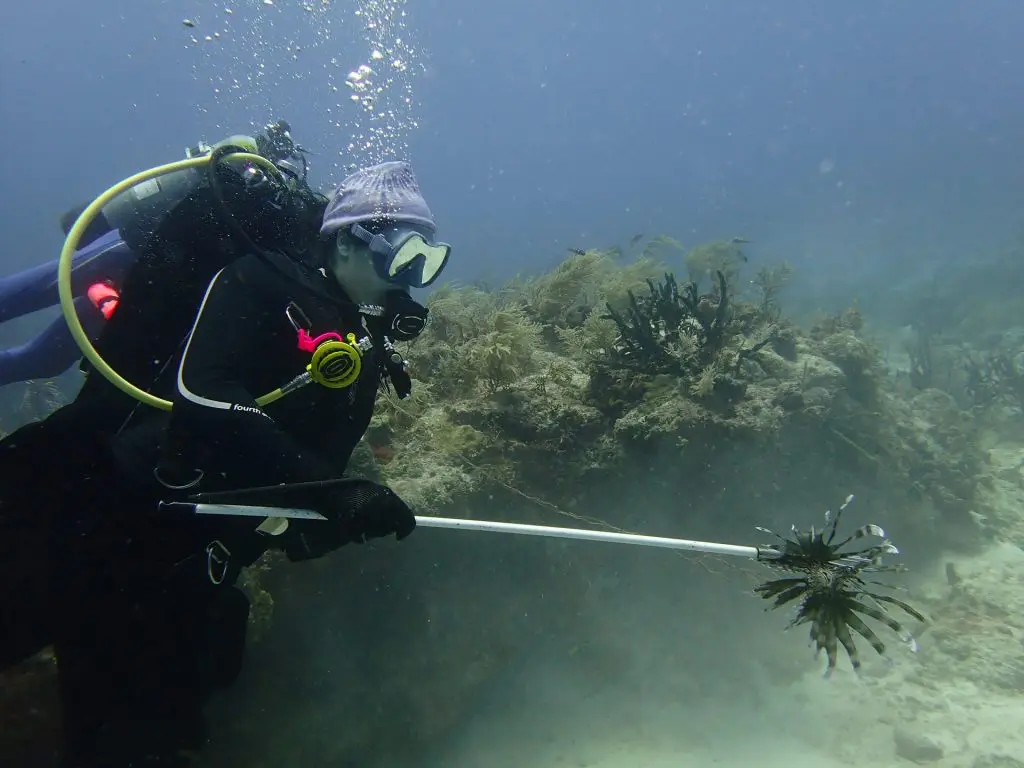
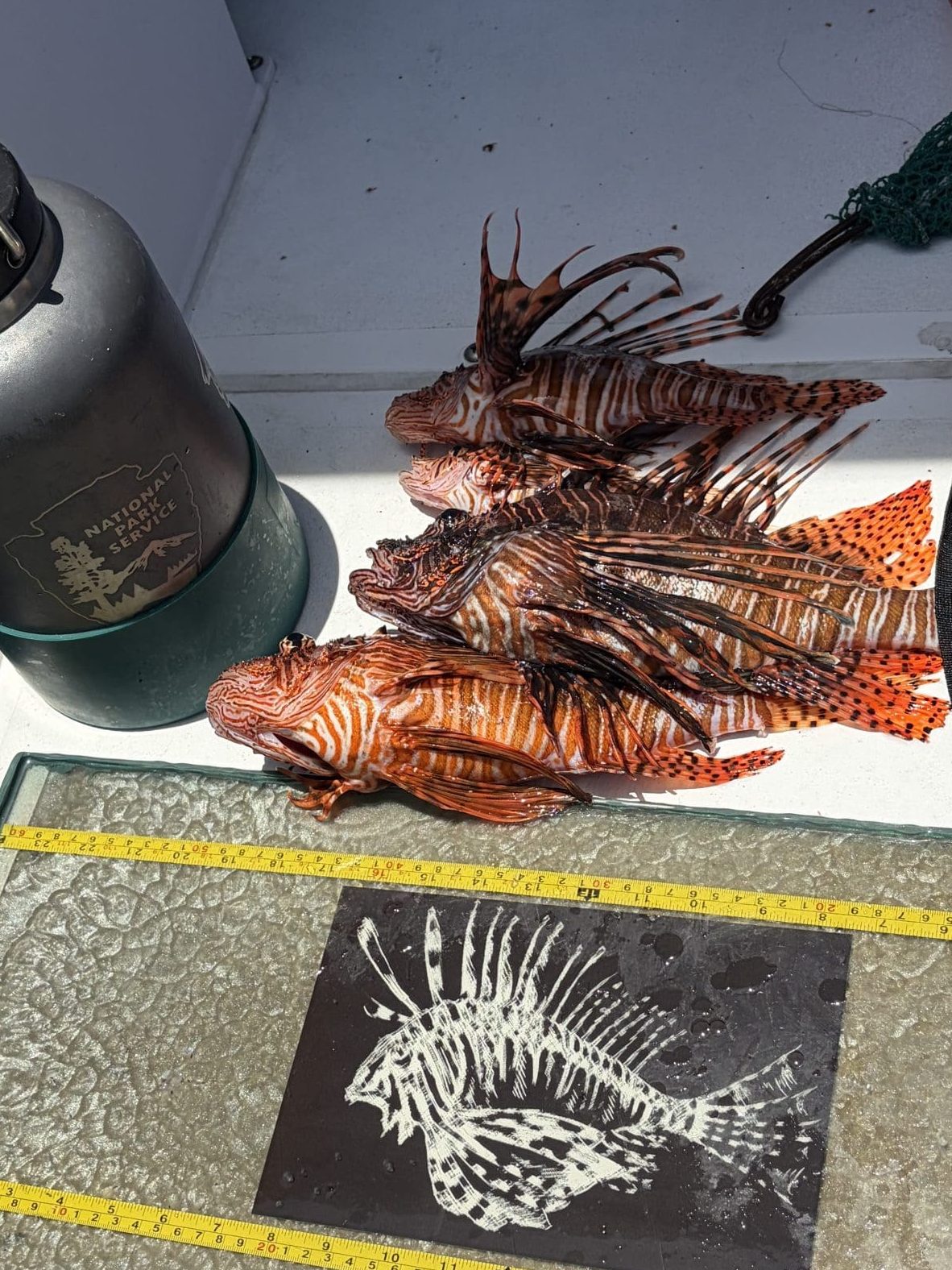
On my first full day at the Park, Shelby introduced me to the Fish Wildlife Inventory and Management Program (FWIMP), with whom I spent a large portion of my time at Biscayne working. On day one, I was spearing my own lionfish and learning to use lift bags to move large pieces of debris. FWIMP quickly turned me into an underwater jack of all trades. I participated in an expansive range of work underwater, from the invasive lionfish removal to marine debris dives to biodiversity and fish surveys to buoy maintenance work. Working alongside Shelby and biology technician Morgan, I gained a deep appreciation for completing tasks underwater. What I loved most was that every dive had a purpose and ended with a visible result. Whether it was a zookeeper packed with lionfish, a brand-new buoy bouncing in the waves, or a boat loaded with ghost traps, line, and other marine debris, every dive left us with something tangible to show for our work.
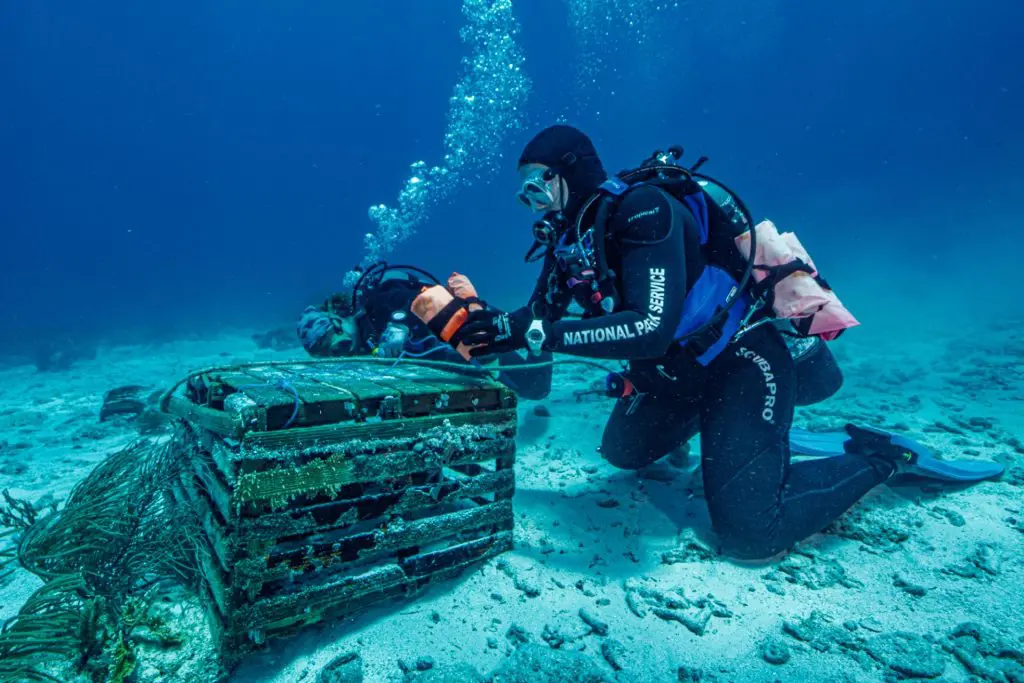
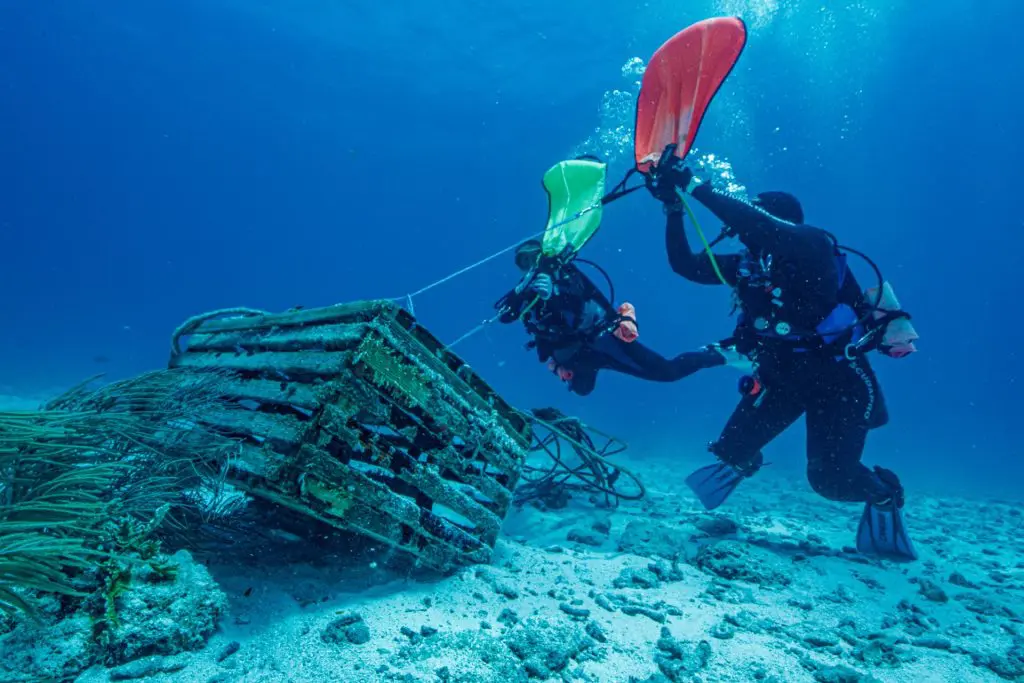
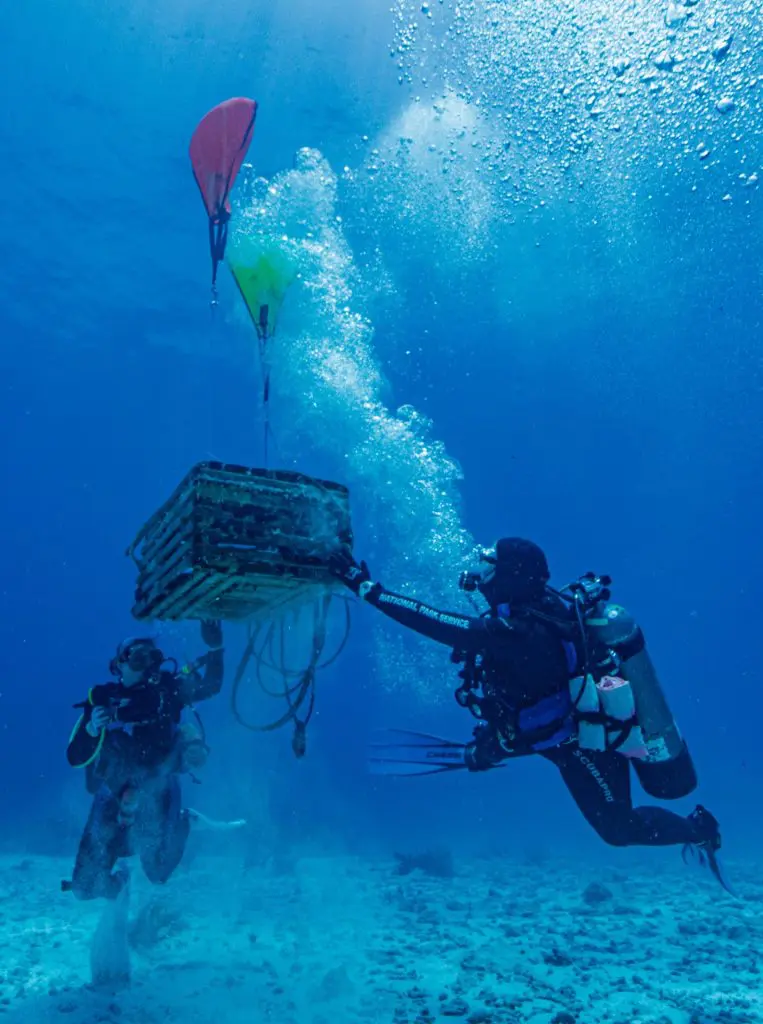
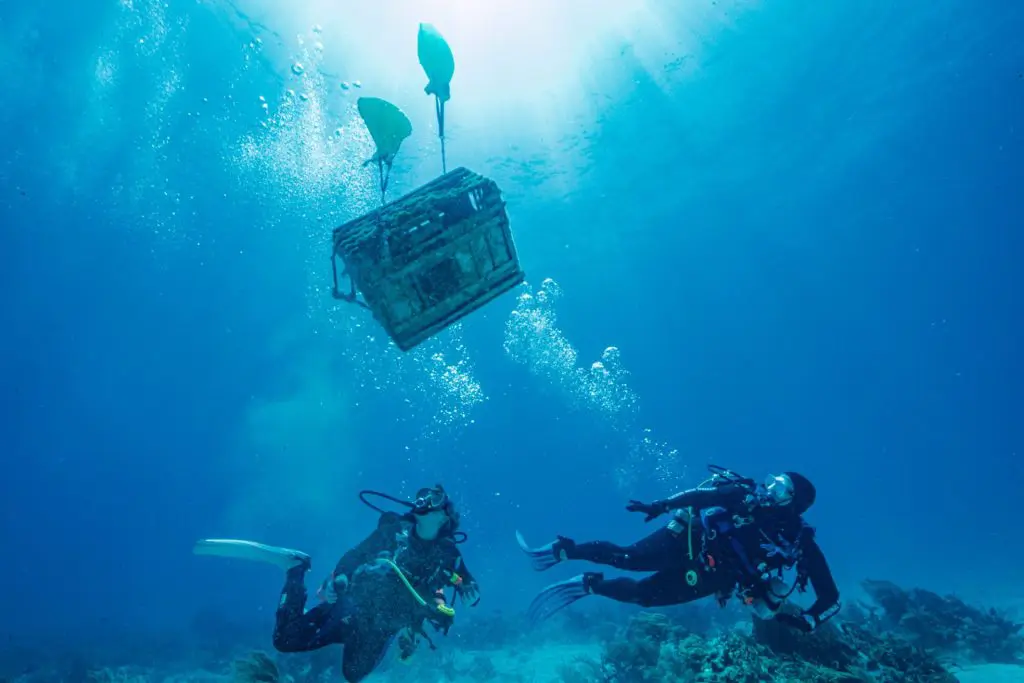
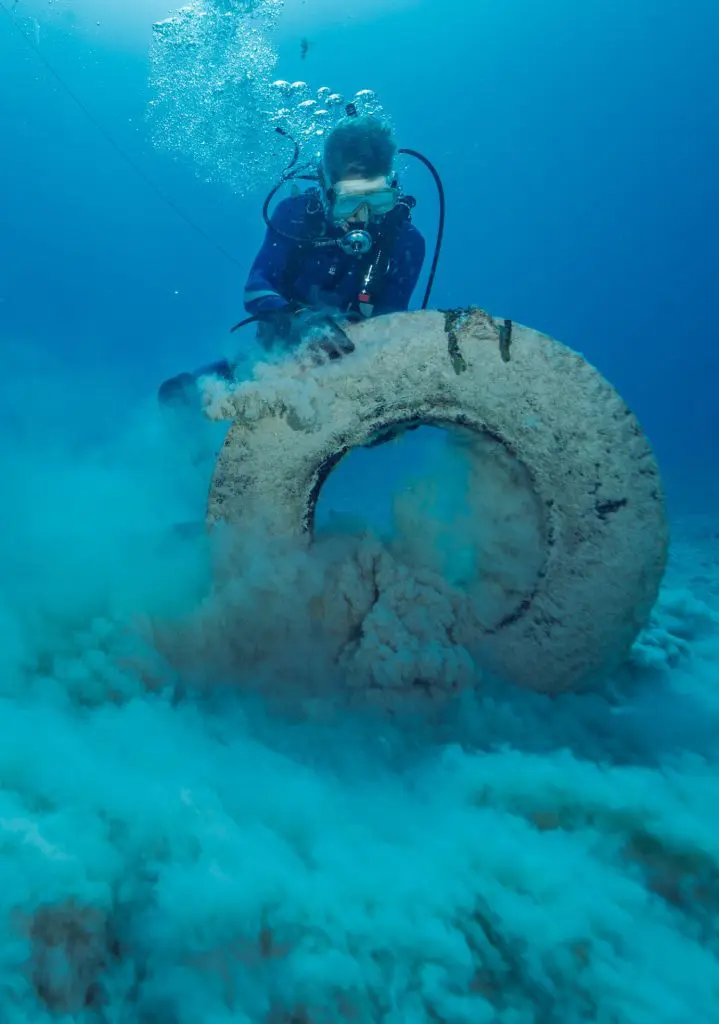
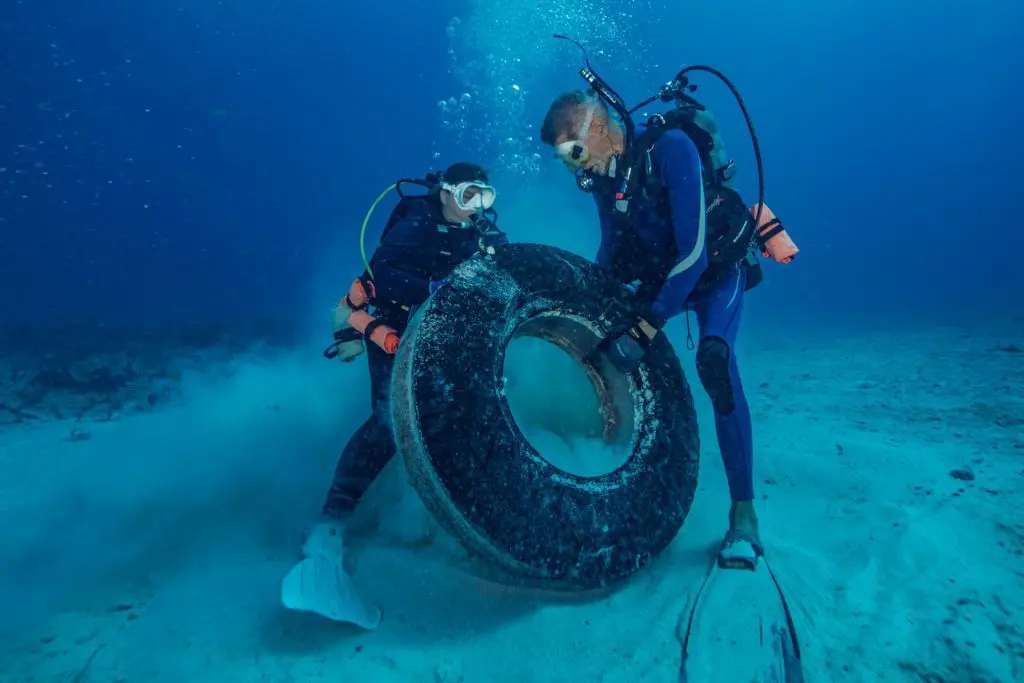
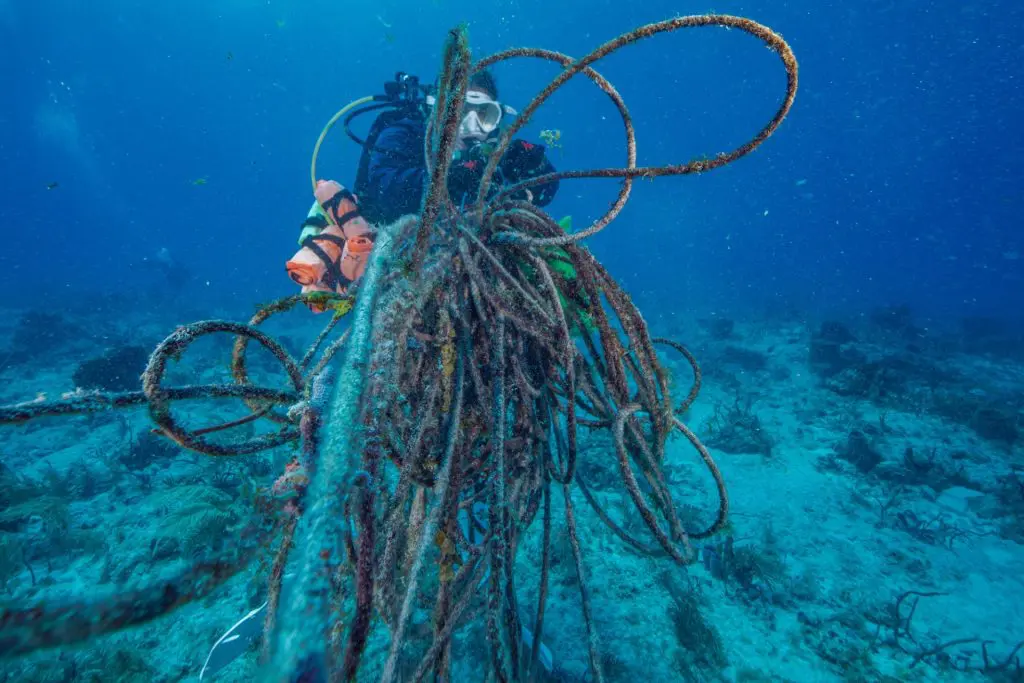
Biscayne is one of the only national parks that allows commercial fishing and trapping. Unfortunately, many crab and lobster traps get cut from their lines and neglected on the seafloor. FWIMP’s marine debris dives are integral to removing this trash buildup. Through trap-specific dives and a project called “Patches,” where FWIMP works on one patch reef per dive until all of the debris is removed from the patch, the team makes a massive dent in controlling the pollution. On one trap/marine debris day, led by Ana, we collected and removed 702lbs of trash, which included a 103-pound tire that definitely wasn’t supposed to be there.
I appreciate how FWIMP’s work supports other education and research initiatives, too. The vast majority of the lionfish that FWIMP removes go to education programs for students to carry out fish dissections. They also do Reef Visual Censuses (RVCs), where divers observe and record the species, abundance, and size of different animals on the reef. This data collection supports a larger project through the National Coral Reef Monitoring Program. On a couple of dives, we also recorded goliath grouper sightings, which goes into a dataset for a citizen science project called the Great Goliath Grouper Count.
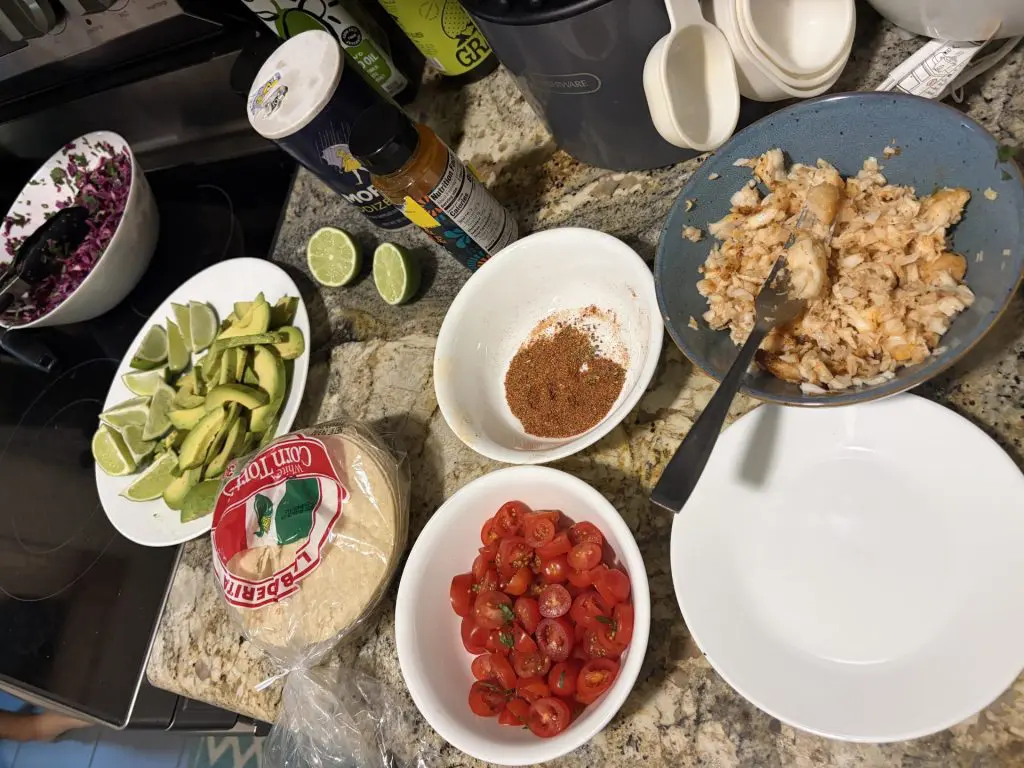
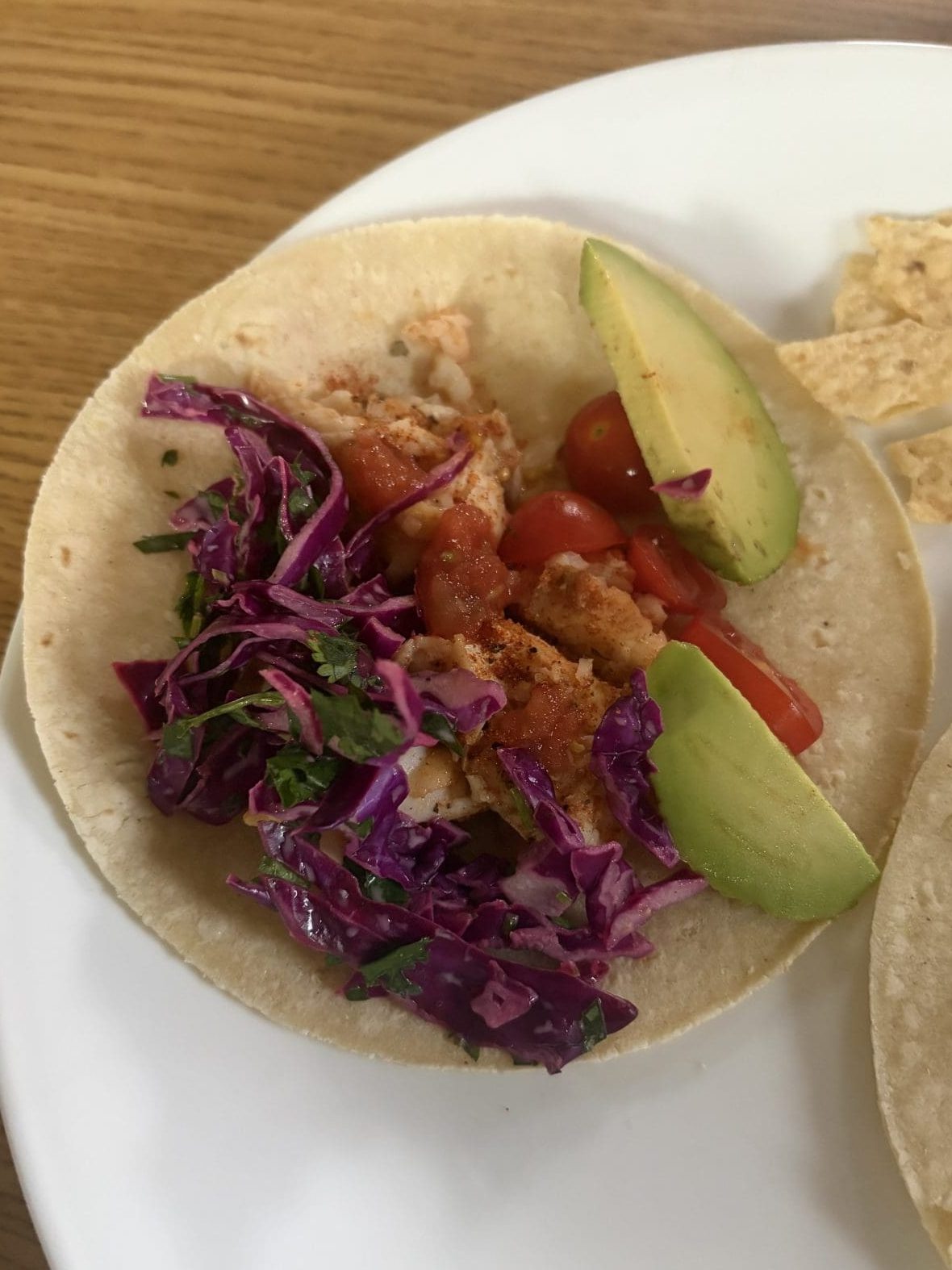
While almost all of the lionfish catch was saved for community programs, a few fish had a different fate. After one particularly successful lionfish removal day—where we removed 60 lionfish—Shelby generously filleted a few for me to take home. The SIP crew and I turned the invasive species into tacos. It may have been the most sustainable meal I’ve ever eaten: remove an ecological problem by day, enjoy it for dinner by night. Humans are one of the few predators capable of controlling invasive lionfish populations, and it doesn’t hurt that they happen to be delicious. If you ever get the chance to try lionfish, I highly recommend it.
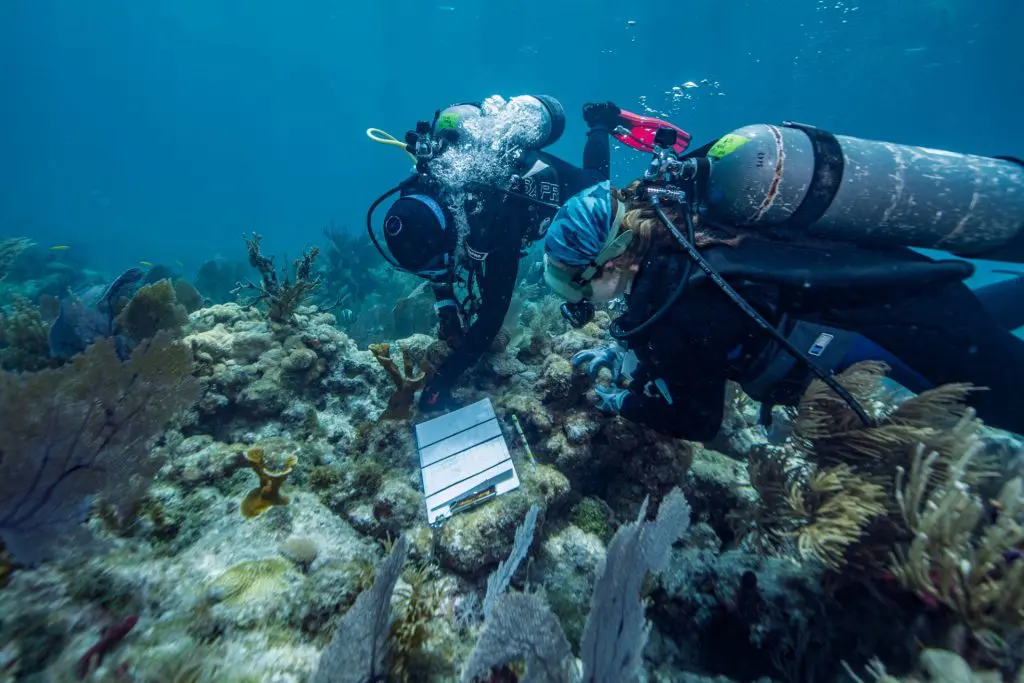
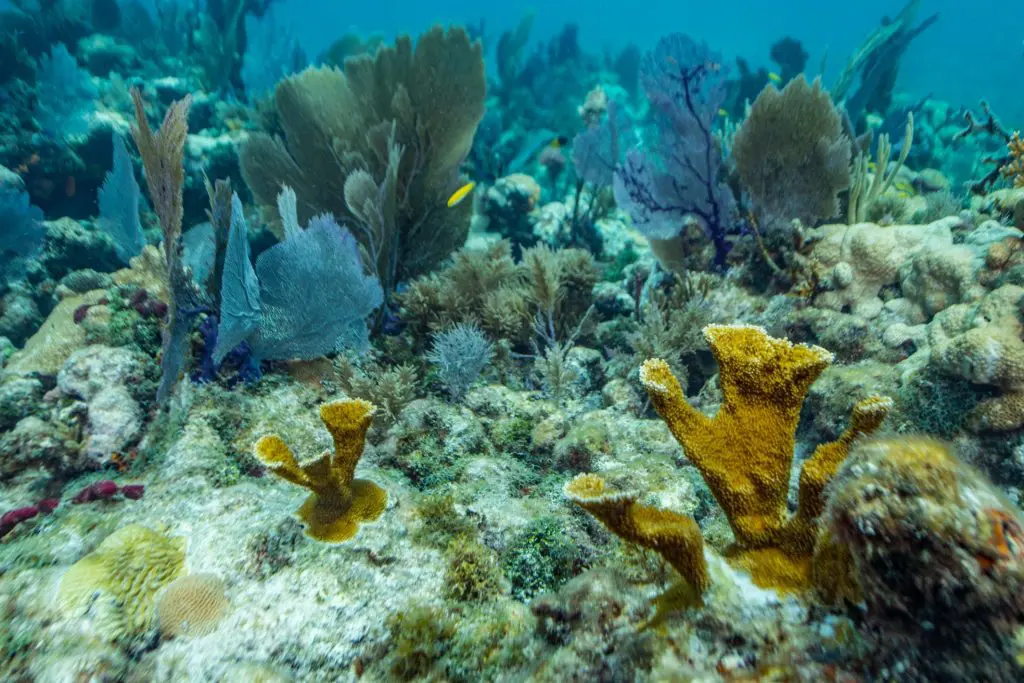
Towards the end of my first week in Biscayne, I joined the Habitat Restoration Program (HRP) on a series of shorter dives to check the status of some Elkhorn Plate coral, Acropora palmata, colonies. We did six dives that day, assessing the health of some known natural colonies around the park, as well as some restoration sites with outplants from the University of Miami and Mote Marine Labs. It was amazing to see the small, growing outplants, and a happy surprise to find some large, older colonies with healthy live tissue.
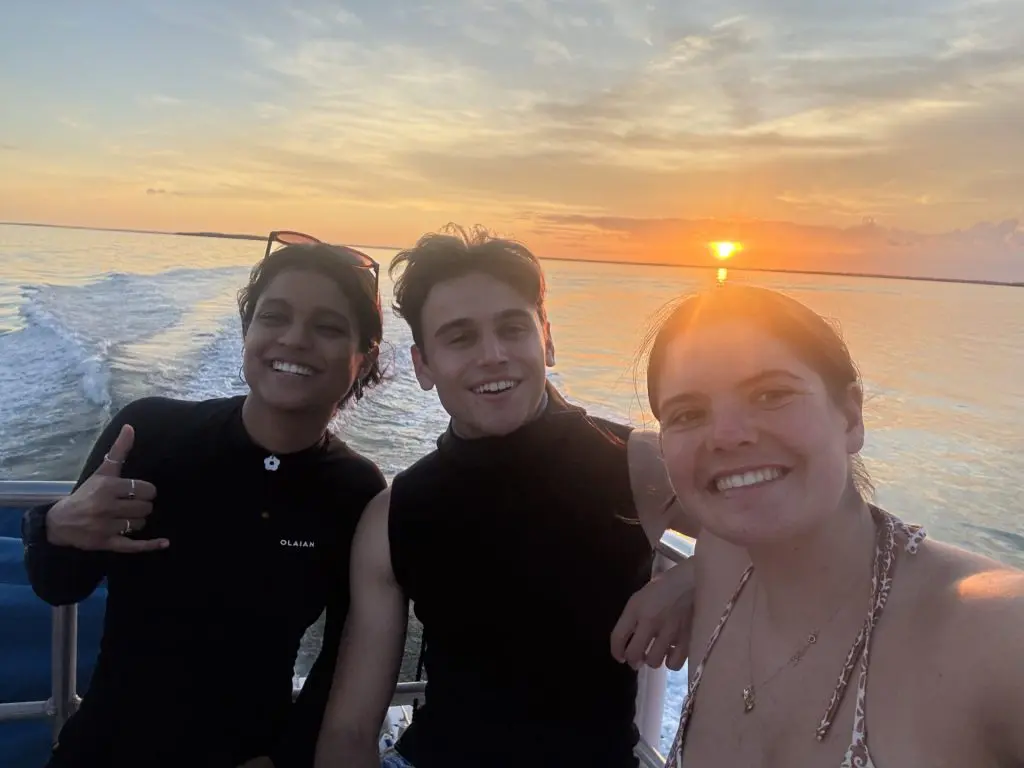
Outside of Biscayne, on one of my days off, I was able to go on a very fun night dive with fellow Our World-Underwater Interns, Navya, who is spending her summer with REEF in Key Largo, and Caden, last year’s AAUS intern. We were lucky enough to be joined by a pod of dolphins at sunset on our ride out to the dive site. Underwater, we got to see a nurse shark, turtle, moray eels, slipper lobster, spiny lobster, a massive crab, and some cool shrimp!
Next up…my bonus park.
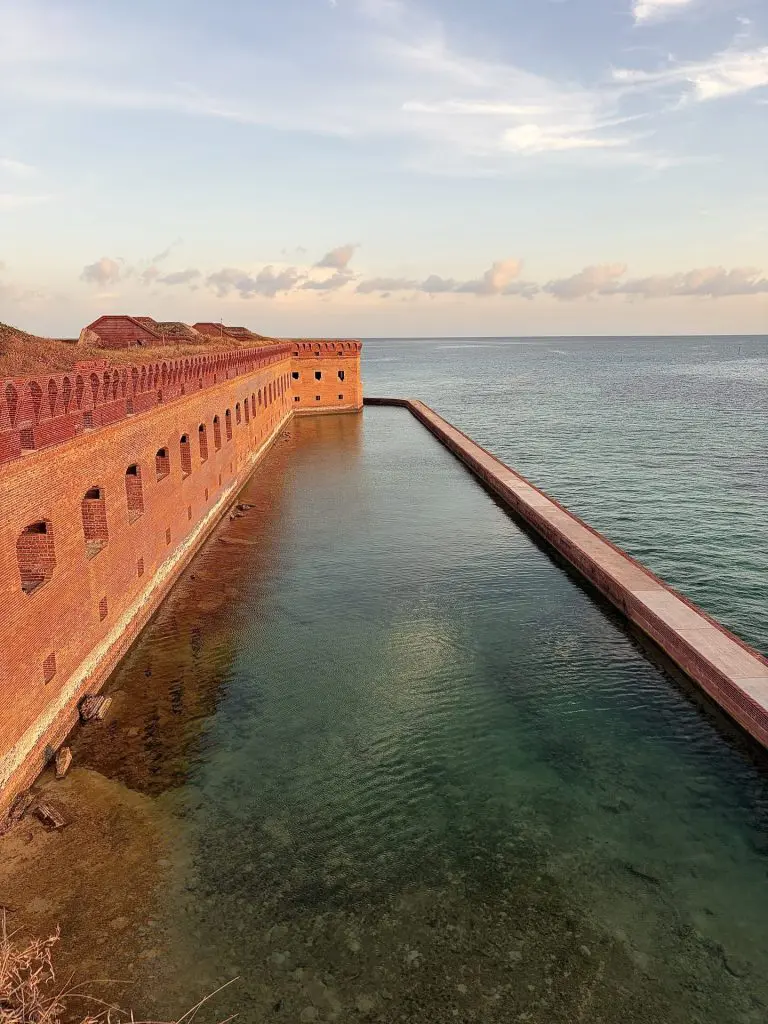
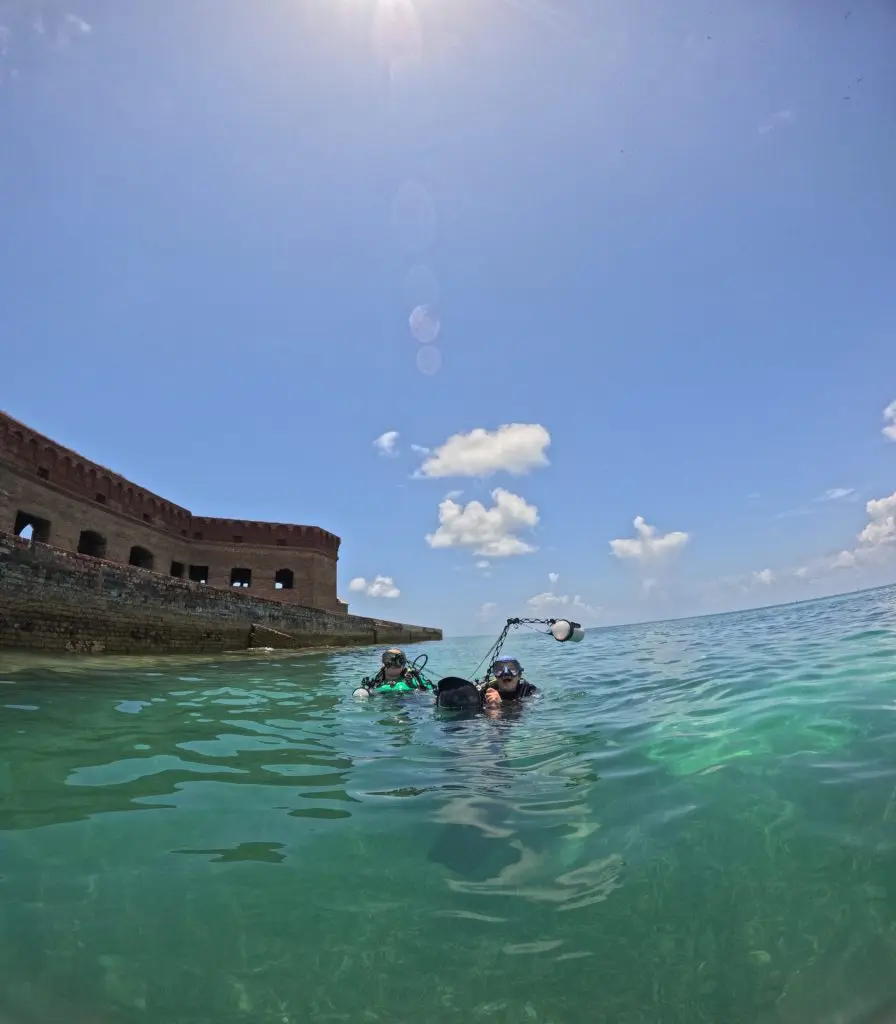
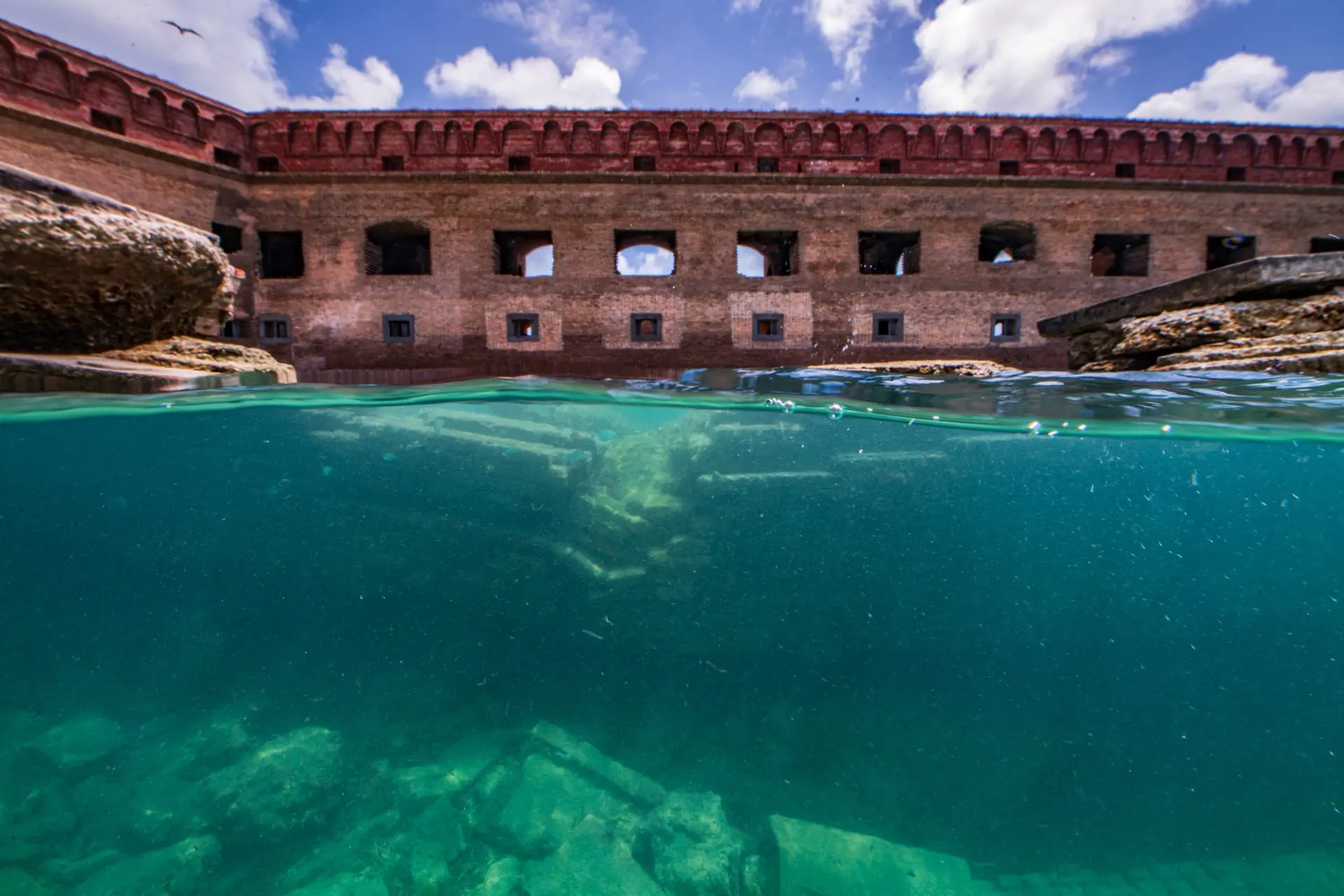
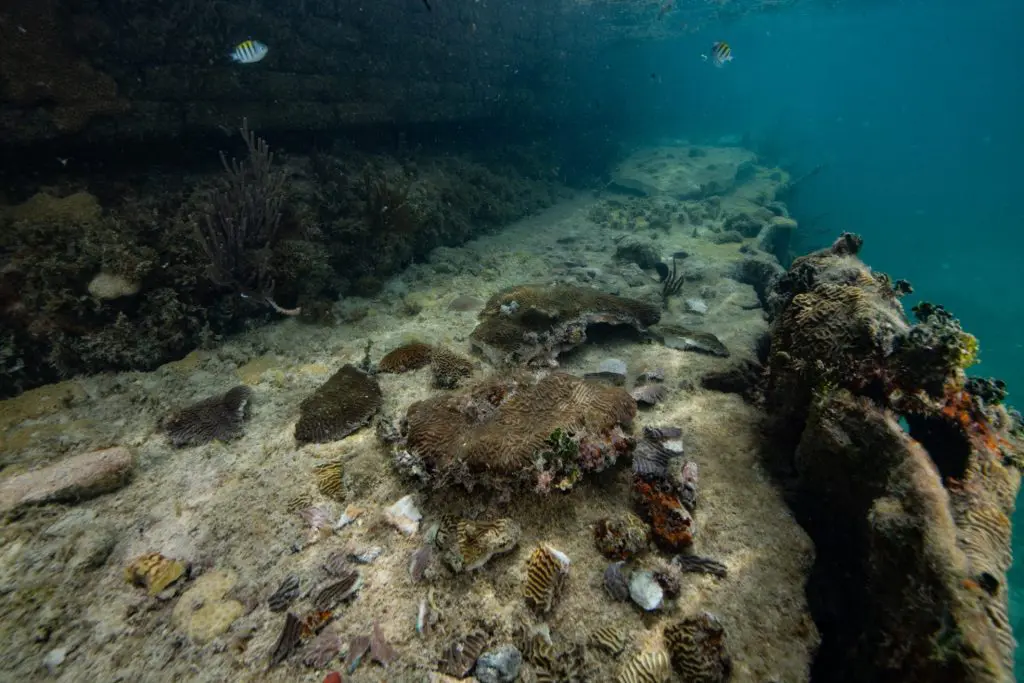
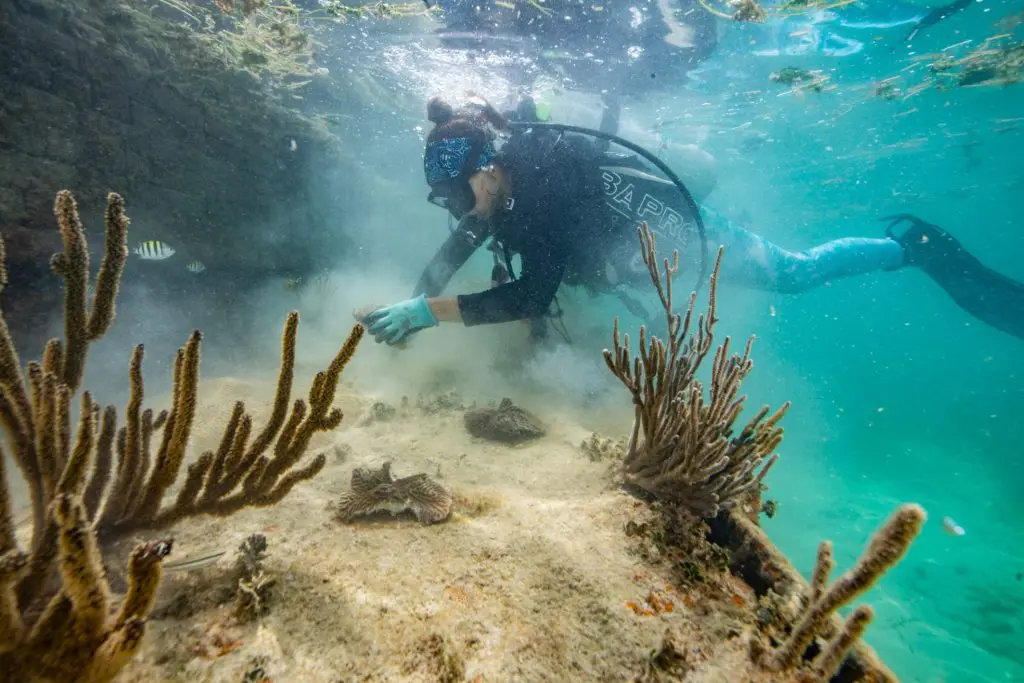
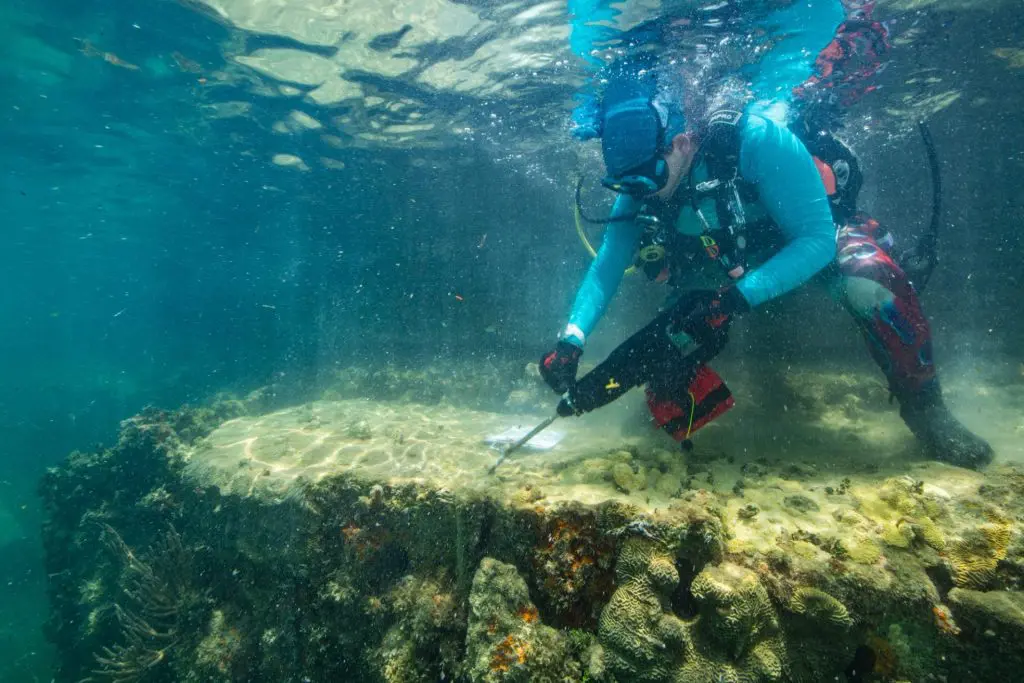
Apparently, the HRP team found my company at least moderately tolerable, because they invited me on a project at Dry Tortugas National Park. Thank you again, Amanda, Laura, Sanauz, and the HRP team for letting me tag along. This was a magical surprise addition to my internship journey! The trip consisted of two travel days to and from Key West and 70mi each way by ferry to get to Fort Jefferson, and one day of diving. The long journey was absolutely worth it. The mission was straightforward but meaningful. A section of the historic moat wall around Fort Jefferson collapsed, and for preservation of the site, the parks service will be doing repairs to fix it. However, there are many hard corals residing on the moat wall, including on the section that needs to be repaired. So, HRP was brought in to relocate the corals further down the moat wall, to protect them from the construction work. The relocation process was methodical: chiseling corals off the wall, and breaking out power tools for the larger colonies, cleaning new attachment sites, mixing cement directly on the moat wall, transporting via paddleboard, and finally securing each coral into its new home.
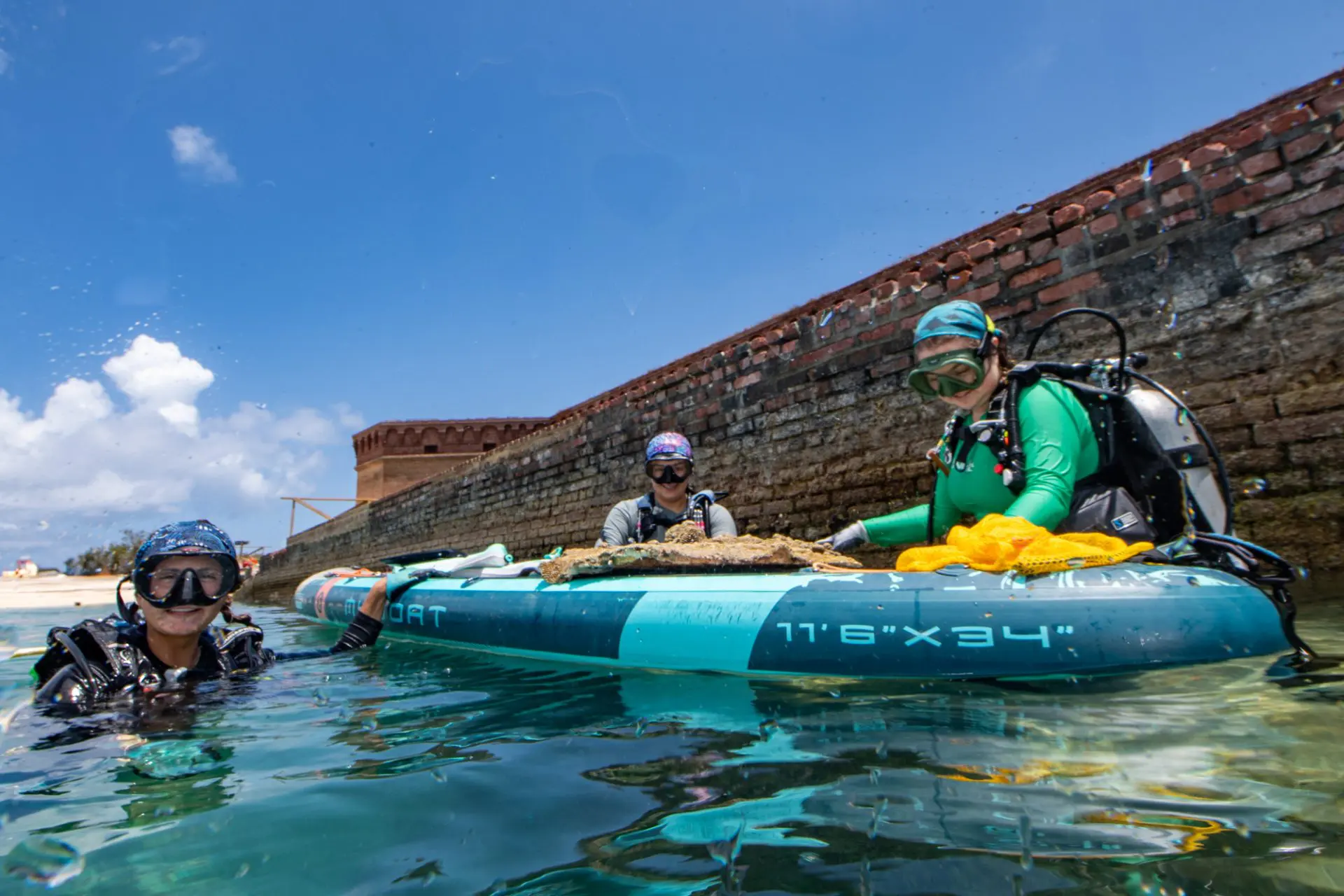
Initially, I couldn’t help wondering about all the other life that depended on those corals—the Christmas tree worms tucked into the grooves of the stony corals and the fish that considered these colonies home. Thankfully, when we returned the next morning for a snorkel to check our work, the relocated corals were already settled in. Fish were weaving through the colonies, Christmas tree worms were back out displaying their colorful spirals, and Bella even spotted an octopus checking out the new neighborhood.
Topside, exploring Fort Jefferson was incredible. The architecture was inspiring enough that I’ve now added “build a house with a shark-filled moat” to my list of life goals. It’s probably unrealistic, but I think it’s important to dream big. Getting to watch the sunset from the top of the fort was one of the most beautiful views I have seen.
One of the most rewarding parts of my time at Biscayne was finally getting comfortable with my camera setup. If you remember, in my last post, I described it as looking less like a camera and more like a small satellite. Thankfully, we’ve come a long way since then. After some practice, a few jumpscares (including six barracudas that seemed unusually interested in my strobe lights), and learning to reverse frog kick because I essentially no longer have functioning arms underwater, I finally reached the point where I could dive with the camera without my heart rate immediately doubling. Photographing the science being carried out by the Biscayne dive teams became one of my favorite parts of my time there. Whether I was following a diver tracing a winding line through a patch reef or watching another chisel a coral from a wall, I loved documenting the work that keeps these underwater ecosystems healthy—work that most park visitors never get to see.
I couldn’t have imagined a better park to begin this internship. In just two weeks, I logged more than 20 dives, contributed to an incredible range of projects, and learned from an inspiring team of scientists and divers. Thank you to everyone at Biscayne for welcoming me so generously—especially Shelby, Amanda, Morgan, Laura, Sanauz, Ana, Nika, Ethan, Jeramy, Nico, Abby, Willow, Bella, and Terry. You made these two weeks unforgettable.