Greetings once again! Even in such a short amount of time, so much has gone on. There is never a dull moment at REEF, with plenty do. Due to the diverse range of work we do as interns, there is plenty to share and talk about.

REEF’s mission is to educate and enable divers to become active stewards and citizen scientists. Data collected by REEF and its’ members is used by researchers to monitor health and biodiversity of fish species worldwide. REEF provides members with various resources to learn fish identification such as identification books and fish ID webinars. They also provide members with underwater paper and slates to record the species and number of fish seen during a survey. Divers conducting a survey assign each fish species they see an abundance category. The categories are: single (1), few (2-10), many (11-100), or abundant (101+). The data is then uploaded online and added to the vast REEF database.

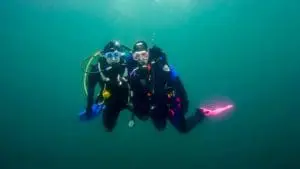
As an intern, one of our perks is the opportunity to take a half day during the week to go out on one of the local dive boats and conduct fish surveys. Since the beginning of the internship, I have conducted 19 Surveys and am working on becoming a level 3 surveyor. As a REEF member, there are different levels of surveyors. Everyone starts as a level one (novice) because everyone knows at least one fish. After conducting 2 surveys, and passing a level 2 quiz with 80% or better, a diver can advance to level 2 (Beginner). After 25 surveys and passing the level 3 quiz, a diver becomes a level 3 surveyor (advanced). Level 4 and 5 are expert surveyors and require even more dives and a greater range of knowledge of fish species as well as their phases.

Fish identification really keeps you on your toes. It requires a lot of time and dedication to learn the many species found in the Water of the Tropical Western Atlantic Region. It also requires a keen eye and patience as fish come in many shapes, sizes, colors, and variations making them hard to identify sometimes. Although large reef fish are cool, there is just something so exciting about finding small blennies and gobies that are the size ones pinky finger. With each dive, my range of fish which I can identify grows and with each survey I get more excited to test my knowledge. The fish ID has even pushed me to start working on improving my underwater photography skills to keep a record of what I see and to double check my survey data. Diving with a purpose also makes diving more enjoyable. I can’t imagine ever being able to go back to just diving and not having a slate in my hands.

With summer passing by, that means Lionfish Derby season and Kids camps are almost upon us. Looking forward to sharing more wonderful experiences with everyone really soon! Best Fishes and Happy diving